










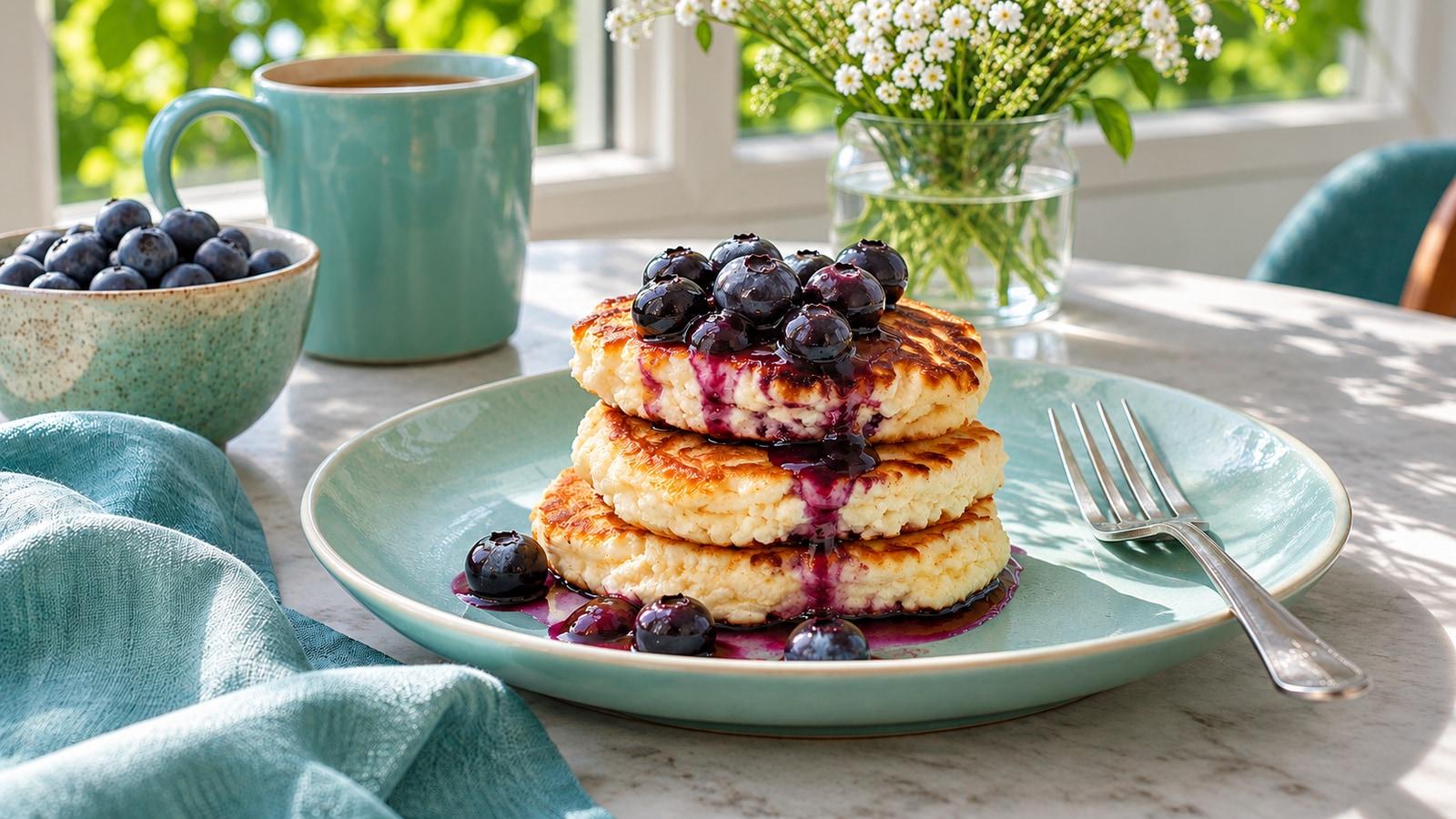
These small pancakes are a good reason to keep a tub of cottage cheese in the fridge. The cottage cheese blends into the batter, while warmed blueberries make a quick topping that doesn't need a separate sauce recipe.
The batter comes together in a blender. Make the pancakes small enough to turn easily, cook them through, and serve the amount you want. The rest can be refrigerated for another morning.
Ingredients
For approximately two servings:
For the pancakes
- 1 cup cottage cheese
- 2 large eggs
- 1/2 cup rolled oats
- 1/2 teaspoon baking powder
- 1/2 teaspoon vanilla extract, optional
- A little neutral cooking oil for the pan
For the blueberries
- 1 cup fresh or frozen blueberries
- 1 tablespoon water
- A squeeze of lemon juice, optional
You'll need a blender, a nonstick skillet, a spatula, a small saucepan, and a food thermometer. The yield depends on how large you make the pancakes, so think of the serving count as a starting point rather than an exact number.
Blend and cook
- Wash your hands and clean the work surface. Rinse fresh blueberries under running water. If using frozen berries, follow the package's preparation instructions.
- Add the cottage cheese, eggs, oats, baking powder, and optional vanilla to the blender. Blend until the oats are broken down and the batter is mostly smooth. Let it stand for a few minutes while you prepare the pan.
- Warm a lightly oiled nonstick skillet over medium-low heat. Pour small rounds of batter, leaving enough space between them to slide a spatula underneath. If the batter is very thick, stir in a small splash of water or milk.
- Cook until the undersides are set and you can turn the pancakes without the batter running. Flip carefully and continue cooking. Reduce the heat if the outsides are browning before the centers are cooked.
- Because the batter contains eggs, cook the pancakes to an internal temperature of 160°F. Check a pancake at its thickest part with a food thermometer; don't rely on color alone. Transfer the cooked pancakes to a clean plate.
Wash the blender, utensils, and surfaces that touched raw egg batter before using them for cooked food. Don't taste the raw batter.
Warm the blueberries
While the pancakes cook, put the blueberries and water in a small saucepan over medium-low heat. Stir occasionally until the berries are hot and begin to soften. Mash a few with the back of a spoon if you want a looser, saucier topping; leave more whole if you prefer distinct pieces.
Add lemon juice if you like a little tartness. Spoon the warm berries over the pancakes just before eating. If the sauce thickens more than you want, stir in a small splash of water.
You can cook the berries first and set them aside while you make the pancakes. Use separate clean utensils for the finished topping and the raw batter.
Getting a texture you like
Cottage cheese brands differ in moisture, and rolled oats absorb liquid as they sit. If the batter seems too loose, give it another minute to rest. If it becomes too thick to pour, add liquid a little at a time. Small pancakes are easier to turn than one large one, particularly when the batter is soft.
Keep the heat moderate. A hot pan can brown the surface quickly while the center remains undercooked. A thermometer is the useful check; the cooking time will vary with the pan, pancake thickness, and stove.
If you prefer a less tangy topping, taste the cooked blueberries with a clean spoon before adding lemon. You can also serve a little plain yogurt alongside or use a different fruit you enjoy. Check ingredient labels if you have an allergy or need oats that are specifically labeled gluten-free.
Serving a smaller or larger appetite
Set a few pancakes and some berries on a plate, then see whether you want more. If your appetite has changed while taking a GLP-1, you don't need to decide the perfect portion before you start. Keep the remaining cooked pancakes and topping safely refrigerated for later.
For someone who wants a more substantial breakfast, serve the pancakes with yogurt, milk, or another familiar side. If a particular food is hard to tolerate or you have a medical eating plan, adapt the meal with your care team or dietitian.
The recipe contains dairy and eggs. A dairy-free or egg-free version would need different ingredients and may cook differently, so check a tested alternative that fits your needs rather than assuming a direct swap will behave the same way.
Saving and reheating
Refrigerate the cooked pancakes and berries in covered containers within two hours of cooking, or within one hour if exposed to temperatures above 90°F. Keep the refrigerator at 40°F or below and use cooked egg leftovers within three to four days.
Reheat the pancakes thoroughly to 165°F before serving, checking with a food thermometer. Warm the berries separately if you like. Keeping the topping apart helps the pancakes retain their texture and lets you choose how much to add.
A breakfast prepared ahead should make the next morning easier. A label with the date and a clean container in the front of the refrigerator are often all it takes to make sure the leftovers are noticed.