










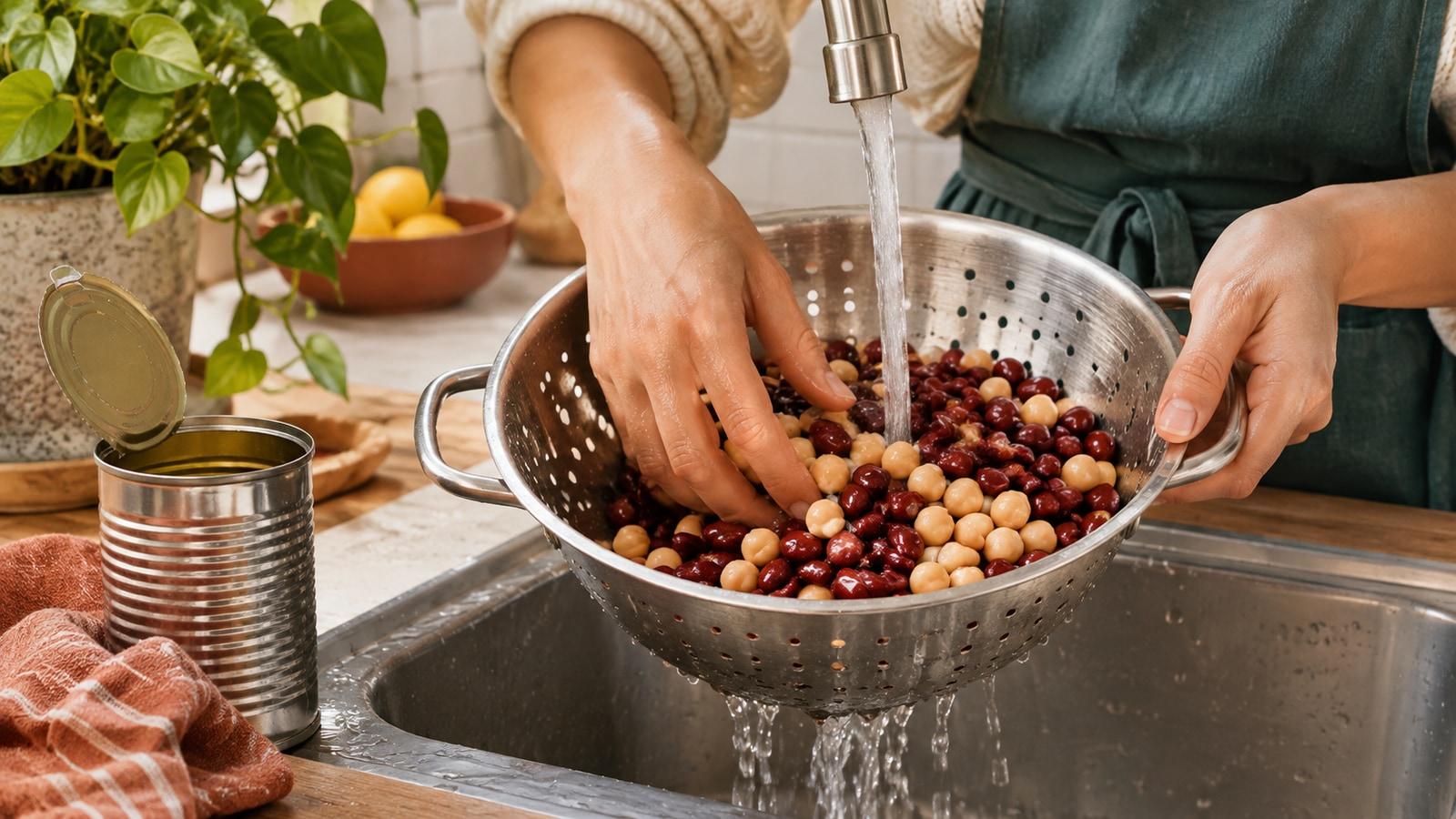
You open a can of beans and pour off the liquid. Or you keep the tomatoes and their juice together for a sauce. Either choice changes what goes into the meal—but the Nutrition Facts label doesn't always tell you exactly how many nutrients remain after your particular preparation.
The answer depends on the food, the liquid, whether the label describes a drained serving, and what you do next. You can use the label as a guide without pretending the result is more precise than it is.
First, check what the serving describes
Look at the serving size and any words near it. Some products describe a drained portion; others may list nutrition for the food as packaged or prepared in a specified way. If the label includes preparation directions, read them before comparing it with another can.
Suppose two cans list sodium per serving, but one serving is described as drained and the other isn't. The numbers may not be a direct comparison of the portions you plan to eat. Serving sizes can differ too. If you eat twice the listed serving, the label values generally need to be considered for two servings.
When the basis isn't clear, the manufacturer may be able to explain it. For an ordinary meal, an estimate is usually more realistic than trying to calculate the exact amount left after draining at home.
What happens to the liquid?
Packing liquid may contain salt, sugar, oil or other components, depending on the product. Pouring some of it away changes the mixture you're serving. Rinsing may remove additional material from the food's surface, but the amount varies with the food and method.
Studies of selected canned foods have found different effects from rinsing and draining. Those results don't give a reliable universal percentage for every brand, ingredient or kitchen. Some water-soluble nutrients may also be lost when liquid is discarded or food is rinsed.
So if you drain a can of beans, it is reasonable to understand that the finished portion differs from the original contents. It isn't reasonable to promise that your particular bowl contains exactly a certain percentage less sodium without product-specific information.
Beans, fish and tomatoes don't behave alike
For beans packed in liquid, you might drain and rinse them for a cleaner flavor or a firmer texture in a salad. For a soup or stew, you may prefer some of the liquid's body. Check the ingredients and choose according to the dish and any advice you've received about sodium.
Canned fish may be packed in water, brine or oil. Draining changes how much packing liquid is served, but the food itself can retain some. Compare products using the serving information provided and choose the flavor and texture you want. Don't assume that every drop of oil has been removed.
Canned tomatoes are often used with their juice in sauces. Draining them for a topping produces a different dish from pouring the entire can into a pot. One is not automatically the correct choice; it depends on the recipe and the meal.
If you're watching sodium
Compare labels for products with lower sodium when that fits your plan. Look at the same serving basis where possible, and remember to account for sauce, broth or other ingredients added later.
If a clinician has given you a sodium limit for a medical condition, ask a dietitian how to handle packaged foods and estimates. They can help you build a plan without relying on an assumed reduction from rinsing. Don't replace your medical guidance with a general label comparison.
The same principle applies to sugar in fruit packed in syrup or oil around fish: the amount you pour off changes the food you serve, but the label and your preparation determine what you can reasonably estimate. You don't have to drain every product for it to fit a meal.
Use clean tools and store the rest
Wash your hands and use a clean colander or utensil. Once opened, follow the package instructions for refrigeration and storage. Transfer unused food to a suitable covered container if needed and label it with the date.
Keep perishable leftovers cold and use them within the recommended period for that food. If a can is leaking, bulging or otherwise damaged, don't taste its contents to check whether they're safe. Follow food-safety guidance for the situation.
A useful way to think about the label
The Nutrition Facts panel describes a stated serving under a stated or expected basis. Your bowl may be different after draining, rinsing or adding ingredients. That doesn't make the label useless; it means it is one part of the decision.
Choose the preparation you enjoy, compare similar servings when you can, and ask for individual guidance when a medical target makes the details important. An honest estimate is more useful than a precise-looking number that isn't supported by the label.