










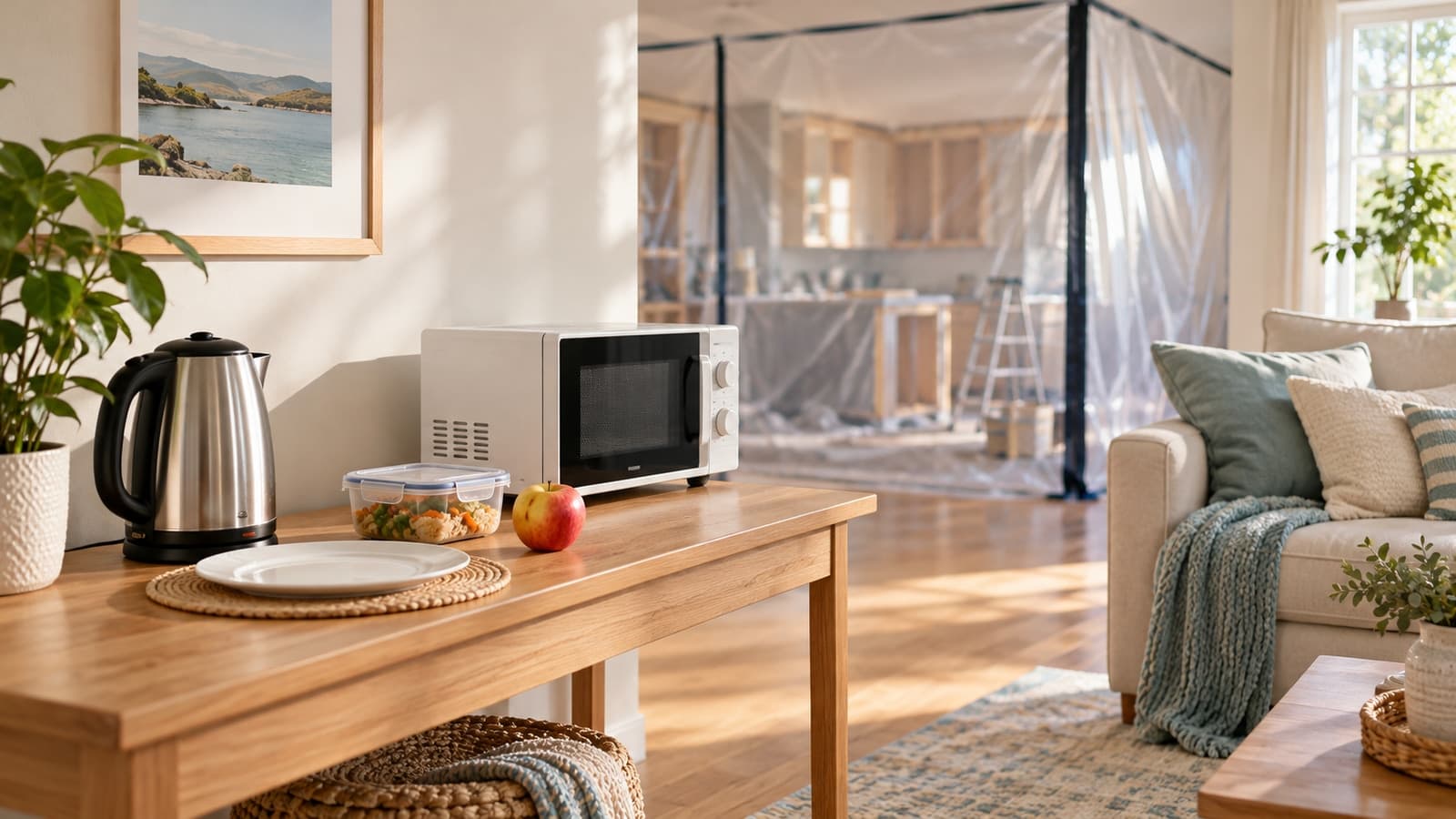
The cabinets are gone, the sink is disconnected and the microwave is sitting on a table in the living room. Your kitchen renovation may be exciting, but tonight’s dinner still needs somewhere to happen.
Choose the smallest setup that works. For a few weeks, a clean station, a short shopping list and an honest assessment of your equipment can be more helpful than trying to recreate your entire kitchen.
Find a clean place to work
Pick a stable surface away from the construction area and dust. Keep food covered and utensils in a clean container. Ask the people doing the work which areas and outlets are available, and avoid setting up where workers need to move tools or materials.
Next, locate safe water and a way to wash hands, dishes and food. You might use a bathroom sink for handwashing and arrange another practical place for dishes, depending on the layout of your home. If the normal water supply is interrupted or its safety is uncertain, follow local guidance and use a safe source.
Make sure any appliance is suitable for the space, connected and used according to its instructions. A fuel-burning camping stove is not an indoor substitute for your range. If you don’t have a safe way to heat food, build meals that don’t need it.
Give the refrigerator a plan
If your refrigerator is still working, keep it at 40°F or below and make sure the door can open fully. If it has been moved to another room, decide where you’ll prepare food before buying ingredients that need several trips through a construction zone.
Without reliable refrigeration, choose foods that can be stored safely at room temperature until opened. Whole fruit, suitable crackers, unopened bean pouches and certain nut or seed butters are examples. Read the package for storage after opening, and buy amounts you can use safely.
A cooler can be a short-term option when supplied with enough ice or frozen packs. Check the temperature rather than assuming it stayed cold. When you cannot tell whether a perishable item has been stored safely, don’t taste it to test it.
Rotate a few meals instead of starting over daily
A microwave, if safely available, opens up options such as a warmed rice pouch with beans and vegetables. With no cooking appliance, you might assemble a wrap with shelf-stable ingredients and whole fruit. If you have a working refrigerator, a yogurt bowl or a prepared salad can add variety.
Think in combinations rather than recipes with lots of steps. Pick a food you enjoy, add something with protein if it suits your needs, and include produce when practical. Portion the meal in a way that feels comfortable; if your appetite has changed on a GLP-1, separate components can let you decide what you want in the moment.
Takeout can fill a gap too. Look for meals that provide leftovers only if you have a safe place to refrigerate them promptly. A renovation is a temporary change in circumstances, not a test of how many meals you can make from scratch.
Reduce the daily friction
Keep a small basket with a can opener, utensils, napkins and a washable container. Put your usual water bottle somewhere easy to refill. Ask household members to return shared tools to the basket so the only clean spoon doesn’t disappear into a moving box.
If ongoing nausea or another symptom makes it hard to eat or drink, bring it up with your care team. A kitchen workaround can help with logistics, but it can’t answer every health question.
For more combinations, see our low-cook meal ideas. You can make the temporary setup simpler than the kitchen you’re waiting for.