










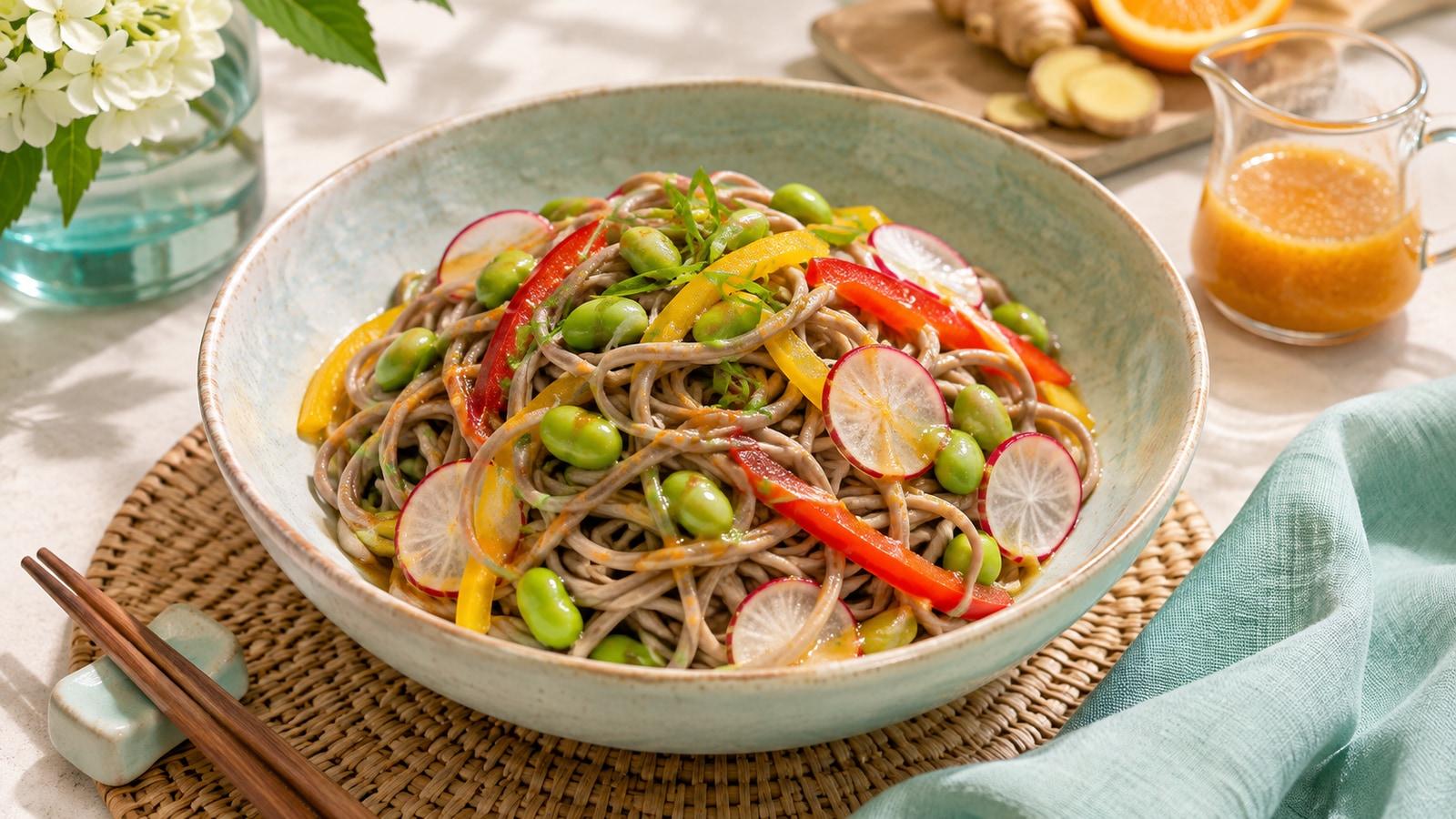
Soba has a nutty flavor that makes a good starting point for a lunch you can pack ahead. Here, the noodles meet edamame, thinly sliced bell pepper, radishes, and a bright orange-ginger dressing. It's more tangy than rich, with plenty of crunch if you want it.
The important bit is treating the ingredients separately at first. Soba can turn clumpy if it sits wet, and frozen edamame may need cooking. Once both are prepared and chilled, putting lunch together is easy.
What you'll need
Makes: about 3 servings
Prep: about 20 minutes
Cook: follow the noodle and edamame packages; allow time to chill
- 6 ounces dry soba noodles
- 1½ cups frozen shelled edamame
- 1 red or yellow bell pepper, thinly sliced
- 4 radishes, thinly sliced
- 2 tablespoons orange juice
- 1 tablespoon rice vinegar
- 1 teaspoon grated fresh ginger, or less to taste
- 1 teaspoon neutral oil
- 1 teaspoon lower-sodium soy sauce, optional
- 1–2 tablespoons water, as needed
- Sliced scallions or chopped mint, optional
You can use a little lime juice in place of some vinegar for a sharper dressing. Keep the dressing modest at first; it's easier to add another spoonful than to take it out.
Cook the noodles and beans
- Wash your hands. Rinse the pepper, radishes, and any fresh herbs under running water. Cut the vegetables into thin slices and refrigerate while you work.
- Cook the soba as directed on its package. Drain it, then rinse if the package instructs. Spread the noodles in a shallow container and refrigerate promptly.
- Prepare the edamame according to its package directions. Drain if needed, place in a separate shallow container, and refrigerate promptly.
- Whisk the orange juice, vinegar, ginger, oil, and optional soy sauce. Add water if you'd like a gentler flavor. Refrigerate the dressing if preparing it ahead.
- When the noodles and edamame are cold, separate the noodles with clean utensils. Toss the noodles and edamame with the pepper, radishes, and a little dressing. Add more dressing to taste and finish with scallions or mint.
For lunches later in the week, keep the dressing separate until serving. Give it a shake first, since the oil and juice will separate as they sit.
Choosing soba without guessing
Soba noodles aren't all the same. Some are made entirely from buckwheat; many others contain a mixture of buckwheat and wheat. The package tells you what you're buying and how long that particular noodle needs to cook.
Buckwheat itself doesn't contain gluten, despite its name. Wheat does, and cross-contact can matter for someone with celiac disease. If you need a gluten-free meal, choose a suitable labeled noodle and check every other ingredient, including any soy sauce. Edamame is soy, so this recipe needs a different protein and sauce for someone with a soy allergy.
Thin noodles can go from pleasantly springy to very soft quickly. Set a timer for the package's earliest suggested time, then check a strand. Don't leave cooked noodles in the warm pot while you finish everything else; drain and cool them promptly.
Make the ginger dressing your own
Fresh ginger can be lively. If you're cooking for someone who prefers a mild flavor, start with half the amount and serve the rest separately. Orange juice rounds out the vinegar, while the optional soy sauce adds a savory note.
Taste the dressing with a clean spoon. Too sharp? Add a little water or another splash of orange juice. Too mild? Add a small amount of vinegar. Different oranges and vinegars taste different, so a fixed ratio won't suit every kitchen.
The dressing is meant to coat rather than pool at the bottom of the container. Chilled noodles can stick together; gently loosen them with a fork and a spoonful of water before tossing. You can also cut a serving of noodles with kitchen scissors if shorter strands are easier to eat.
Crunchy, softer, or somewhere between
Thin radish slices bring a peppery bite. If that flavor isn't for you, use less or leave them out and add more bell pepper. For a softer meal, briefly cook the pepper, then cool it promptly before adding it to the chilled noodles.
Edamame adds plant protein, and soba makes the salad substantial enough for lunch. For a lighter first bowl, save some noodles and edamame in the refrigerator and add them later if you want more. Keep the dressing separate until serving.
Serve the salad with extra fruit or another side if you'd like a larger meal. For a shared lunch, let everyone add their own herbs and dressing so one bowl doesn't have to suit every preference.
Packing it for later
Keep the cooked noodles, edamame, and assembled salad cold. Refrigerate perishable food within two hours, or within one hour when it's been exposed to temperatures above 90°F. When taking lunch away from home, an insulated bag with ice packs helps keep it cold until you're ready to eat.
Use refrigerated leftovers within three to four days, counting from when the oldest cooked ingredient was prepared. If you'd rather eat them warm, reheat to 165°F and add any fresh herbs afterward.
The appeal here is the contrast: nutty noodles, soft beans, crisp vegetables, and a dressing that tastes bright rather than heavy. Adjust the texture and ginger to make the bowl work for you.