










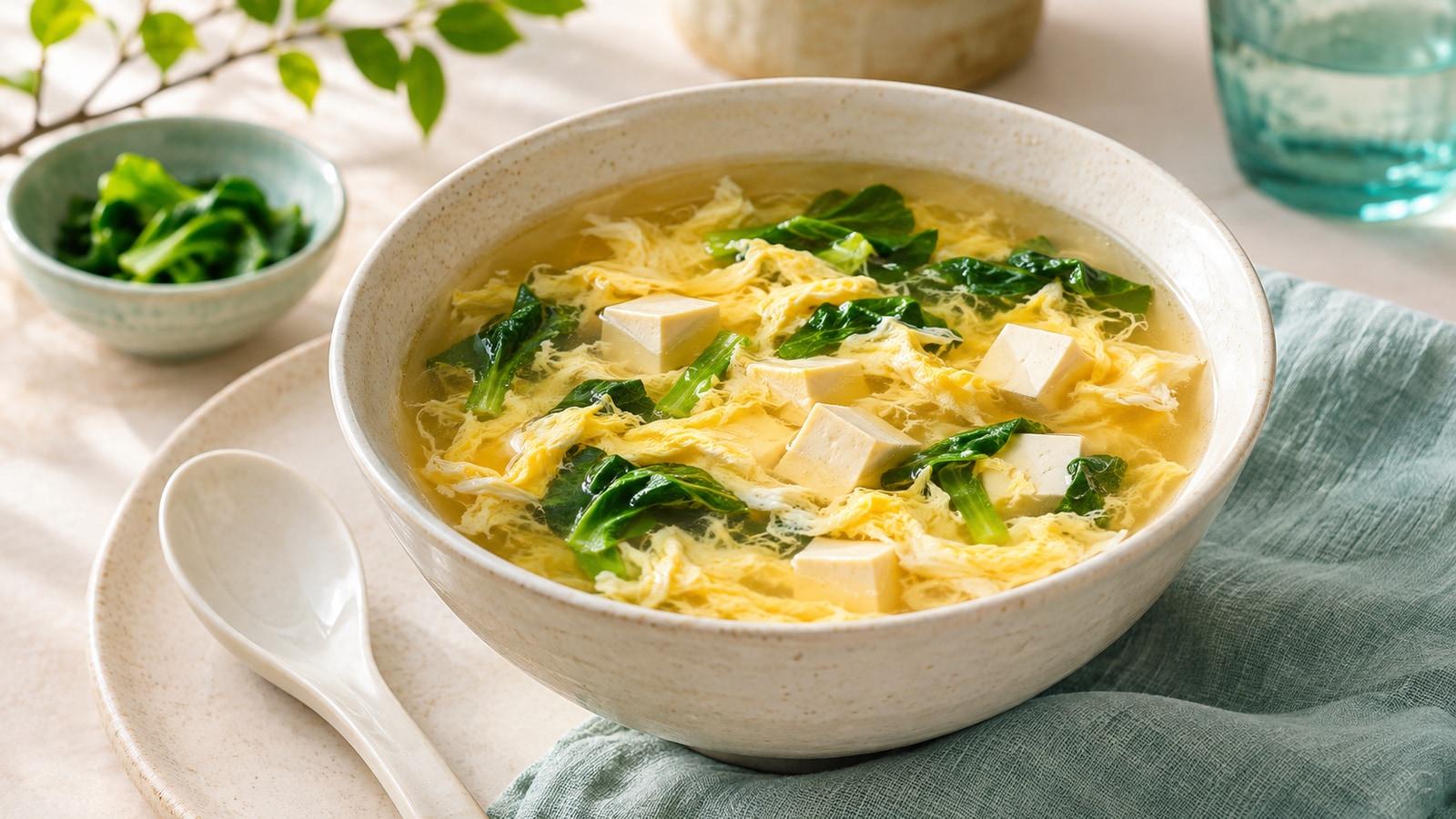
Egg drop soup is a good example of how a few ingredients can create a comforting bowl. Beaten egg forms soft ribbons in hot broth; tofu and greens add texture without requiring a long simmer.
This version uses a simple vegetable or chicken broth and a small amount of ginger. The egg needs to cook fully, so use a thermometer to check the finished soup rather than relying only on how the ribbons look.
Ingredients
Makes: about 3 servings
Prep: about 10 minutes
Cook: about 15 minutes
- 4 cups lower-sodium vegetable or chicken broth
- 8 ounces firm or silken tofu, cut into small cubes
- 2 cups chopped spinach or another tender green
- 2 large eggs
- 1 teaspoon grated fresh ginger, optional
- 1 teaspoon lower-sodium soy sauce, optional
- 1 teaspoon cornstarch mixed with 1 tablespoon cold water, optional
- Sliced green onion, optional
Tofu and many soy sauces contain soy. Some soy sauces also contain wheat. Check labels and choose ingredients that fit your needs. If you have an egg allergy, use another soup recipe rather than trying to remove the egg after cooking.
Make the soup
- Wash your hands. Rinse the greens, ginger, and green onion under running water before cutting.
- Bring the broth and optional ginger to a simmer. Add the tofu and greens and cook until the greens are tender and the tofu is heated according to its package directions.
- If using the cornstarch mixture, stir it again and add it to the simmering broth. Cook briefly while stirring until the broth thickens slightly.
- Beat the eggs in a clean bowl. While gently stirring the hot broth, pour the eggs in a thin stream. Continue cooking until the egg is fully set and the soup reaches at least 160°F throughout, checked with a food thermometer.
- Add the optional soy sauce and green onion. Serve promptly.
Wash your hands, bowl, fork, and counter after they touch raw egg. Don’t use the bowl that held raw egg for the finished soup unless it has been washed with hot, soapy water.
Making ribbons instead of clumps
The pace of the pour changes the shape of the egg. A thin stream into gently moving broth creates finer ribbons; a faster pour can make larger pieces. Both can be enjoyable. The aim is to cook the egg fully, not to achieve a particular appearance.
If the broth is swirling rapidly, the egg may break into very small pieces. Stir more gently for broader ribbons. If you prefer a thicker soup, use the optional cornstarch mixture, but add it gradually; a little goes a long way.
The thermometer is useful because appearance alone can be misleading. Stir the soup and check the temperature in more than one place, making sure the egg is cooked through. If you’re using a pasteurized egg product, follow its package instructions as well.
Choose the tofu and greens
Silken tofu creates a soft, delicate bowl and can break apart if stirred vigorously. Firm tofu holds its shape more readily. Choose the texture you like and follow the package’s storage and preparation directions. Once opened, unused tofu belongs in the refrigerator according to its label.
Spinach cooks quickly. Bok choy or another green may have thicker stems that need a little longer than the leaves. Cut stems small and add them first if needed. Frozen greens should be cooked according to their package instructions before serving.
Egg and tofu both contribute protein, but exact amounts depend on the products and portion. Add rice, toast, or another side if you want a more substantial meal. If saving cooked rice, cool and refrigerate it within one hour, use it within 24 hours, and reheat it only once. A small bowl can also be an accompaniment to lunch or dinner.
Flavor without a lot of fuss
Ginger is optional and can be strong, so begin with a small amount. Soy sauce adds savoriness and salt; taste the broth before adding more. A few drops of sesame oil or a little chopped cilantro can change the finish, provided those ingredients fit any allergies at the table.
If your appetite is smaller, ladle a modest bowl and keep the rest safely. A soft soup may be appealing on some days, but it isn’t a treatment for medication side effects. Contact your care team if persistent nausea makes eating or drinking difficult.
Save and reheat
Divide leftovers into shallow containers and refrigerate within two hours, or within one hour if exposed to temperatures above 90°F. Keep the refrigerator at 40°F or below and use the soup within three to four days, accounting for the age of any ingredients prepared earlier.
Bring leftover soup to a rolling boil when reheating, stirring gently so it heats evenly. The egg ribbons and tofu may become softer after storage, but the flavor can still work well. Add fresh green onion after reheating.
Keep the first pot simple and adjust the texture in your own bowl. Fine ribbons, larger pieces of egg, soft tofu, or extra greens are all choices you can make without changing the basic method.