










You have seven minutes before dinner is ready. That’s not enough time to drive to the gym, but it might be enough for a walk around the block or a little movement in the living room.
People sometimes call these brief sessions “exercise snacks.” The name is catchy, but the idea is simple: use a small window for an activity that fits. A short bout of movement still counts. It doesn’t have to be a miniature version of someone else’s intense workout.
What counts as a short bout?
It could be a walk to the end of the street and back, a few minutes of dancing at home, or a short ride on a stationary bike. Depending on your ability and the activity, it may feel easy or more demanding. Choose something appropriate for you and give yourself space to stop.
Physical activity guidance recognizes that moderate or more vigorous activity can add up across bouts of any length. The intensity matters when comparing activity with those guidelines: standing up or moving gently can still be useful, but it may not be the same as a moderate aerobic session.
You don’t have to calculate the intensity of every minute. The practical point is that an activity doesn’t become meaningless because your calendar gave it a short slot.
Match the activity to the opening
Start with a time that already exists. Perhaps you have a little space after dropping someone off, before a shower or while a load of laundry runs. Choose one possible moment rather than trying to fill every gap in the day.
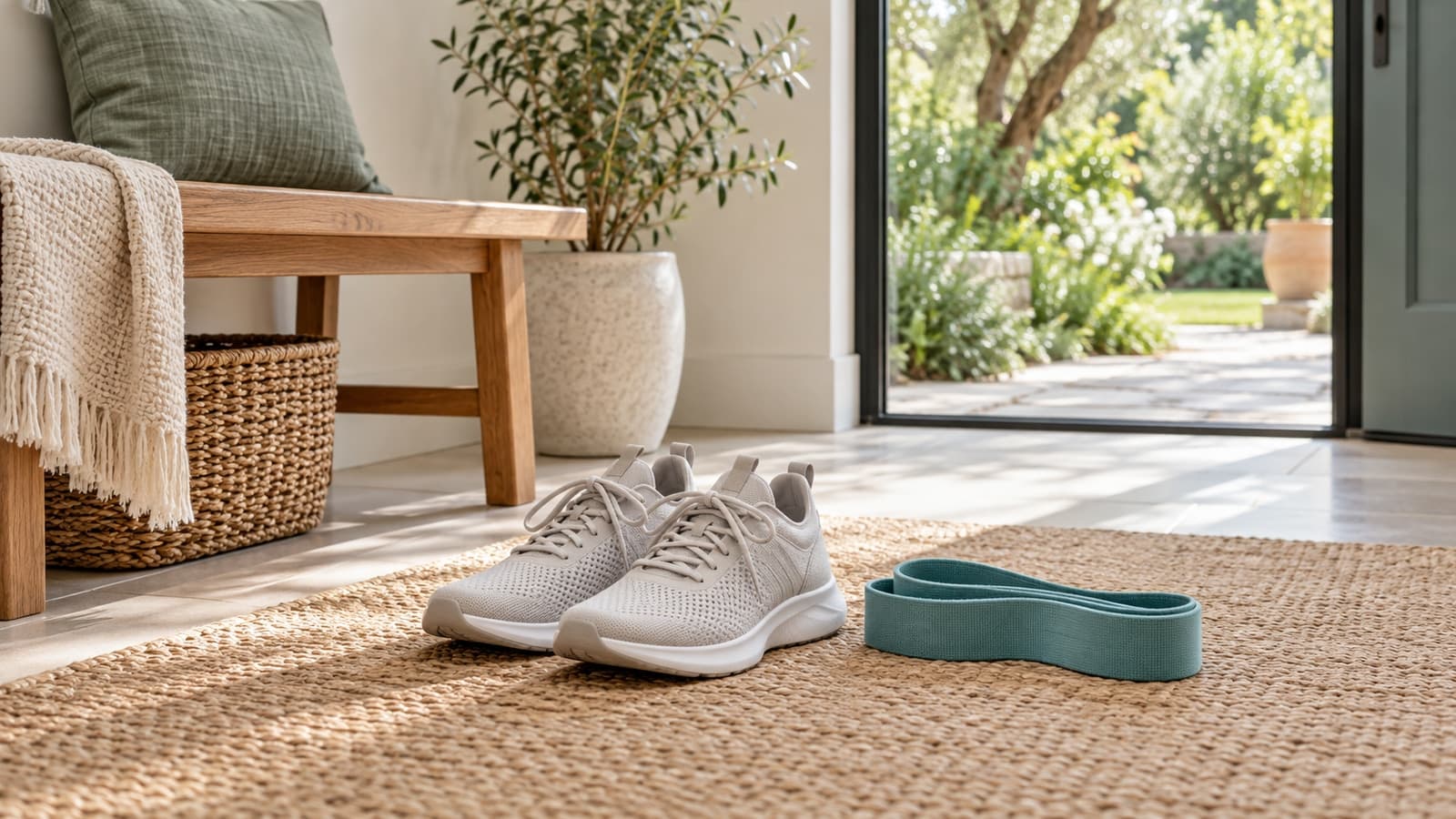
Keep the option close by. Comfortable shoes near the door or a cleared space at home can make the decision easier. If you’re away from home, find a route or room you can use safely and check that you can return when needed.
You might choose music for a few minutes of gentle dancing on one day and a walk on another. A short strength session can also be part of a broader routine if you know movements that suit you. Allow enough time to move with control rather than rushing through repetitions.
If a busy workday is your main challenge, our movement breaks guide has ideas for transitions between tasks. Your short activity can happen outside work hours too.
Build a week, not a streak
Try one short session and notice what happens next. Did the timing work? Did the movement feel comfortable? Was it easy to stop and return to what you were doing? Those answers are more useful than whether a watch celebrated the session.
If it fits, repeat it on another day. You can gradually add time or another opportunity, but you don’t need to increase the pace, duration and frequency all at once. On a crowded day, keeping the same small routine may be enough.
Short sessions can sit alongside longer walks, strength training or other activity you enjoy. They don’t have to replace those activities, and missing one is not something to make up with a harder workout.
Leave room for how you feel
Use a clear surface and choose a version that fits your mobility and health. If you have ongoing pain, an injury or questions about a new activity, a clinician or physical therapist can help you choose an appropriate starting point.
If GLP-1 symptoms make you dizzy, leave you vomiting or make drinking difficult, contact your care team and deal with that first. Stop for pain, faintness or unusual breathing trouble. If you notice new or unexplained chest pain or other possible heart attack signs, call 911. Seek emergency help for other severe symptoms too.
A useful movement break should fit the day you’re actually having. Sometimes that’s a few minutes outside; sometimes it’s rest and a fresh start tomorrow.