










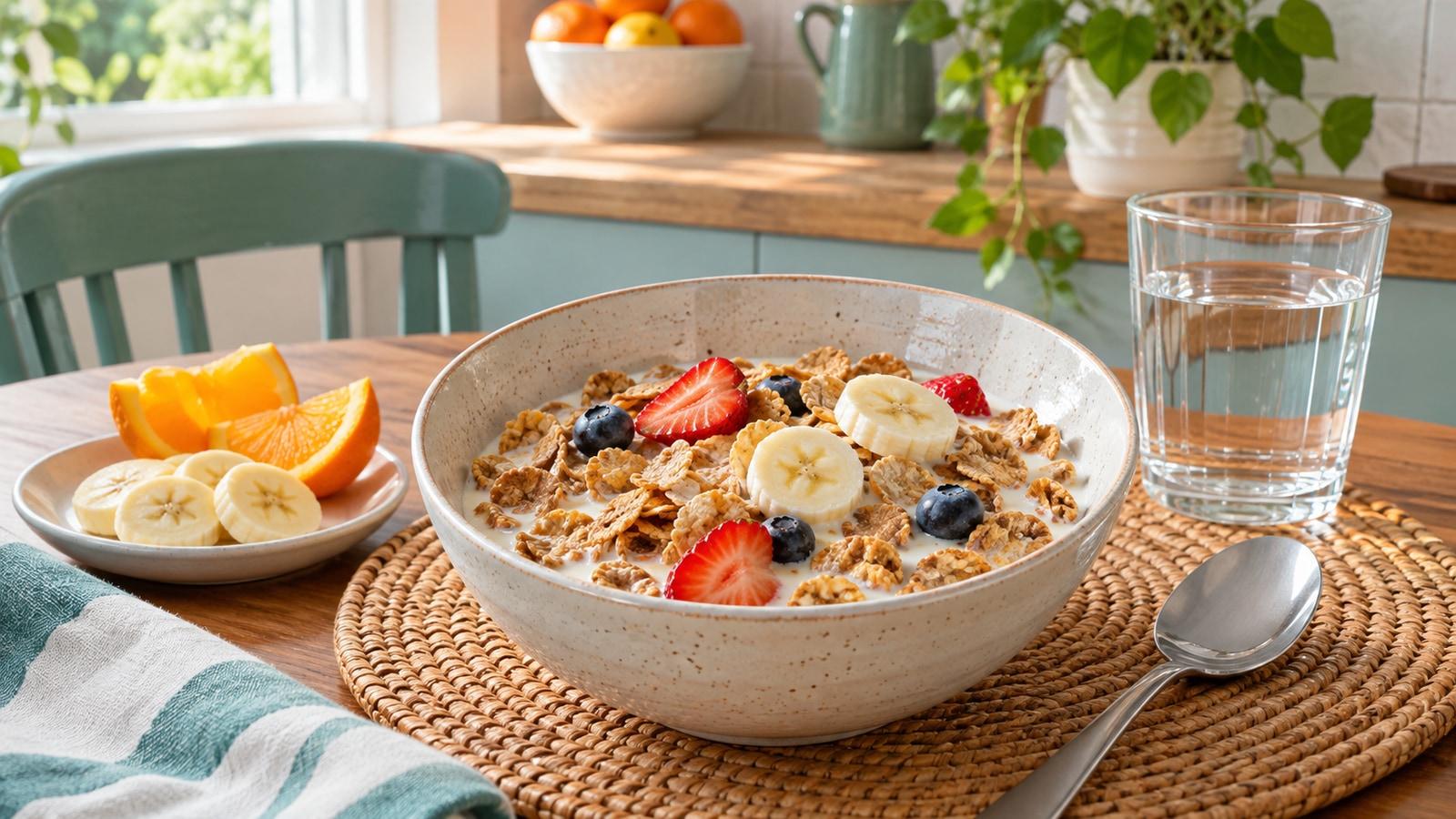
Some mornings, cereal is exactly the breakfast you have time to make. You pour it into a bowl, add milk or another topping, and get on with the day. The challenge is choosing a box that tastes good and keeps breakfast useful for your schedule.
You don't need to find a perfect cereal or eliminate your favorite. A quick look at the label—and a thought about what you'll eat alongside it—can help you choose a bowl that works for you.
Begin with the cereal you enjoy
Do you like crunchy flakes, softer cereal, or something you can eat dry on the way to work? Would you actually use a large box before it goes stale? A cereal with a beautiful label isn't much help if it stays in the pantry untouched.
If you already have a favorite, keep it in the comparison. You might pair it with yogurt, milk, fruit, or nuts rather than switching to something you dislike. Another option is mixing two cereals for a taste and texture you enjoy. There is room for preference in a practical breakfast.
The rest of the bowl matters, too. Cereal is rarely the only thing in it. Milk, fortified soy beverage, yogurt, fruit, seeds, or nuts can change the meal's texture and nutrients. Choose options that fit your allergies, medical needs, and appetite.
Check the serving size first
Before comparing numbers on two boxes, look at the amount each label calls a serving. One might list three-quarters of a cup; another might list a full cup. The cereal pieces and their weight can differ, too, so equal-looking bowls aren't always equal amounts.
Imagine one box lists 4 grams of fiber per cup and another lists 3 grams per half cup. Those fictional labels describe different serving amounts. If you normally eat a cup, you'd need to account for that when comparing them. The serving on the label is a reference, not an instruction that everyone must eat exactly that amount.
If you're curious about your usual portion, pour a normal bowl once and compare it with the label's measure. It's information, not a test. A smaller appetite may call for a smaller bowl; a busy morning or a later lunch may call for more. The aim is a breakfast that is comfortable and adequate for you.
Look at grains and fiber
If you'd like a whole-grain cereal, read the ingredient list for names such as whole oats or whole wheat. The word “wheat,” a brown color, or a picture of grain on the front doesn't necessarily tell you how much of the grain is whole.
The Nutrition Facts label lists dietary fiber per serving. Compare the amount in the portion you're likely to use, not just a front-of-box claim. You can also get fiber from foods alongside cereal, including fruit and nuts if they fit your needs.
If you're increasing fiber, a gradual change may be more comfortable for your digestion. A very high-fiber cereal isn't automatically the best choice for every person. If you have a digestive condition or a prescribed eating plan, ask your care team what applies to you.
Total sugar and added sugar aren't identical
The label lists total sugars and, underneath, added sugars. Total sugars can include naturally occurring sugars as well as added sugars. The added-sugars line helps you compare products without trying to infer everything from a name like “honey” or “fruit.”
You can compare two cereals in a similar serving amount and choose the one that meets your preferences. If a sweet cereal is your favorite, you might have it with a less-sweet yogurt or mix it with another cereal. You don't have to turn breakfast into a contest to find the lowest possible number.
Also check sodium and ingredients if a clinician has asked you to pay attention to them. Some cereals marketed as healthy can still vary considerably in those details.
Give the bowl some staying power
If cereal alone leaves you hungry before lunch, experiment with what you add or serve beside it. Try milk or a protein-containing alternative, yogurt, a handful of nuts, or an egg if those foods work for you. Fruit can add flavor and variety. You might prefer toast or another food alongside the bowl instead.
There isn't one required combination. The useful question is how the breakfast feels over your morning and whether it fits the rest of your day. If you have a small appetite while taking a GLP-1 medicine, you may prefer a modest bowl with a topping you tolerate, then another snack later. Persistent difficulty eating enough deserves a conversation with your care team.
For food allergies or gluten-related needs, read the package each time. Ingredients and manufacturing information can differ across brands and varieties. Ask the manufacturer or your clinician when you need more detail.
Make the next shopping trip easier
Compare the price per ounce as well as the price per box. A larger package may cost less by weight but isn't useful if it goes stale before you finish it. Keep cereal closed and follow the package's storage directions.
You might leave the store with the cereal you've always liked, a new whole-grain option, or one of each. Breakfast doesn't need a perfect score. It needs to be something you'll enjoy and can fit into the morning you actually have.