










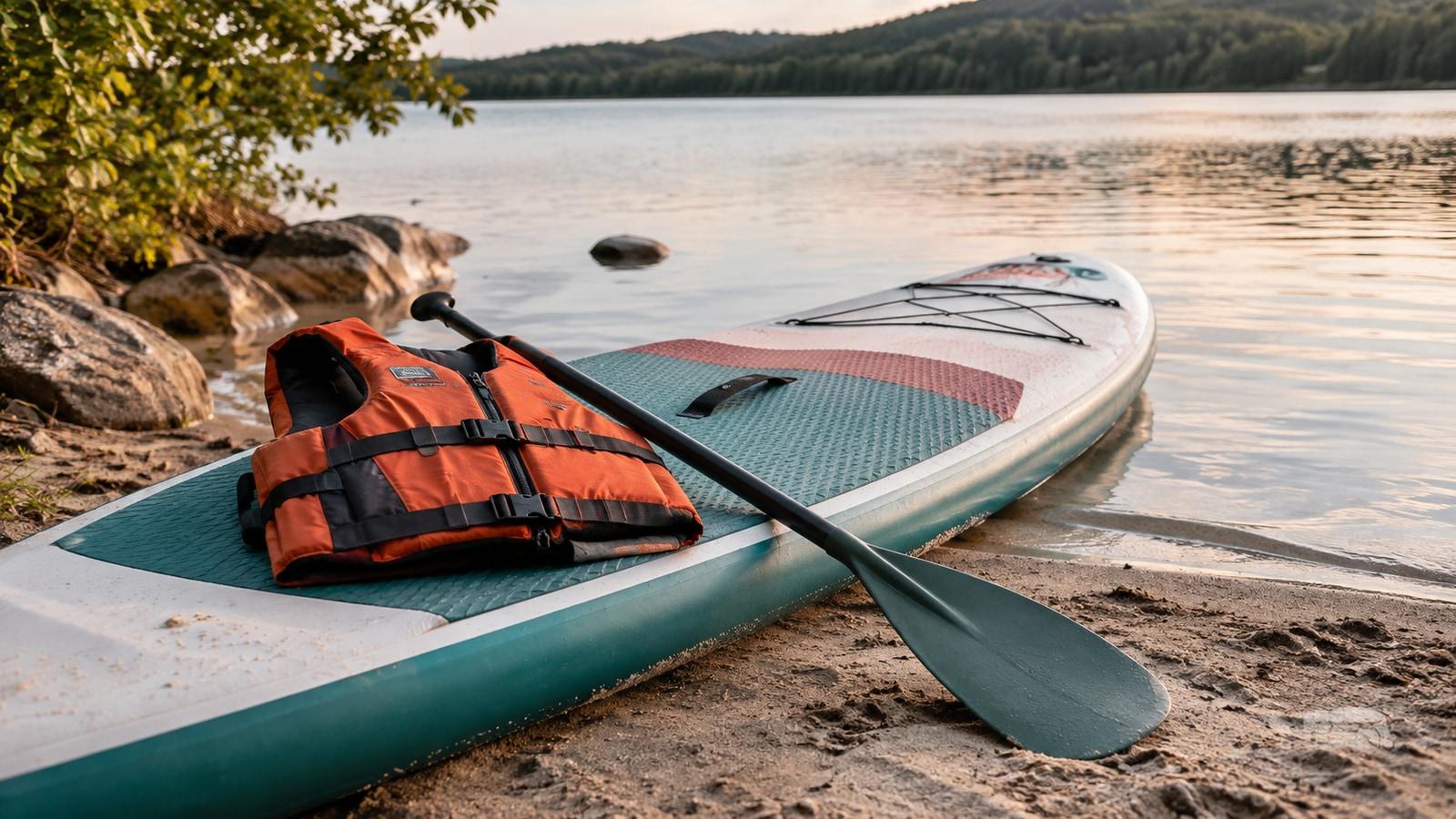
From the shore, paddleboarding can look wonderfully calm: a board, a paddle, and an open stretch of water. Once you're standing on the board for the first time, you may discover that the calm part takes a little practice. That's normal. Your first outing can be about learning the equipment and enjoying the water, with no distance goal required.
A beginner lesson with a reputable local outfitter is a good place to start. You'll have someone to help you choose equipment, understand the conditions, and practice what to do if you fall in.
Choose a place that suits a first lesson
Ask the instructor where beginners usually start and what conditions they consider suitable. A sheltered area with relatively calm water, a straightforward launch, and access to shore is generally a more manageable learning environment than an exposed, busy stretch of water.
Check the forecast before leaving and again near the time you launch. Wind, waves, currents, boat traffic, and water temperature all matter. A sunny day on land does not guarantee easy conditions on the water. If the wind picks up or a storm is approaching, be willing to postpone. The board will be there another day.
Tell someone where you're going and when you expect to return, and consider going with a group or instructor rather than alone. Ask how the group communicates on the water and what the plan is if someone needs help.
Wear a life jacket that fits
Wear a properly fitted life jacket appropriate for the activity and your size. Ask the outfitter to help you check the fit and show you how to use the equipment. A life jacket is useful only if you know how it works and have it on when you need it.
Dress for the water temperature, not just the air temperature. Cold water can affect your ability to move and breathe even on a warm day. Your instructor can explain what clothing is appropriate for the local conditions.
Ask about a board leash too, including when and how to use the type provided. The right setup depends on the water and conditions; moving water and obstacles can present different risks. Don't improvise a leash arrangement without local instruction.
Get comfortable before trying to stand
On land, look over the board and paddle with your instructor. Ask how to hold the paddle, where to position yourself, and how to launch without damaging equipment or getting in someone else's way. Let them know about any movement, balance, or access needs so they can help you choose a suitable setup.
On the water, many beginners start kneeling or seated while they get a feel for the board. There is no prize for standing immediately. Practice a few gentle strokes, turning, and returning toward shore with your instructor's guidance. If standing doesn't feel right for you, ask about remaining seated or trying another accessible paddling option.
When you do try to stand, follow the instructor's demonstration and take your time. The goal is a comfortable, controlled position—not a perfect pose for a photo. If the board feels unsteady, returning to a lower position is a sensible choice.
Practice the part nobody puts in the photo
You may fall in. Ask your instructor where it is safe to practice and how to return to the board or get assistance. The right technique depends on your equipment and ability, so learn it in a supervised setting before heading farther out.
If getting back onto a board independently is difficult, discuss an adapted setup or a different activity with the outfitter before the session. A good lesson makes room for that conversation instead of assuming every participant moves the same way.
Keep valuables secured as the instructor recommends, and ask where drinking water and any needed medicine can be kept. Don't rely on a phone as your only safety plan; water, battery life, and reception can all complicate a call.
Set a goal other than mileage
For a first session, success might be learning to turn, getting comfortable kneeling, or spending an enjoyable stretch of time outdoors. You can take breaks and return to shore when you need to. A short lesson can be worthwhile even if you spend part of it laughing at how wobbly the board feels.
If you're managing a health condition or are unsure whether a new activity is appropriate, talk with your clinician beforehand. Bring up balance concerns, symptoms, or medicines that affect how you feel during activity. An instructor needs to know about practical accommodations, but your medical decisions belong with your care team.
Decide whether you'd like to go again
Afterward, think about what you enjoyed and what you would change. Maybe the location felt crowded, the paddle needed a different adjustment, or the seated position was more comfortable. Tell the outfitter before a future lesson; those details can help them suggest a better fit.
Paddleboarding doesn't need to become a weight-loss challenge or a new identity. It can simply be one way to spend time outside and move in a setting you enjoy. Start with instruction, respect the conditions, and let the first outing be a chance to learn.