










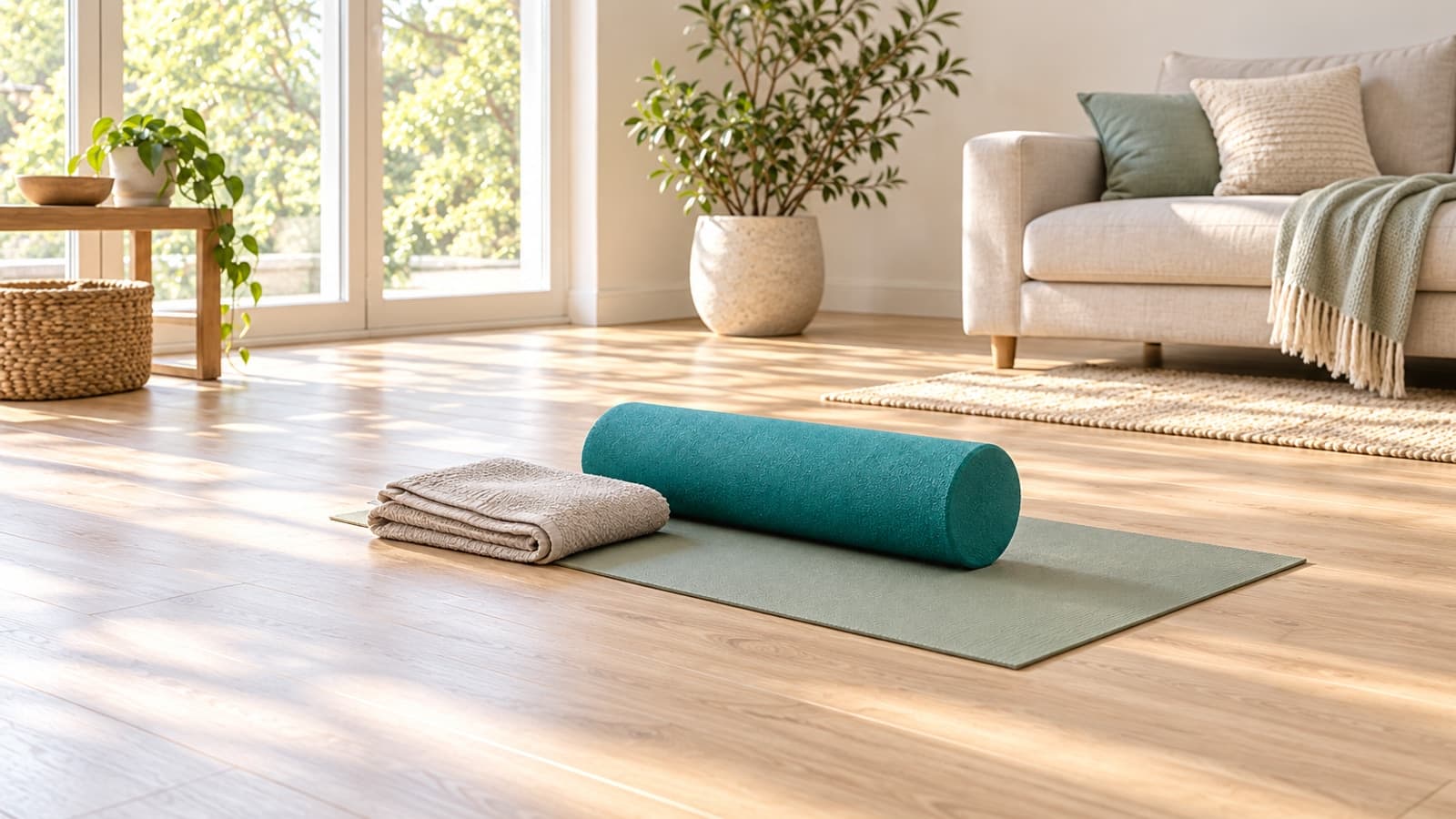
There’s a foam roller in the corner of the gym, and someone always seems to be using it after a workout. You may wonder whether you’re missing an essential recovery step.
Foam rolling is optional equipment. Some people like the sensation and the chance to slow down after exercise. Others find it uncomfortable or simply prefer a walk, a shower or a quiet evening. You can build a sensible routine without buying a roller.
What does rolling involve?
Usually, a person places a muscle area against a firm foam cylinder and moves slowly over it, using their body position to control pressure. The roller comes in different lengths and firmness levels. A coach or physical therapist can help you choose a position that you can enter, hold and leave safely.
You don’t have to put all your body weight on the roller. If you can’t control the pressure or get onto the floor safely, skip that setup and ask about an alternative. Stop if you feel sharp pain, numbness or symptoms that concern you. Don’t roll directly over a new injury or a painful, swollen area while guessing what caused it.
If you have a medical condition, a recent procedure or reduced sensation, ask your clinician whether rolling is suitable before trying it. A general video cannot account for your history.
A closer look at the evidence
Studies look at different workouts, body areas and outcomes, so they don’t all answer the same question. One small trial involved 32 active men who completed a specific hamstring exercise. The group using a roller showed better short-term flexibility on the test used, but did not show an advantage over passive rest on several measures of strength and muscle stiffness.
That is interesting, but it isn’t a guarantee that rolling will make every sore muscle recover faster. The participants, workout and measurements were specific. Another study in active men did not find rolling superior to comparison conditions for the tissue properties the researchers measured.
You may hear confident claims that a roller permanently breaks up scar tissue or “flushes toxins.” Those claims go well beyond what these studies establish. A change in how an area feels after rolling is not the same thing as proof of a structural change inside it.
Decide what you want from it
If you already own a roller and enjoy using it gently, you might include a short session when it fits your day. Notice how you feel during and afterward. There’s no need to keep applying pressure until it becomes painful, and more pressure isn’t a measure of a better recovery session.
If you don’t enjoy it, leave it out. You might prefer an easy walk when appropriate, a warm shower or time away from training. A physical therapist can help when you want to return to a particular activity but discomfort keeps interfering.
Persistent, worsening or unusual pain deserves assessment rather than repeated attempts to roll it away. Severe symptoms or pain after an injury may need more urgent attention. The roller is not a way to diagnose what is happening.
Keep the basics in the picture
Recovery is more than one object. Sleep, eating enough, hydration and a workload that matches your current abilities all belong in the conversation. If GLP-1 side effects make eating or drinking difficult, contact your care team rather than trying to solve low energy with another recovery gadget.
Our guide to soreness and rest can help you think about the next day as well as the workout you just finished. A foam roller can be a useful preference; it doesn’t need to become a requirement.