










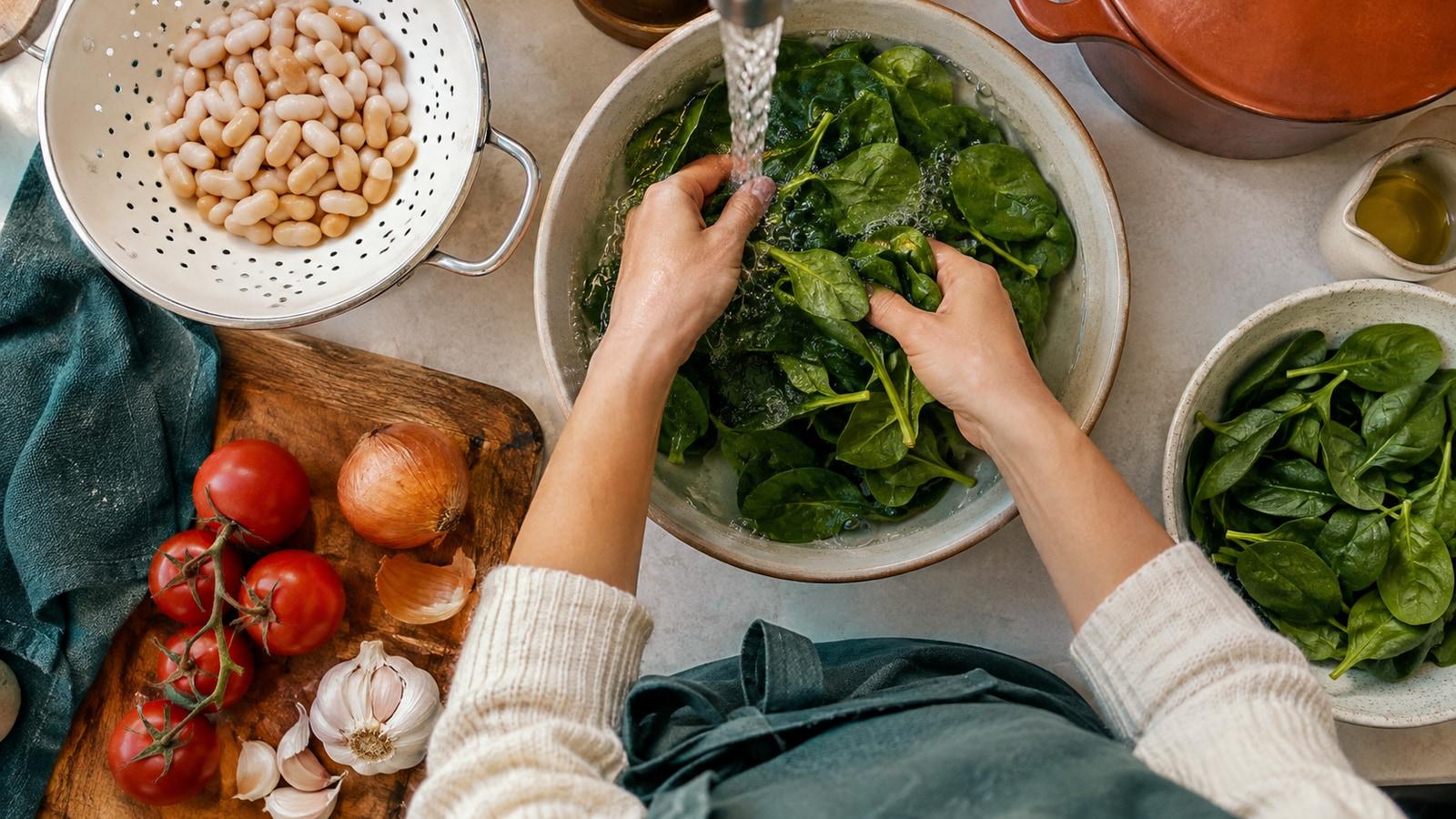
Folate isn't an ingredient most people put on a grocery list. You might, however, already have several foods that contain it: beans in the cabinet, spinach in the refrigerator or an orange in the fruit bowl.
This B vitamin helps your body make DNA and supports cell division. It's worth knowing where it appears in food, especially if your appetite or usual meals have changed. You don't need to build an entire menu around one nutrient, though; variety and your individual health needs matter too.
Folate and folic acid: what's the difference?
“Folate” is a general term for forms of this vitamin. It occurs naturally in many foods. “Folic acid” is a form added to some foods and used in many supplements. You may see either term on a label or in a conversation with your clinician.
Your body handles naturally occurring food folate and added folic acid somewhat differently. That's one reason a nutrition label may use a measurement called dietary folate equivalents. If the label looks confusing, you don't have to convert the numbers yourself; a dietitian or clinician can help you understand what matters for you.
The distinction is useful, but it doesn't make one food automatically better than another. A meal can include naturally occurring folate, an enriched grain, both, or neither.
Look beyond leafy greens
Dark leafy greens are one source, but they aren't the only option. Folate is also found naturally in foods such as asparagus, Brussels sprouts, beans, peas, peanuts and oranges. Enriched breads, pasta, rice and some breakfast cereals may contain added folic acid. Check the individual package for the ingredient and nutrition information.
Think about foods you already enjoy. Black-eyed peas could be part of a favorite family dish. Beans might go into a taco or soup. Spinach can be served cooked if a large salad doesn't appeal. An orange can be eaten on its own or alongside a breakfast you already make.
Fresh isn't the only useful form. Frozen or canned foods may fit your budget and schedule better. Read storage and preparation directions, and choose the versions that work for your health needs. If beans are unfamiliar or tend to bother your stomach, a dietitian can help you find a comfortable approach rather than insisting on a particular serving.
Build on a meal you already make
Suppose your usual lunch is a sandwich. You might add a vegetable you like, have a piece of fruit alongside it, or choose an enriched bread that suits the sandwich. If dinner is rice and beans, the beans may contribute naturally occurring folate, and an enriched rice may provide folic acid.
Those examples aren't prescriptions. They show how a nutrient can show up in ordinary combinations without a special product or a complicated recipe. The rest of the meal matters too: taste, satisfaction, access, preparation time and your other nutrition needs all count.
If you are eating smaller portions while taking a GLP-1 medicine, choose foods you can tolerate and enjoy. Persistent nausea, vomiting or difficulty eating enough deserves a call to your care team. A dietitian can help you think about a varied intake without turning every bite into a nutrient calculation.
When needs deserve a closer conversation
Folate needs vary across life stages and health circumstances. If you are pregnant, could become pregnant, or are planning a pregnancy, ask your clinician about folic acid and your individual needs. This is a conversation to have early rather than trying to infer a supplement plan from a general article.
Some medical conditions, surgeries or medications can also affect nutrition. Bring your full medication and supplement list to the appointment, including products you buy without a prescription. Your clinician can decide whether testing, a supplement or another step makes sense for you.
Don't assume that more is always better. High amounts of folic acid from supplements or fortified foods can have drawbacks, including masking signs of a vitamin B12 deficiency. Ask before combining several products that contain it.
Read the label in context
A fortified cereal may list folate on the Nutrition Facts panel, and an ingredient list may name folic acid. Start with the serving size: the amount shown is for that listed serving, which might not be the amount you pour into your bowl. You can then compare it with other cereals in a way that makes sense for your breakfast.
A label won't tell you whether the cereal tastes good to you or keeps you satisfied through your morning. You may prefer it with milk or yogurt, fruit, nuts, or something else alongside. A food can contribute a nutrient and still be only one part of a meal.
A useful question for your next visit
If you're concerned about folate because you've been eating less, ask: “Does my current intake or medical history suggest I need any follow-up?” Bring a few examples of what you usually eat. You don't need a perfect food diary to begin.
Folate shows up in many familiar foods. Start with the ones you like, make room for variety where you can, and get individual guidance when your circumstances call for it.