










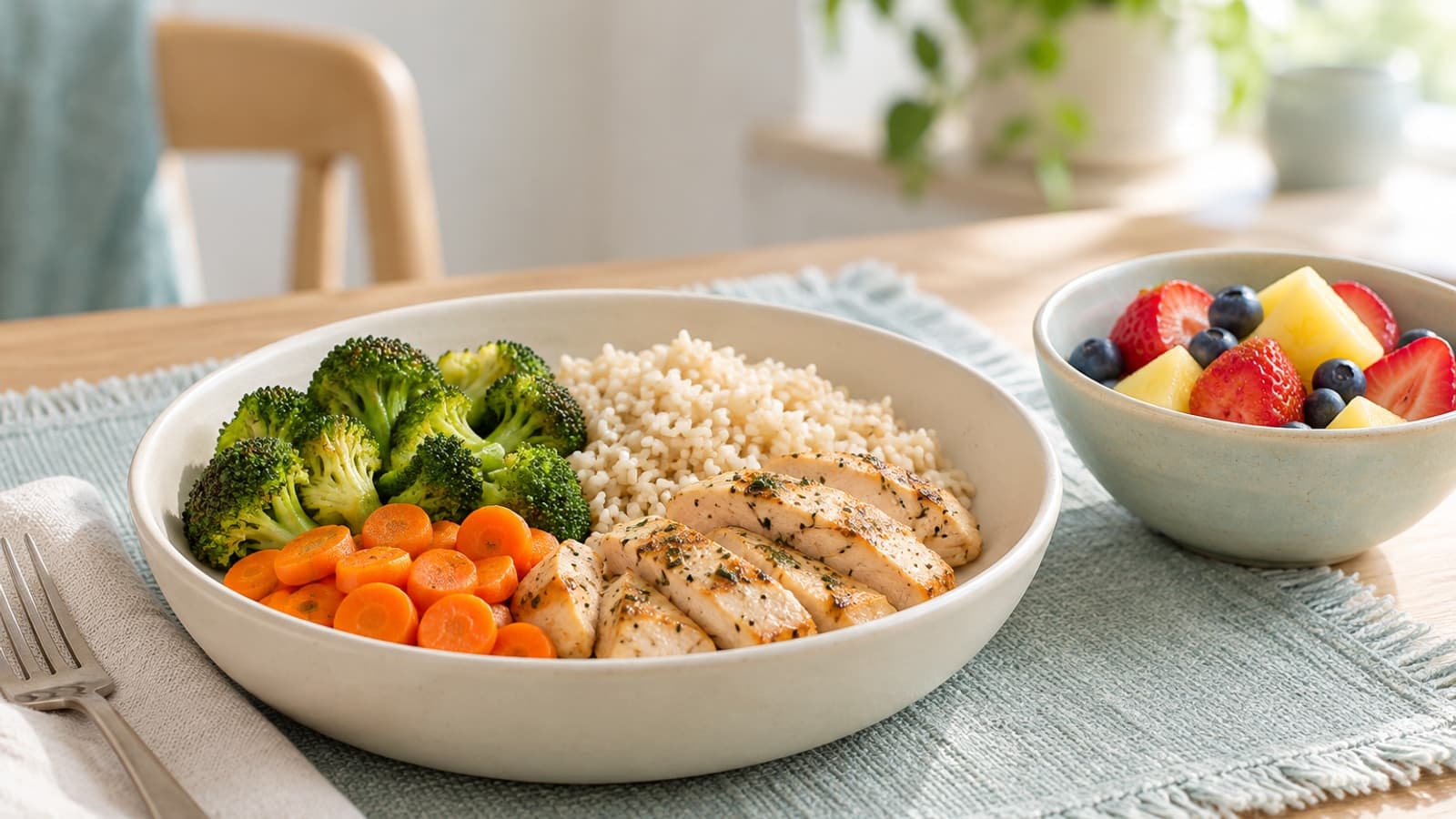
A frozen dinner can make the difference between eating something and looking at the clock at 9 p.m. wondering what happened to the evening. You don’t have to apologize for using one.
Some trays already contain a mix of foods you enjoy. Others may leave you wanting more vegetables, fruit, protein or simply a larger meal. Start with the meal in front of you.
Read a real example
On October 31, 2026, the maker’s online label for a 10-ounce Lean Cuisine orange chicken meal listed chicken, rice and vegetables. For one package, it showed 350 calories, 15 grams of protein, 2 grams of fiber and 780 milligrams of sodium. Its listed allergens included wheat, sesame and soy.
That tells you more than the name on the front: the tray already includes chicken and vegetables, while the sodium and fiber may be details you want to consider alongside the rest of your day. It doesn’t tell you whether the meal is the right size for your appetite.
The retailer’s online nutrition panel we saw differed from the maker’s panel for the same named product. Formulas and listings can change. Read the label on the package you purchase for the information that applies to your meal, and follow any personal guidance you’ve received.
Decide if you want to add anything
If the tray sounds good as it is, eat it as it is. If you’d like more produce, add a piece of fruit or some separately prepared vegetables. A side salad is another option if raw vegetables appeal to you; cooked vegetables may be preferable when you want a softer texture.
If you’re still hungry after a small tray, consider another suitable food: yogurt, beans, a piece of bread or leftover chicken can each serve a different purpose. These aren’t required additions, and their protein and ingredients vary. Choose based on your appetite and what is already in your kitchen.
For someone taking a GLP-1, a smaller meal may feel comfortable some days. On another day, you might want a side or a snack later. The number printed on the box doesn’t prescribe what you personally must eat.
Check more than the front
Look at the serving size and the number of servings in the package. Then consider protein, fiber, sodium and ingredients that matter to you. A meal that meets one person’s needs might not fit someone following different medical advice or managing a food allergy.
Compare meals you would actually enjoy rather than sorting every option into “good” or “bad.” One may have a sauce you like, another may have more vegetables, and a third may fit your budget. A useful freezer meal is one you’ll eat and can prepare safely.
Our food-label guide explains the panel in more detail if you want help comparing two boxes.
Heat it the way the package says
Keep the meal frozen until you’re ready to prepare it. Follow the specific heating and standing directions on your package, since trays and appliances differ. Stir or rotate when instructed; standing time can help the heat distribute.
The orange chicken example instructs a 165°F internal temperature and says not to reheat the tray. Other products may have different instructions. Use a food thermometer as directed, check more than one spot and handle the hot container carefully.
If you save food after cooking, transfer it to an appropriate covered container and refrigerate promptly. Reheat leftovers to 165°F and avoid relying on a warm edge as proof that the center is hot.
Keep a couple of options you like in the freezer. You can decide on a side when the day arrives, rather than turning an easy dinner into another complicated project.