










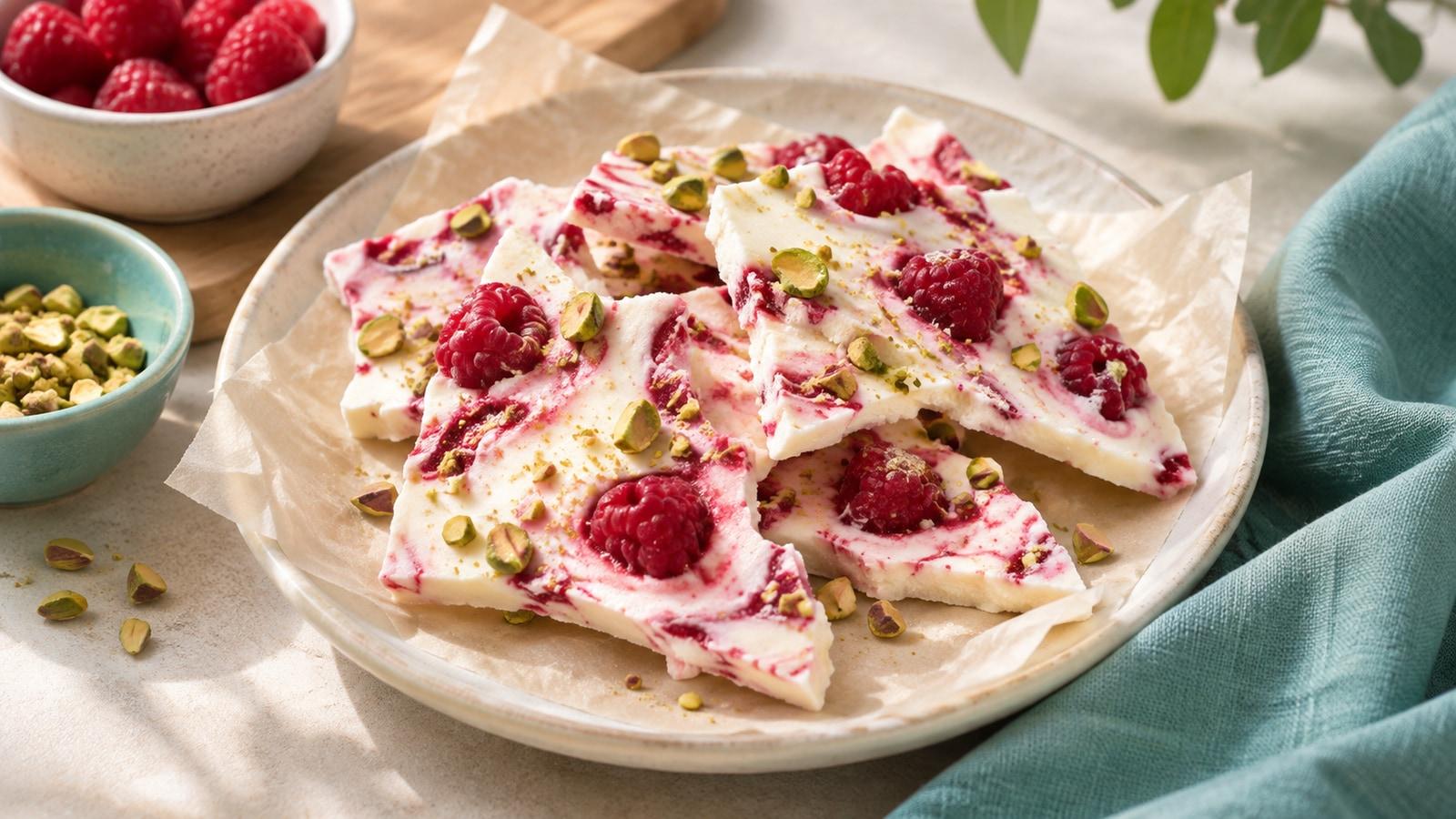
Frozen yogurt bark is a simple snack you can break into pieces and keep in the freezer. Spread yogurt on a lined tray, scatter raspberries and chopped pistachios over it, and freeze until firm. The result is cold and a little tart, with fruit and crunch in each piece.
It’s easier to eat straight from the freezer than after a long trip in a warm bag. Make a small batch first and see what thickness and toppings you like.
Ingredients
Makes: about 8 small pieces, depending on how it breaks
Prep: about 10 minutes
Freeze: about 3–4 hours, or until firm
- 2 cups plain yogurt made from pasteurized milk
- ¾ cup raspberries
- ¼ cup shelled pistachios, roughly chopped
- 1–2 teaspoons honey, optional
- ½ teaspoon vanilla, optional
Thicker yogurt makes a sturdier layer. If yours is very thin, spread it a little more thickly and allow extra freezing time. Taste the yogurt before adding honey; the fruit may provide enough sweetness for you.
Make the bark
- Wash your hands and rinse fresh raspberries under running water. Gently dry them with a clean towel. If using frozen berries, follow the package directions and cool them safely if cooking is required.
- Line a small rimmed tray or freezer-safe dish with parchment. Make sure it fits flat in your freezer before adding the yogurt.
- Stir yogurt with honey and vanilla if using. Spread it on the parchment in an even layer about ¼–½ inch thick.
- Scatter raspberries and chopped pistachios over the yogurt, pressing them lightly into the surface. Freeze until firm, about 3–4 hours or longer depending on thickness.
- Lift the slab from the tray and break it into pieces. Return the pieces to a covered freezer-safe container and keep frozen until serving.
The bark will soften as it warms. Put a few pieces in a bowl and return the rest to the freezer rather than leaving the whole batch on the counter.
Thickness changes the snack
A very thin layer freezes quickly but can break into small shards. A thicker layer takes longer to firm and produces larger, creamier pieces. Aim for an even layer so the center and edges freeze at a similar rate.
Pressing the fruit and nuts into the yogurt helps them stay attached. If the raspberries are large, break them into smaller pieces. Leave a little space between toppings so the bark can break without every piece falling apart.
Frozen yogurt becomes hard. Let a piece sit briefly if it’s too firm to bite, or break it into smaller pieces and eat it with a spoon. Be mindful of the texture for anyone who has difficulty chewing; the pistachios can be omitted or ground finely if appropriate.
Choosing yogurt and fruit
Yogurt contributes protein, and raspberries provide fiber. Plain yogurt lets you decide whether to add sweetener. Flavored varieties can be used, but check the label for added sugar and other ingredients if those matter to you.
Fresh raspberries should be rinsed under running water before use. Frozen fruit is convenient, but follow its package instructions; some products need cooking. If you cook the berries, chill them safely before adding them to the yogurt so they don’t melt the layer.
Blueberries, chopped strawberries, or sliced peaches can make a different version. Cut larger fruit into small pieces so it freezes evenly. Very juicy fruit may release liquid and make the bark icier, which is a texture choice rather than a problem to solve with extra sweetener.
Allergies and alternatives
Pistachios are tree nuts, and yogurt contains milk; both are common allergens. Choose toppings and a yogurt alternative suitable for the person eating, and check labels for cross-contact information. Pumpkin seeds or a sprinkle of oats may work for some households, but they are not automatically safe for every allergy.
If avoiding gluten, choose labeled gluten-free oats and check the other ingredients. A dairy-free yogurt can freeze differently and may provide a different amount of protein, so taste and test a small batch before making more.
Honey is optional. It should not be given to infants under one year old. If sharing with young children, consider both that guidance and whether hard frozen pieces or nuts are appropriate for their chewing ability.
Keep it ready for a snack
Once the bark is firm, break it up and store it in a covered freezer-safe container. Separate layers with parchment if they stick together. Label the container with the date and follow the yogurt product’s guidance for freezing and quality.
This isn’t a good snack to leave in a warm car or on a desk. Keep it frozen until serving, and refrigerate or discard perishable food according to safe time limits if it has thawed. Don’t repeatedly thaw and refreeze pieces that have been left out.
A few pieces can sit alongside fruit or another snack, or stand on their own when you want something cold. The pieces won’t be identical in size, so choose an amount that suits your appetite.
Once you know your preferred thickness, changing the fruit or topping is an easy way to make the next batch feel different.