










You may have seen a food described as “high glycemic” and wondered whether that means you should stop eating it. Then you find a second number called glycemic load, and the answer seems to change.
The two measures ask related but different questions. Glycemic index compares a blood sugar response to a standardized amount of carbohydrate. Glycemic load also takes the carbohydrate in a particular portion into account. Neither number tells you everything about a food or predicts exactly what will happen to your blood sugar.
What glycemic index compares
Researchers measure glycemic index, often shortened to GI, by comparing the blood glucose response to a carbohydrate-containing food with the response to a reference food, often glucose. The portions are chosen to provide a comparable amount of available carbohydrate—commonly 50 grams in testing.
That makes the comparison useful for research, but a test portion isn't necessarily the amount someone would eat at lunch. One food may need a much larger serving than another to provide the same amount of carbohydrate.
GI is a relative measure based on a test. It is not a count of grams of sugar in a serving, and it doesn't tell you whether the rest of a meal is balanced, affordable, or enjoyable.
Glycemic load brings the portion into the picture
Glycemic load, or GL, uses the glycemic index together with the amount of available carbohydrate in a specified portion. The calculation is the food's GI divided by 100, multiplied by the grams of available carbohydrate in that portion.
Here's a made-up example. Suppose a food has a GI of 50 and a portion contains 20 grams of available carbohydrate. Its calculated glycemic load would be 10. A portion containing 40 grams of available carbohydrate, using the same GI, would have a calculated load of 20.
Those figures are just arithmetic for an imaginary food. They are not blood glucose readings, and they don't tell a particular person how much to eat. The example shows why the portion named alongside a glycemic-load number matters.
Why a food can look different on the two scales
A food can have a relatively high glycemic index but a smaller glycemic load in a modest serving if that serving contains comparatively little available carbohydrate. Another food can have a lower index but a larger load when the portion provides more carbohydrate.
That doesn't make one food automatically “safe” and the other “bad.” It means the measures are describing different things. If you see a single number in a chart, check whether it's an index or a load and what portion the load refers to.
You may also find different GI numbers for what sounds like the same food. Variety, preparation, and the way a food was tested can affect the estimate. A number in a table is best treated as a reference, not as a fixed property that predicts every response.
Meals aren't usually eaten in a lab
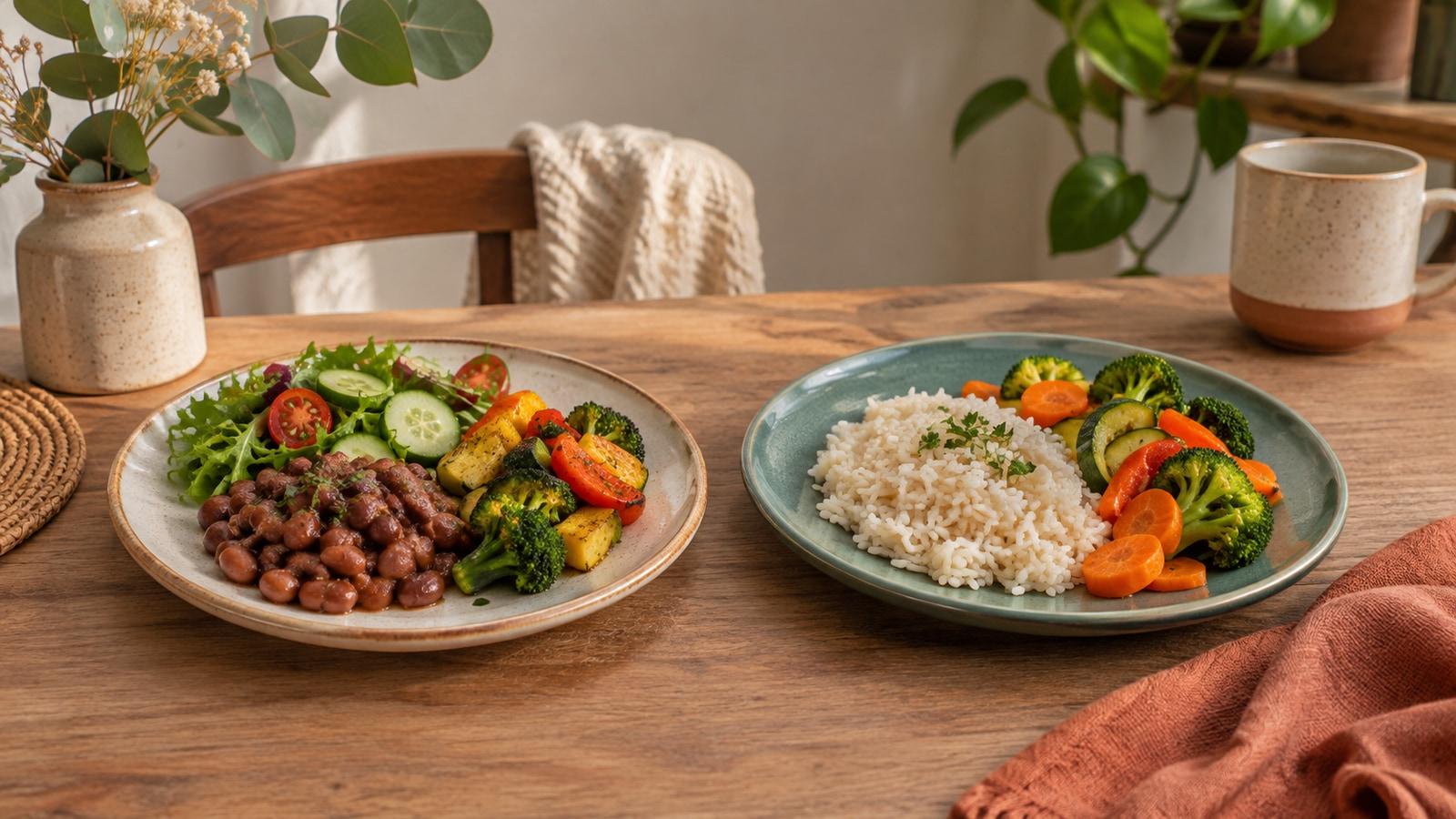
Most of us eat combinations: rice with beans, toast with eggs, or fruit with yogurt. A chart for one food doesn't capture every ingredient in the meal, the amount you eat, or your individual health and medications.
Studies have found variation in glycemic responses between people and between tests. If you monitor glucose, your own readings and the context around them can be useful to discuss with your care team. A chart alone can't replace an individual monitoring or treatment plan.
You don't need to calculate the glycemic load of every lunch to benefit from understanding the concept. It can be enough to recognize why portion size matters and why a dramatic claim about a single food may leave out useful context.
If you're taking a GLP-1
A GLP-1 medicine can affect appetite and digestion, and some products are used as part of diabetes care. If your portions or meal timing have changed, let your clinician or dietitian know—especially if you also use insulin or another medicine that can cause low blood sugar.
Ask whether and how your glucose monitoring plan should fit your current meals. Don't change medication based on a food's GI or GL number. If you're having trouble eating or drinking, that deserves a conversation too.
How to use the information without a new set of food rules
Start with the question you're trying to answer. If you want to understand a packaged food, look at the serving size and total carbohydrate on its label. If you're curious about a GI chart, see how the food and portion were tested. If your goal is managing diabetes, ask your care team how those details fit with your own readings and treatment.
Taste, texture, nutrition, cost, and cultural preferences still belong in the decision. A lower number on a chart doesn't automatically make a meal better for every person, and a higher number doesn't erase the other qualities of a food.
Glycemic index is a standardized comparison; glycemic load adds the amount in a portion. Once you know which question a number is trying to answer, it's easier to use it as information rather than a rule.