










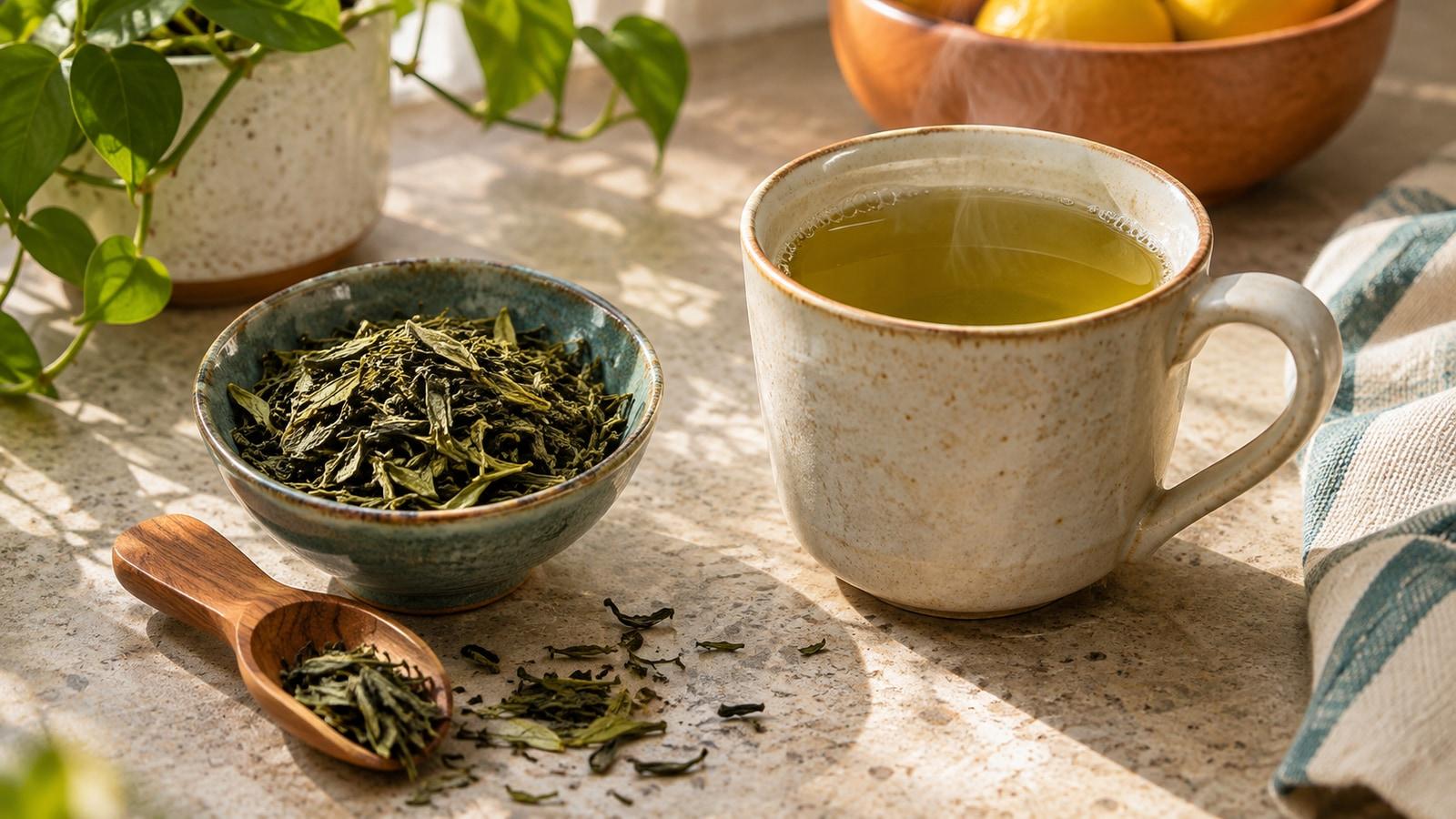
You enjoy a cup of green tea and then notice a bottle of “green tea extract” sold for weight loss. The names sound similar, but a brewed drink and a concentrated supplement aren't necessarily the same experience for your body. They can contain different amounts of compounds and caffeine, and the supplement may include other ingredients.
If you're considering the extract, look beyond the picture of tea leaves on the label. It's worth checking the evidence and talking with a clinician or pharmacist who knows your medicines.
A drink and a capsule are different products
Green tea is made from tea leaves and contains substances called catechins as well as caffeine. A brewed cup can vary in strength depending on the tea and how it's prepared. Bottled drinks may also contain sweeteners, flavorings, or other ingredients.
A supplement may contain a concentrated extract, sometimes combined with caffeine or several other substances. The amount and form can differ widely between products. You can't assume a capsule has the same contents as the cup you make at home simply because both say “green tea.”
That doesn't mean a drink is right for everyone or that you must avoid tea. If caffeine affects your sleep, causes a racing feeling, or conflicts with advice from your clinician, discuss what fits your situation. Decaffeinated and non-caffeinated drinks are options for some people, but check the label if caffeine matters to you.
What about the weight-loss claim?
Some studies have examined green tea or its extracts for weight management. Any average effect found in research has generally been small, and results for one formulation don't establish what every drink or supplement will do. A product that promises dramatic results is making a much bigger claim than the evidence supports.
Don't assume a green tea product works like a GLP-1 medicine because a social post compares the two. A comparison needs a study of the actual products and outcomes, not just a description of an ingredient. If you're prescribed a medicine, discuss treatment changes with your prescriber.
You can drink tea because you like it. It doesn't need to be a fat-burning ritual to earn a place in your day.
Why extract safety needs a separate look
Green tea extract supplements can cause nausea, constipation, abdominal discomfort, or increased blood pressure. Liver injury has also been reported in some people using green tea products, primarily concentrated extracts. It is uncommon, but it is important enough to discuss before taking a product for weight loss.
If you use an extract and develop symptoms such as yellowing of the skin or eyes, dark urine, significant abdominal pain, or persistent nausea, stop taking the extract and seek medical care promptly. Seek emergency care for severe symptoms. Tell the clinician exactly what you have taken and bring the container if possible.
Symptoms can have several causes, so don't try to diagnose a liver problem from a list. The point is to make sure your care team has the information needed to assess you.
Check the whole ingredient list
A supplement marketed as green tea may contain other plant extracts, stimulants, or vitamins. Some ingredients appear under unfamiliar names. A pharmacist can help you review the full label and consider potential interactions with prescription and over-the-counter medicines.
Green tea products can interact with some medicines. If you take a heart or blood-pressure medicine, a blood thinner, or treatment for another condition, ask about your specific product rather than relying on a general compatibility claim.
Bring every supplement you take to that conversation. Two products may contain the same stimulant or ingredient, making the combined amount difficult to judge from the front labels alone.
How does it fit with a GLP-1?
If you're using a GLP-1 medicine and experiencing nausea, constipation, or a smaller appetite, adding a concentrated supplement can make the situation harder to interpret. Tell your prescriber what you're considering and what symptoms you already have.
Ask whether the product has evidence for your goal, what risks or interactions matter for you, and how to report a problem. Don't stop a prescribed medicine or add a weight-loss product based on a testimonial.
For a brewed drink, consider what you enjoy and how it affects your day. A cup earlier in the day may fit someone who notices caffeine affects sleep; another person may prefer a different drink altogether. If you have a fluid restriction or other medical instructions, follow your own plan.
A simple decision checklist
Before buying an extract, ask:
- What exactly is in the product, and how much?
- Has this formulation been studied for the result it promises?
- Could it interact with my medicines or other supplements?
- Who should I contact if I feel unwell?
Green tea as a drink and green tea extract as a supplement deserve separate consideration. Enjoying one doesn't require taking the other, and a concentrated product isn't automatically a better choice for weight care.