










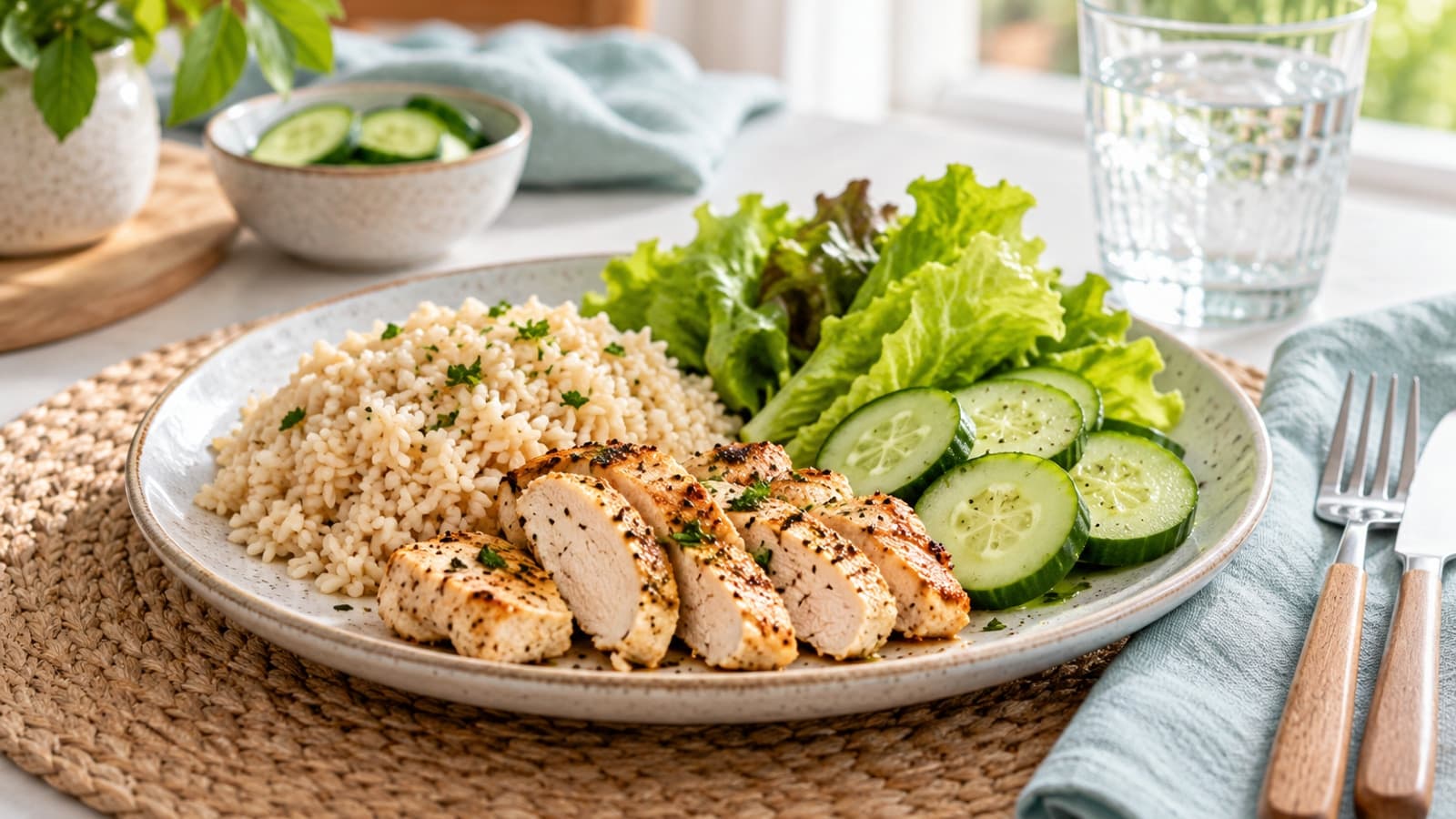
You can like every ingredient on a plate and still be bored by the meal. Maybe everything is soft, every bite tastes the same, or the leftovers don't have the texture you remember.
Texture is an easy place to experiment without buying a cart full of new foods. Choose the contrast you like, then leave the rest.
Pair soft with crisp
Start with something familiar, such as rice, soft noodles or a baked potato. Add cucumber slices, crisp lettuce or another food you enjoy on the side. If crunchy foods aren't comfortable, a cool soft vegetable or fruit may be a better contrast.
You can keep the components separate. Put a topping in a small bowl so it stays crisp until you're ready, or skip it altogether. The aim is to make the meal more appealing to you, not to meet a texture requirement.
Try a different cut as well. Thinly sliced cucumber gives a different bite from a larger chunk; mashed beans feel different from whole ones. A small change in preparation may make a familiar ingredient more interesting.
Play with warm and cool
A warm grain bowl with a cool spoonful of yogurt sauce is one possibility. Soup with a separate piece of toast is another. Or serve warm cooked chicken beside a cool salad if you enjoy both. Keep perishable foods at safe temperatures and use ingredients that fit any allergies or dietary needs.
Temperature preference can change from day to day. If the smell of a hot meal feels unappealing, you may prefer a different food or preparation. If you're saving cooked leftovers, refrigerate them promptly and reheat the portion you choose safely.
Be careful with very hot foods and drinks, and follow any specific instructions you've received after dental work or a procedure. “More contrast” isn't useful if it makes a meal uncomfortable.
Change one component, not the whole menu
Pick a meal you already make. With eggs and toast, you might add a soft fruit or a vegetable you like. With noodles, you could keep a few vegetables separate and add them at the table. With a grain bowl, a sauce on the side lets you decide how much moisture to add.
Think about what has been disappointing. If leftovers feel dry, a little suitable sauce may help. If everything has become soft, keep a crisp ingredient separate until serving. If mixed foods are unappealing, use a plate with distinct components instead of combining them.
There's no need to add more ingredients merely to make the plate look impressive. One small change can be enough, and there will be days when the familiar version is exactly right.
At breakfast, that might mean adding a few soft berries beside yogurt or having toast separately rather than mixing crumbs into it. At lunch, it could be a cool cucumber side next to a warm wrap. Use what you have before buying a special topping that might go unused.
Keep appetite and comfort in view
If you're taking a GLP-1 and prefer a smaller first serving, begin with an amount that feels manageable and keep more available if you're hungry. A side, snack or later meal can be useful when a large plate doesn't appeal.
If you have difficulty swallowing, painful chewing or a prescribed texture-modified diet, follow your care team's guidance rather than experimenting with crunchy foods. Persistent nausea or a shrinking list of foods you can eat also deserves attention.
Our guide to meals for sensory preferences has more on building from dependable foods. For tonight, try choosing just one contrast you already know you like.