










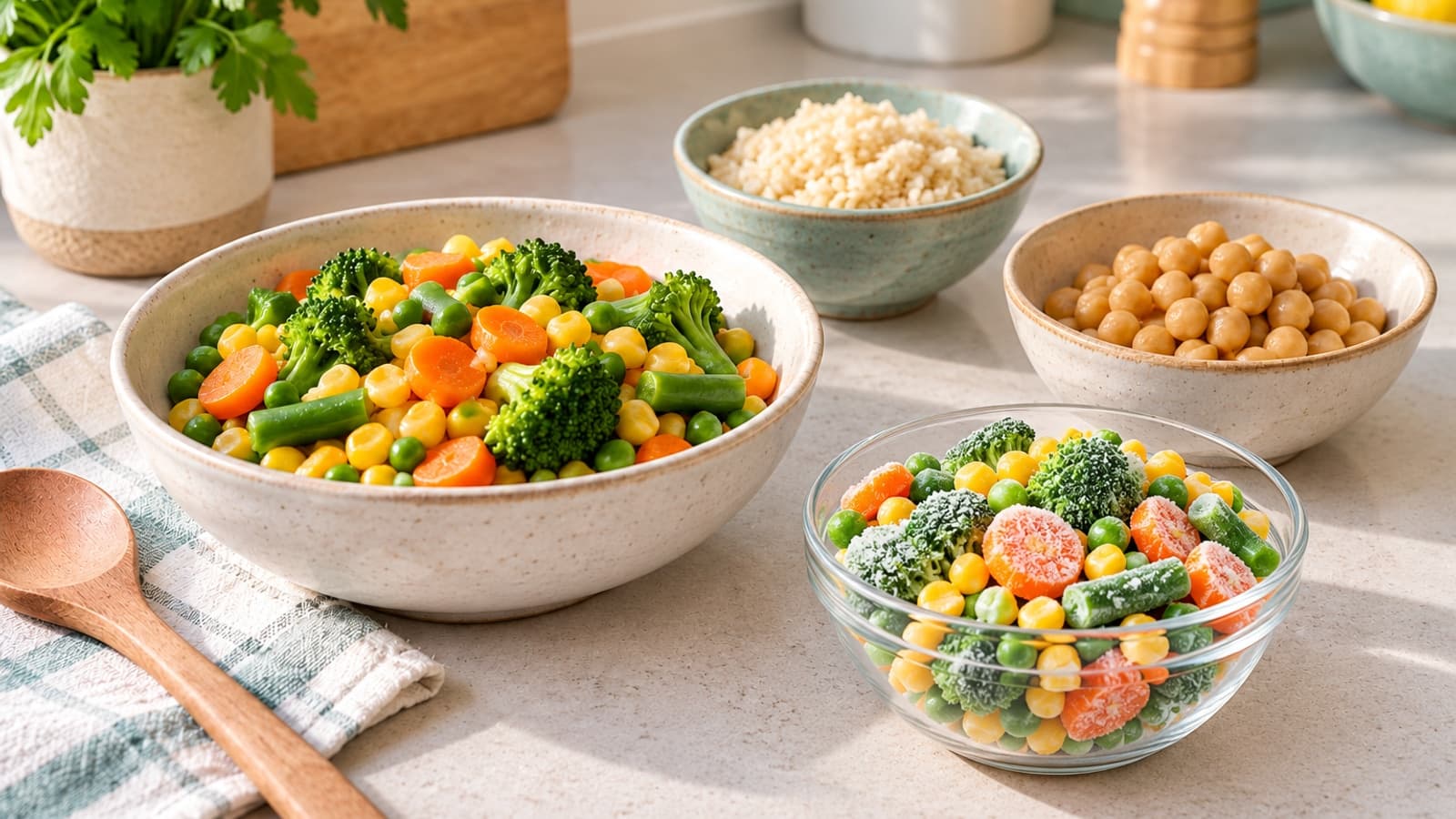
There are evenings when chopping a pile of vegetables feels like one task too many. A bag in the freezer can make dinner simpler, especially when you only want to cook a little at a time.
Choose a mix you like, then add a protein food and a starch or grain if those fit your meal. The vegetables can be the beginning of dinner rather than another item you feel obliged to eat.
Read the bag before you start
Frozen doesn’t always mean ready to eat. Some frozen vegetables need to be cooked thoroughly before serving. Check the package directions, including whether to cook from frozen and whether a food thermometer is recommended.
Follow the directions for the cooking method you're using. A microwave bag, a saucepan and an oven tray may have different instructions. Don't put frozen vegetables into a cold salad or smoothie unless the specific product is intended to be eaten that way.
If the bag includes a sauce or seasoning, check its ingredients for allergies and compare the Nutrition Facts panel if sodium or another nutrient matters to you. Plain vegetables leave you free to choose the flavor yourself.
When shopping, compare the price per ounce as well as the package size. A large bag may be useful if you have freezer room and will use it, but a smaller one can be easier to store or try for the first time. Pick the mix you'll actually enjoy.
Choose a texture you enjoy
Some people like vegetables soft; others prefer a little bite. After following the package's safe cooking instructions, use the method and timing that give you a texture you like. For a pan or oven recipe, giving pieces enough space can help avoid a crowded, watery result.
If liquid collects during cooking, follow the recipe's directions for draining or using it. A little extra moisture may be welcome in soup, while you may prefer less in a wrap. Keep hot cookware steady and use a mitt or other protection when handling it.
You don't have to finish the whole bag. Return unused frozen food to the freezer promptly, close the package well and follow its storage directions. Cook the amount you expect to use and keep other food available if you're still hungry.
Build three easy combinations
A bowl: Serve the cooked vegetables over rice with beans, tofu, chicken or another protein you like. Add a suitable sauce on the side.
A quick soup: Add cooked vegetables and a protein food to a soup you already enjoy. Use a grain or a piece of bread if you want it. Bring leftover soup to a boil when reheating.
A plate with separate sides: Put the vegetables next to eggs, fish or another protein and a potato or piece of toast. Keeping foods separate makes it easier to choose the amounts and textures you want.
These are starting points rather than a prescribed menu. Choose alternatives for food allergies or intolerances, and follow the appropriate cooking directions for each ingredient.
Make the leftovers easy to find
Refrigerate cooked perishables in shallow containers within two hours, or within one hour if they've been exposed to temperatures above 90°F. Keep the refrigerator at 40°F or below. When reheating leftovers, check they reach 165°F throughout.
Use a small container if you tend to prefer a smaller first serving on a GLP-1, but keep another side or portion available. A container is a storage tool, not a limit on what you can eat.
The next time the refrigerator looks sparse, check the freezer before assuming dinner needs a delivery order. Our low-cook meal guide has more options to keep on hand.