










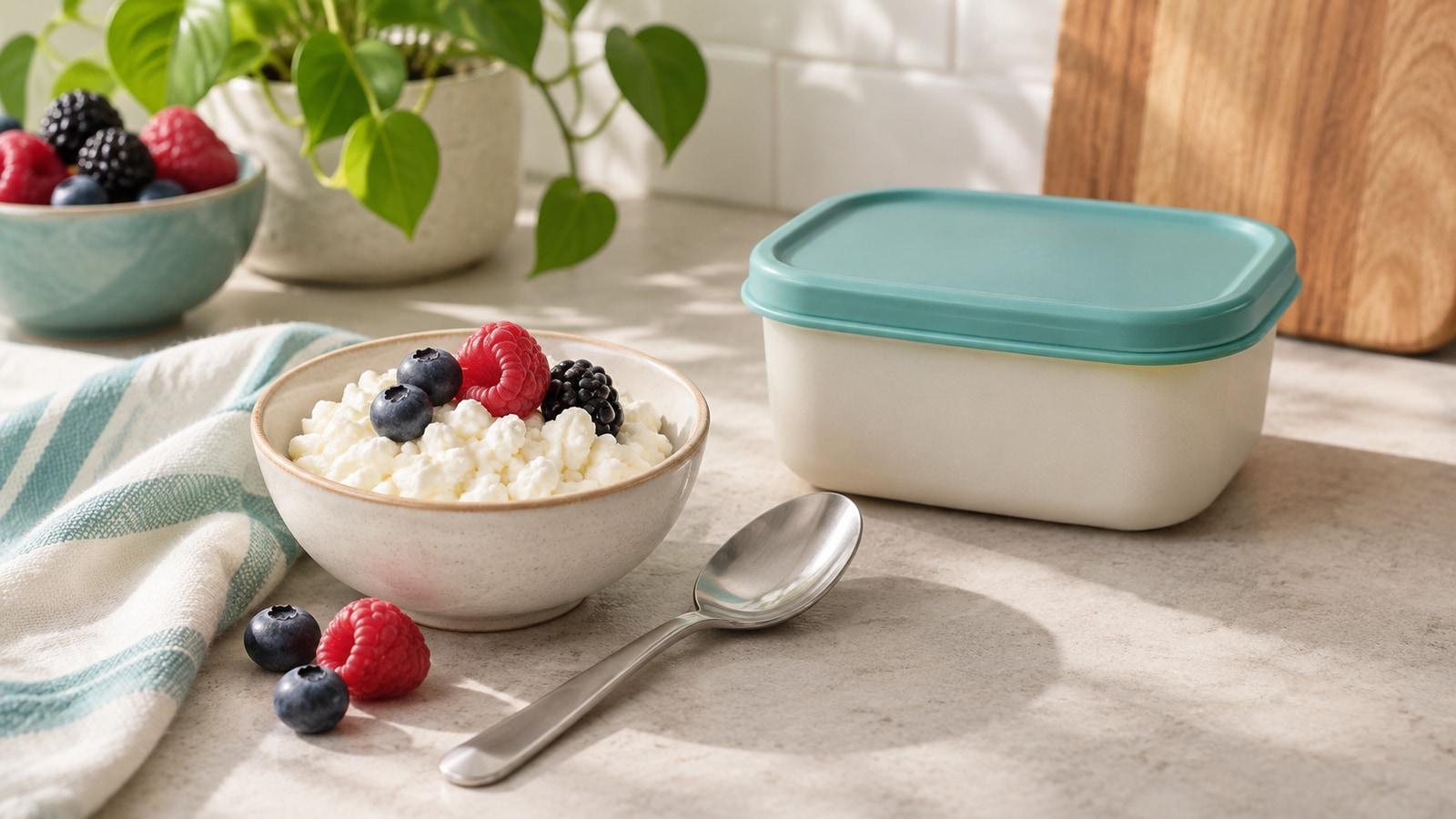
The cottage cheese section can be surprisingly crowded: large curd, small curd, low-fat, flavored, lactose-free, single cups, and tubs big enough for the whole week. The best choice depends on more than the biggest number on the front.
Start with how you plan to eat it. Then compare the labels for the details that matter to you, such as protein, sodium, fat, and serving size.
Check the serving size first
Turn two containers around and look at the Nutrition Facts panels. Are the numbers based on the same amount? One product might list a half-cup serving while another uses a different quantity or gives the weight in grams. Comparing protein or sodium without checking the serving size can make one look better simply because the portions differ.
If the serving sizes match, compare the numbers directly. If they don't, use the weights to make a fair comparison. For example, if a label gives values for 100 grams and you plan to eat about 50 grams, half of the listed amounts is a useful estimate.
The printed serving size is a reference for the label, not an instruction about how much you must eat. You can serve more or less and adjust the numbers accordingly.
Look at protein in context
Cottage cheese provides protein, but the amount varies by product and portion. Check the protein line rather than assuming that every tub contains the same amount. If you're choosing between a small snack cup and a larger tub, compare the amount you expect to eat—not just the total in the package.
Protein can come from many foods. Cottage cheese is one option alongside eggs, fish, beans, tofu, yogurt, and others. You don't need to eat it if you dislike it or if dairy doesn't fit your needs.
For a quick meal, pair a portion with fruit and toast, or add it to a plate of vegetables and crackers. If that doesn't feel like enough food, add another side you enjoy. If your appetite is smaller on a GLP-1 medicine, keeping a second component available can make it easier to adjust without forcing a particular portion.
Compare sodium and fat
Sodium can vary between products, including among tubs that look almost identical. Check the milligrams and the percent Daily Value on the same serving size. As a general label guide, 5% Daily Value or less per serving is low and 20% or more is high. Your own needs may differ, particularly if a clinician has given you a sodium target.
The fat content also varies. Some people prefer the taste and texture of a richer version; others prefer a lower-fat product. Look at both total and saturated fat if you're comparing, and choose something you enjoy within your overall eating plan.
If you're adding salty ingredients such as olives or a seasoned sauce, taste before adding more salt. With fruit or other sweet toppings, check whether the cottage cheese is plain or already flavored.
Decide whether the texture works for you
Curd size affects how the cheese feels on a spoon. Small curds may mix more easily into a dip, while larger curds have a more noticeable texture. Creaminess also differs by product, so the label alone may not tell you exactly what you'll like.
If the curds are the sticking point, try a small container before buying a large one. Some people prefer cottage cheese blended smooth with herbs or fruit; others prefer it straight from the tub. Use a clean blender and keep the finished mixture refrigerated.
Texture preferences can change from day to day. If a food feels too rich or simply doesn't sound good, choose something else. A particular brand or texture isn't required for a weight-management plan.
Lactose intolerance and milk allergy are different
Regular cottage cheese is made from milk. Lactose-free dairy products may be useful for some people who have trouble digesting lactose, but they still contain milk proteins and aren't appropriate for a milk allergy.
If you're unsure whether a product fits your needs, read the ingredients and ask your care team or a dietitian. Plant-based alternatives can use ingredients such as soy or nuts and may have different amounts of protein and other nutrients, so check their labels too.
Our guide to building a dairy-light menu has more ideas if lactose is a concern.
Buy an amount you can use
A larger tub may cost less per ounce, but only if you expect to finish it. A small cup can be a good way to try a new texture; a bigger container may make sense if several people use it for breakfast or snacks.
Choose a refrigerated product made with pasteurized milk. Keep it cold on the trip home, refrigerate it at 40°F or below, and follow the package's storage instructions after opening. Use a clean spoon when taking a portion out.
For lunch away from home, pack it in an insulated bag with a cold pack and keep it cold until you eat. Don't leave perishable dairy out for more than two hours, or one hour when the temperature is above 90°F.
Pick a version that fits your budget, tastes good, and works with meals you already make. That will tell you more than a front-of-package claim alone.