










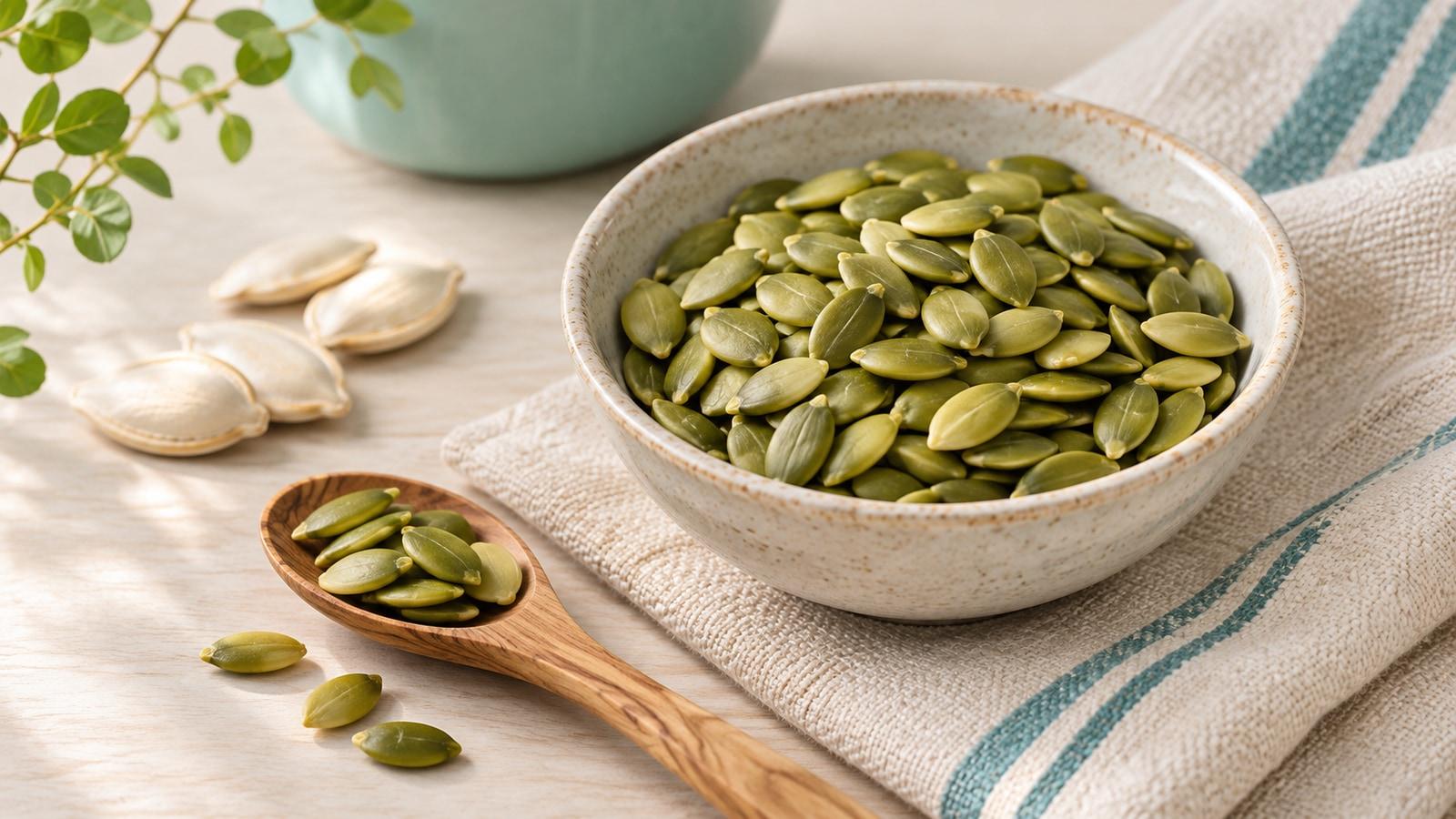
Pumpkin seeds are easy to buy with good intentions and then forget in the back of a cupboard. The bag might say "pepitas," "roasted," "salted" or "in shell," and it isn't always obvious which one you want for breakfast versus a snack at your desk.
Start with how you plan to eat them. A small bag of shelled seeds may be convenient for sprinkling over yogurt; seeds in their shells make for a more hands-on snack. Neither needs to become a daily requirement to be useful.
Start with the kind you'll actually eat
Shelled pumpkin seeds, often called pepitas, are small and easy to add to a bowl. Check the ingredient list and preparation directions: some are sold plain, while others are roasted, salted or coated with seasoning. Choose a ready-to-eat product if you want to use it straight from the package.
Seeds sold in shells have a different texture and take more work to eat. If you're sharing with someone who finds hard or fibrous foods uncomfortable, shelled seeds or another food may be a better choice. The flavor and texture of different products vary, so a small package is a useful way to try one before buying a large bag.
Raw and roasted products can taste different. Follow the label rather than assuming every package has the same preparation or storage instructions. If you plan to toast seeds at home, use a small batch and watch it closely; small pieces can darken quickly. Let them cool before tasting.
Compare labels without overthinking them
Pumpkin seed kernels provide protein, fiber and fat, but the amount you eat matters more than a headline on the front of the bag. The nutrition panel tells you the serving size used for its numbers. Compare similar amounts if one package lists a tablespoon and another lists an ounce.
Salt and seasoning can vary considerably. If sodium is something you monitor, compare the sodium for the amount you expect to use. A plain or lightly salted product also leaves room to season a meal in other ways. Sweet or flavored varieties may have added sugar, so look at the ingredients if that matters to you.
Price can be easier to compare by weight than by bag size. A large bag isn't necessarily the better purchase if it will sit open for months. Pick a size that fits your household and follow the package's directions after opening.
Make them part of a meal
For breakfast, scatter a small spoonful of shelled seeds over yogurt, cooked oatmeal or fruit. Add them just before eating if you want to keep the crunch. If you're taking a bowl to work, pack the seeds separately and keep dairy or cut fruit cold until serving.
At lunch or dinner, seeds can finish a soup, salad or bowl of cooked vegetables. They don't have to be the main protein in the meal. Pair them with beans, eggs, chicken, tofu or another food you enjoy, and add a grain or other side if you want a more substantial plate.
You might also combine ready-to-eat seeds with dried fruit or another snack you like. Put the amount you want in a small container instead of trying to guess later from a large bag. If you're still hungry, you can have more or add another food; the container is a convenience, not a limit.
Consider texture and comfort
Whole seeds are crunchy. If that texture is difficult to chew, try finely chopping them or choose a softer food that fits your needs. Whole or chopped seeds and nuts can be choking hazards for young children; follow age-appropriate feeding guidance. Anyone with a prescribed swallowing plan should follow their care team's advice about texture.
If you're increasing fiber in your diet, make changes gradually and pay attention to what feels comfortable. Seeds are one part of the overall meal, and people differ in how much texture or richness they want at a particular time.
On a GLP-1 medication, your appetite may be smaller some days. A sprinkle can add flavor to a food you already enjoy, but you don't need to force it if the combination isn't appealing.
Check ingredients and keep them fresh
Read labels for allergens and cross-contact information relevant to the people eating. A seed product isn't automatically safe for every allergy, especially if it is mixed or packaged with nuts, sesame or other ingredients. Choose a product that fits your household rather than relying on the name alone.
Close the package after use, keep the contents away from moisture and follow its storage directions. If the maker recommends refrigeration after opening, make room for it in the fridge. Use a clean, dry spoon when serving from a shared container.
If you add the seeds to a perishable food such as yogurt or cut fruit, treat the finished bowl as perishable too. Keep it refrigerated or use an insulated bag with a cold source when traveling. Don't leave it on a desk or in a warm car through the afternoon.
The easiest way to use an open bag is to give it a job: a spoonful on tomorrow's breakfast, a small topping for soup or a separate snack. Choose the preparation and texture you like, then buy an amount you can comfortably use.