










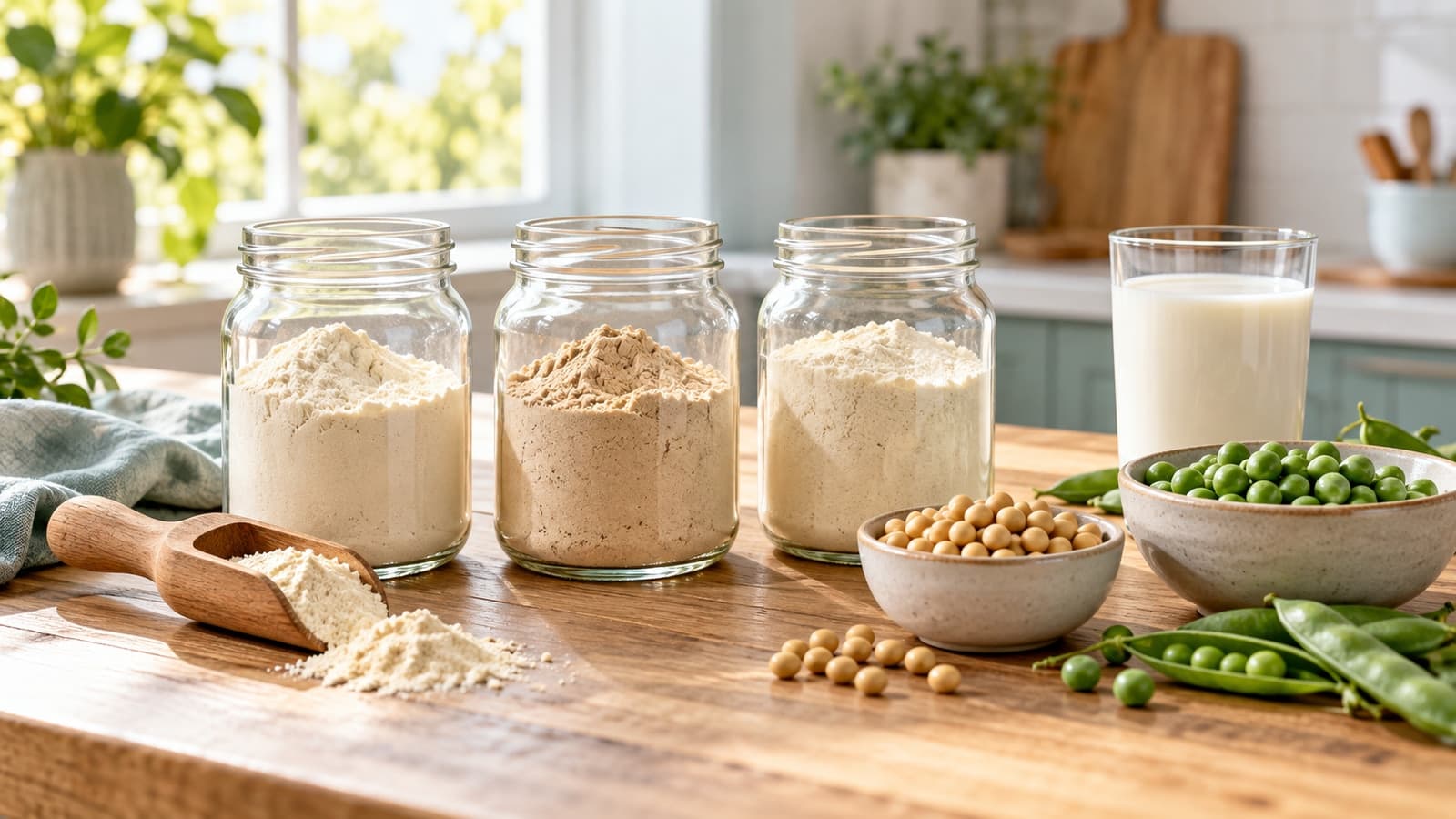
You reach the protein powder aisle and find three tubs with similar promises and very different prices. One is whey, one is soy and one is pea. Which should you buy?
There isn't a single winner for everyone. The best protein powder is the one that fits your needs and that you can actually use. A few minutes with the back of each container will tell you more than the largest claim on its front.
Start with the source
Whey comes from milk. It is a complete protein, meaning it supplies all the essential amino acids in useful proportions. If you have a milk allergy, whey isn't appropriate. Lactose content can vary between products, so someone managing lactose intolerance should check the specific label and discuss options if needed.
Soy protein comes from soybeans and is another complete protein option. It can suit someone who prefers to avoid dairy, but it is not suitable for a person with a soy allergy. Check for other ingredients too; a soy-based powder may still be made with additional components you want to avoid.
Pea protein is plant-derived. Its amino-acid pattern differs from whey and soy, but it can still contribute protein within a varied eating pattern. Formulas vary: some combine pea with another protein, while others use it as the main source.
These descriptions identify where the protein comes from. They don't tell you how a particular powder will taste, mix or feel in your stomach.
Put the serving sizes side by side
Find the serving size and the grams of protein per serving on each label. One brand may describe a serving as one scoop and another as two. A larger number on the front of a tub isn't automatically a better comparison if it comes from a much larger serving.
Now ask how much you would actually use. If the suggested serving is a large shake but you usually drink only half, that half-serving provides roughly half the listed protein. You can compare the products using the amount you realistically plan to finish.
Look at the rest of the label as well. Added sugars, fiber, sweeteners and other ingredients differ. Some powders contain only a few ingredients; others include thickeners, flavors or a long list of extras. More ingredients aren't automatically better or worse, but they may matter to your preferences and tolerance.
Check what works for your body
A milk or soy allergy is different from a food intolerance. If you have an allergy, read the ingredient and allergen information carefully and avoid the food you've been told to avoid. If cross-contact is a concern, contact the manufacturer or follow your allergist's advice.
If a shake repeatedly leaves you bloated, consider the whole product and serving, not just the protein source. Sweeteners, added fibers, milk used for mixing or the size of the drink may also be relevant. Keep the container or a photo of the label for a conversation with a dietitian.
During GLP-1 treatment, a smaller shake may be easier to manage than a very large one for some people. That doesn't mean a powder should replace every meal. Our guide to protein shakes versus food can help you decide when one is useful.
Compare the real cost
Divide the container price by its number of servings. A $24 tub with 12 servings costs $2 per listed serving; a $30 tub with 20 servings costs $1.50 per serving. Then check whether those servings provide similar amounts of protein.
Taste matters here too. A cheaper tub that sits untouched isn't much of a bargain. If possible, try a smaller package before buying a large container, and choose a flavor you would enjoy with water, milk or a suitable alternative.
Finally, consider the job you need the powder to do. Is it a convenient snack, an addition to oatmeal or part of a nutrition plan? You may find an ordinary food does the job just as well. If your appetite remains very low, or you have a condition affecting protein needs, ask your care team for guidance tailored to you.