










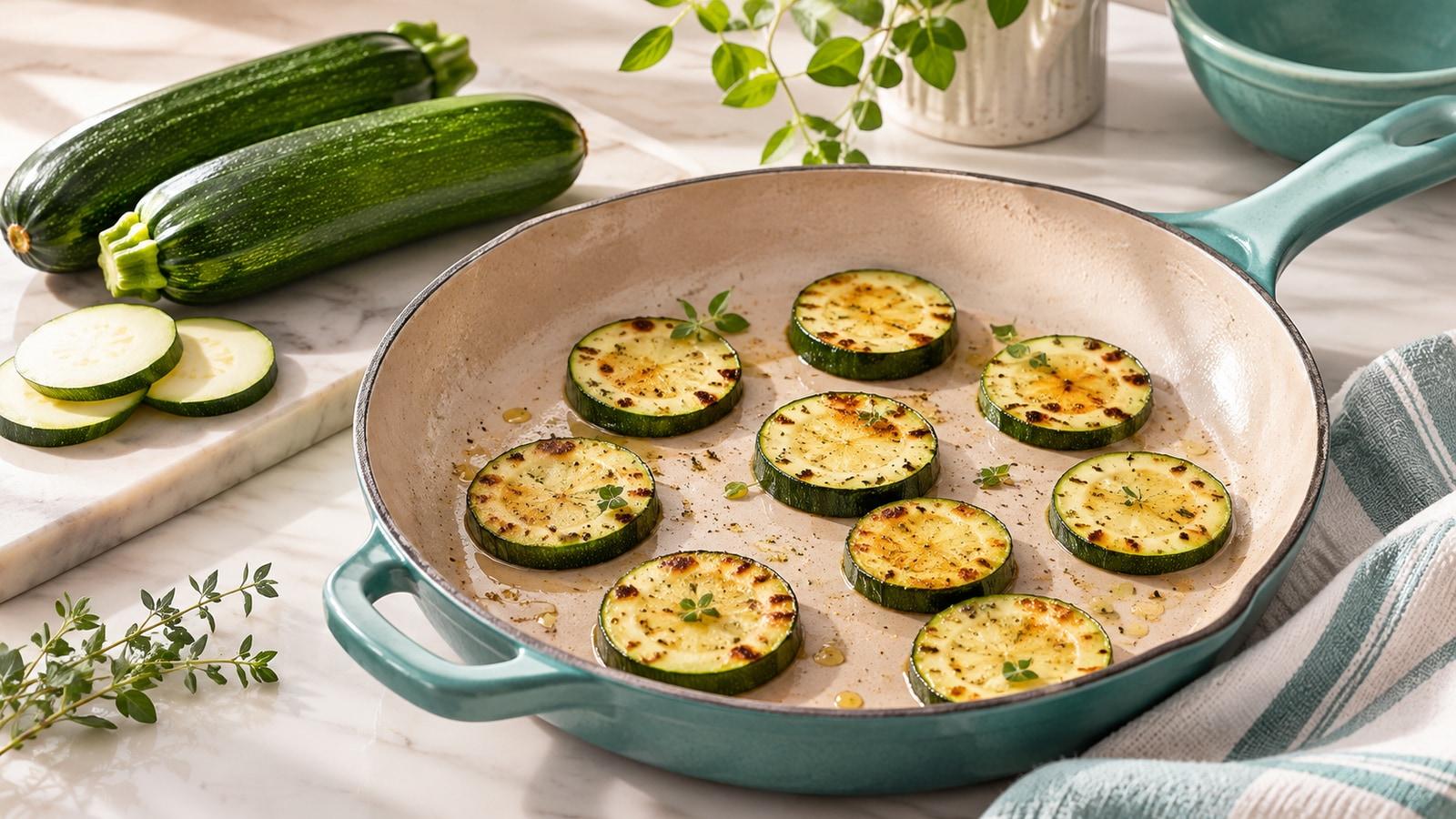
Zucchini can be a quick side dish, but it can also go from firm slices to a watery pile before the rest of dinner is ready. The difference is often in the cut, the amount in the pan, and how long it cooks.
There isn’t one ideal texture. You may like a little bite, or you may want the pieces soft enough to fold into a sauce. Here’s how to choose a method that gets you closer to what you want.
Pick one you’ll use soon
Look for zucchini that feels firm, with smooth skin and no soft or moldy spots. Small and medium ones are often tender and have smaller seeds. A very large zucchini can have a tougher skin and larger seeds; it may be better suited to grating or a longer-cooked dish than to quick slices.
Store whole, unwashed zucchini in the refrigerator’s crisper drawer, ideally in an open or perforated produce bag. Check it before use and wash it just before cutting. The exact keeping time varies, so buying an amount you expect to use in the next few days is a practical place to start.
Rinse under running water and trim the ends. The skin of a tender zucchini can stay on. If you’re using an oversized one and the skin or seeds are tough, remove them as needed for the dish.
Cut for the job
For a quick skillet, slice the zucchini into rounds or half-moons of roughly similar thickness. Thin slices soften quickly; thicker pieces keep their shape longer. Try not to mix paper-thin ends with large chunks, or some pieces may be soft while others are still firm.
For a soup or sauce, dice it. Small cubes blend into a spoonful more easily, while larger pieces remain noticeable. Add them at a point that gives them time to reach the texture you like.
For a batter or patty mixture, grate the zucchini. It releases moisture, so check the recipe before adding liquid. Some recipes ask you to squeeze the shreds in a clean towel; others need that moisture. Don’t wring it completely dry by habit if the recipe depends on it.
Use a stable cutting board, and curl your fingertips away from the knife. If a round zucchini rolls, cut a thin strip from one side first and put the flat side against the board.
For browned edges, give it space
Warm a little oil in a wide skillet over medium heat. Add the slices in a layer that gives them room to touch the pan. If you have a lot, cook in batches rather than piling everything into one deep heap.
Let the slices cook briefly before turning or stirring. Check a piece as you go. University cooking guides suggest that small slices or chunks can sauté in roughly three to six minutes, but thickness, pan size and heat all change the timing. Take them off when they’re tender enough for you.
A crowded pan traps more steam, which makes browning harder. That’s useful when you want soft zucchini; it’s less helpful when you’re after browned edges. If liquid collects, let some cook away or spoon it off before adding a sauce.
Add garlic, herbs, lemon or a seasoning blend you like near the end. Garlic can darken quickly, so keep an eye on it. If acidic or strongly seasoned food doesn’t appeal, a little olive oil and a familiar herb may be enough.
For a softer side, use steam
Cut zucchini into bite-size pieces and put them in a steamer basket over water. Cover and steam until the pieces reach the texture you want. Start checking small pieces after a few minutes; they may soften faster than a thick carrot or potato.
Keep your hands clear of escaping steam when you lift the lid. A fork should go through a piece without much resistance if you want a softer result. For more bite, take the basket off sooner.
Steamed zucchini doesn’t need to stand alone. Add it to a plate with fish and potatoes, stir it into warm pasta, or serve it beside eggs and toast. If you’re using it in a sauce, remember that it may add moisture; start with a little and adjust.
Try it cold, too
Tender zucchini can be eaten raw after washing. Cut it into thin sticks for a dip or shave ribbons into a salad. If the texture is too firm for you, a quick cook may be more enjoyable.
If you’ve been advised to follow a particular food texture or food-safety plan, use that guidance when deciding whether raw vegetables are appropriate. There’s no benefit to forcing a crunchy preparation that doesn’t work for you.
Make the leftovers useful
Refrigerate cut or cooked zucchini promptly in a covered container. For cooked leftovers, use a shallow container and refrigerate within two hours, or within one hour if the temperature is above 90°F. Keep the refrigerator at 40°F or below and use cooked leftovers within three to four days.
Reheat a warm serving to 165°F. Previously cooked zucchini will usually be softer than a fresh batch, which can be useful in soup, pasta sauce, or an omelet. Keep cold toppings separate until you’re ready to eat.
If your appetite is smaller while taking a GLP-1 medicine, put a comfortable amount on the plate and keep more available. Zucchini can be one part of a meal; add a protein food and other sides that sound good to you.
A small skillet of zucchini doesn’t need much fuss. Cut the pieces for the texture you want, leave them room in the pan, and check them before they have a chance to go too soft.