










A glute bridge is a floor exercise in which you lift your hips while your feet and shoulders remain supported. It can be a gentle way to practice using the muscles around your hips, and it doesn't require weights.
The movement should feel controlled, not like a contest to lift as high as possible. If getting onto the floor is difficult, or if you have back, hip or other concerns, ask a physical therapist or clinician for an option that fits you.
Set up on a stable surface
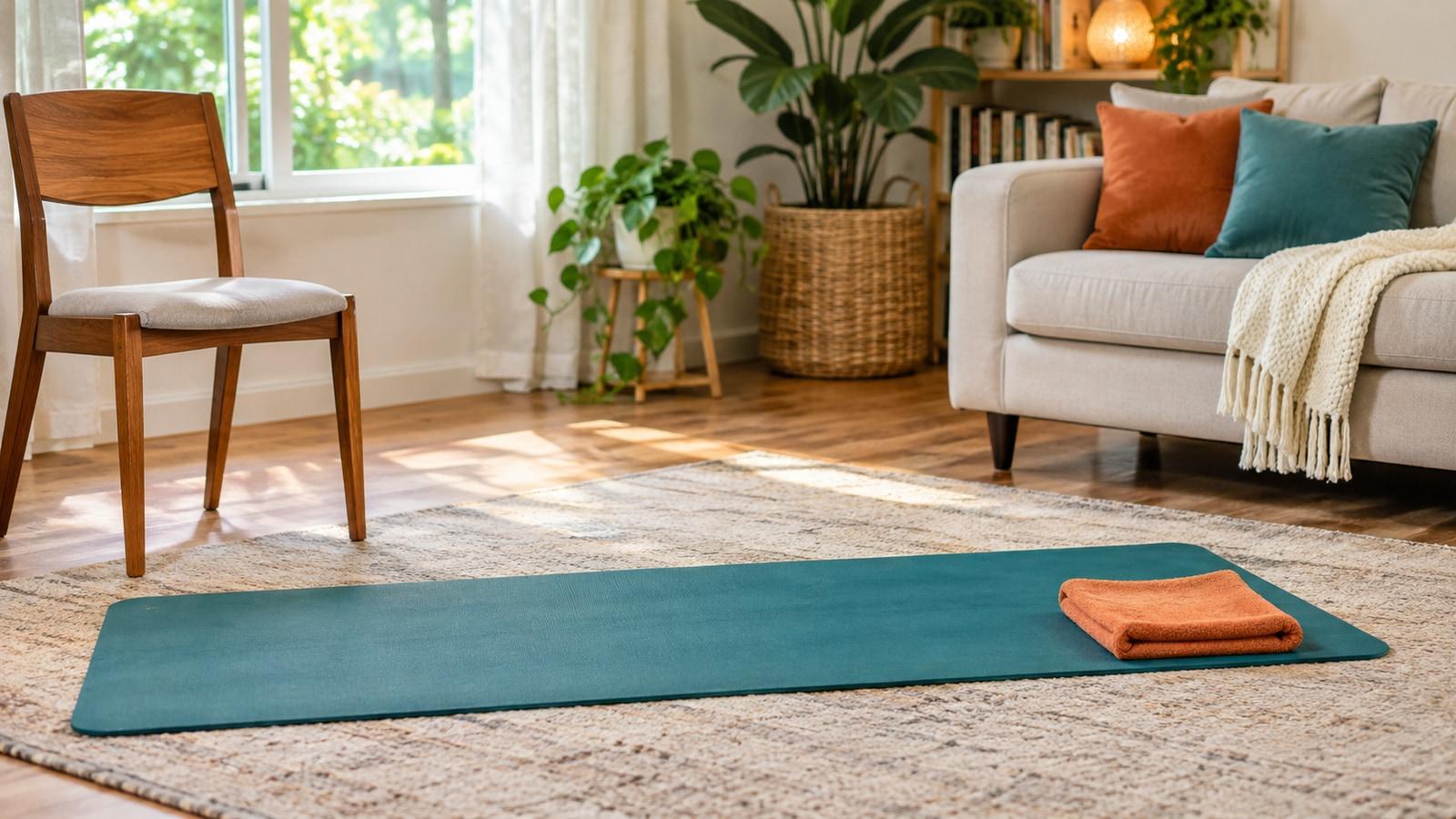
Choose a firm, nonslip floor or exercise mat with enough room to lie down. Remove nearby objects and make sure you can get down and up safely. If the floor isn't accessible or comfortable, don't force the setup; a professional can suggest another movement.
Lie on your back with your knees bent and feet flat, about hip-width apart. Rest your arms at your sides. Your head and shoulders stay relaxed on the floor throughout the movement.
Place your feet where you can press into the floor comfortably. You don't need to copy the exact spacing from a video if it makes your knees or hips uncomfortable. Ask an instructor to help adjust the position if you're unsure.
If you're following a video, listen to the instructions before you lie down rather than turning your head repeatedly to watch the screen during the lift. A short demonstration from an instructor can also help you learn the movement at your own pace.
Lift a little, then lower
Gently engage your abdominal muscles and press through your feet as you lift your hips. Breathe out during the effort. Raise only as far as you can without arching your lower back or losing contact through your feet.
Pause briefly if that feels comfortable, then lower your hips slowly to the floor while breathing in. Let the movement be smooth in both directions. Your shoulders and head remain supported; don't push through your neck to make the lift higher.
Start with a few repetitions that feel manageable and rest. The exact number depends on your current ability and any guidance you've been given. Quality and comfort are more useful than completing a target with a movement you can't control.
What might it feel like?
You may notice the muscles in your buttocks and the backs of your legs working. Some people feel their hamstrings more than expected. If the movement feels awkward, check your foot position and range with a qualified professional rather than repeatedly adjusting while in pain.
A sharp pain, numbness, dizziness or discomfort that worsens is a reason to stop. The exercise isn't supposed to require a large arch in your lower back. If you feel pressure there, lower the height or pause and ask for help with technique.
You don't need to squeeze as hard as possible or hold your breath. A gentle effort with steady breathing is a better way to learn the movement.
Make the range smaller
If a higher lift doesn't feel comfortable, try lifting your hips only a little and lowering them again. You can pause with your hips on the mat between repetitions. If lying on your back is uncomfortable or not advised for you, choose another exercise instead.
A dumbbell, band or single-leg variation adds another demand. There is no need to introduce any of them while you're still finding a comfortable two-footed version. If you're following a rehabilitation plan, ask your therapist before changing it.
If you have had surgery or have a condition affecting your back, hips or pelvis, follow the restrictions from your care team. An online description can't account for your specific recovery or diagnosis.
Fit it into a larger routine
A bridge is one movement, not a complete strength program. You might pair it with a supported chair rise or another exercise you know, leaving rest between sessions that challenge the same muscles. A physical therapist or trainer can help if you want a plan adapted to an injury or other concern.
If you're using a GLP-1 medicine, tell your care team about nausea, reduced intake or other symptoms that affect activity. Exercise should fit your energy and nourishment, and a shorter session can be the right choice on a difficult day.
Afterward, notice how you feel later in the day and at the next session. If soreness or discomfort concerns you, pause and ask a professional before adding more repetitions.
Getting up matters too
When you're done, take your time returning to a seated or standing position. Use a stable support if needed and follow any instructions you've been given for moving from the floor. If getting up is difficult or unsafe, a floor-based exercise may not be the best option without assistance.
The bridge is a small, controlled lift. Keep your feet and shoulders supported, breathe through the movement and choose a range that feels appropriate for you.