










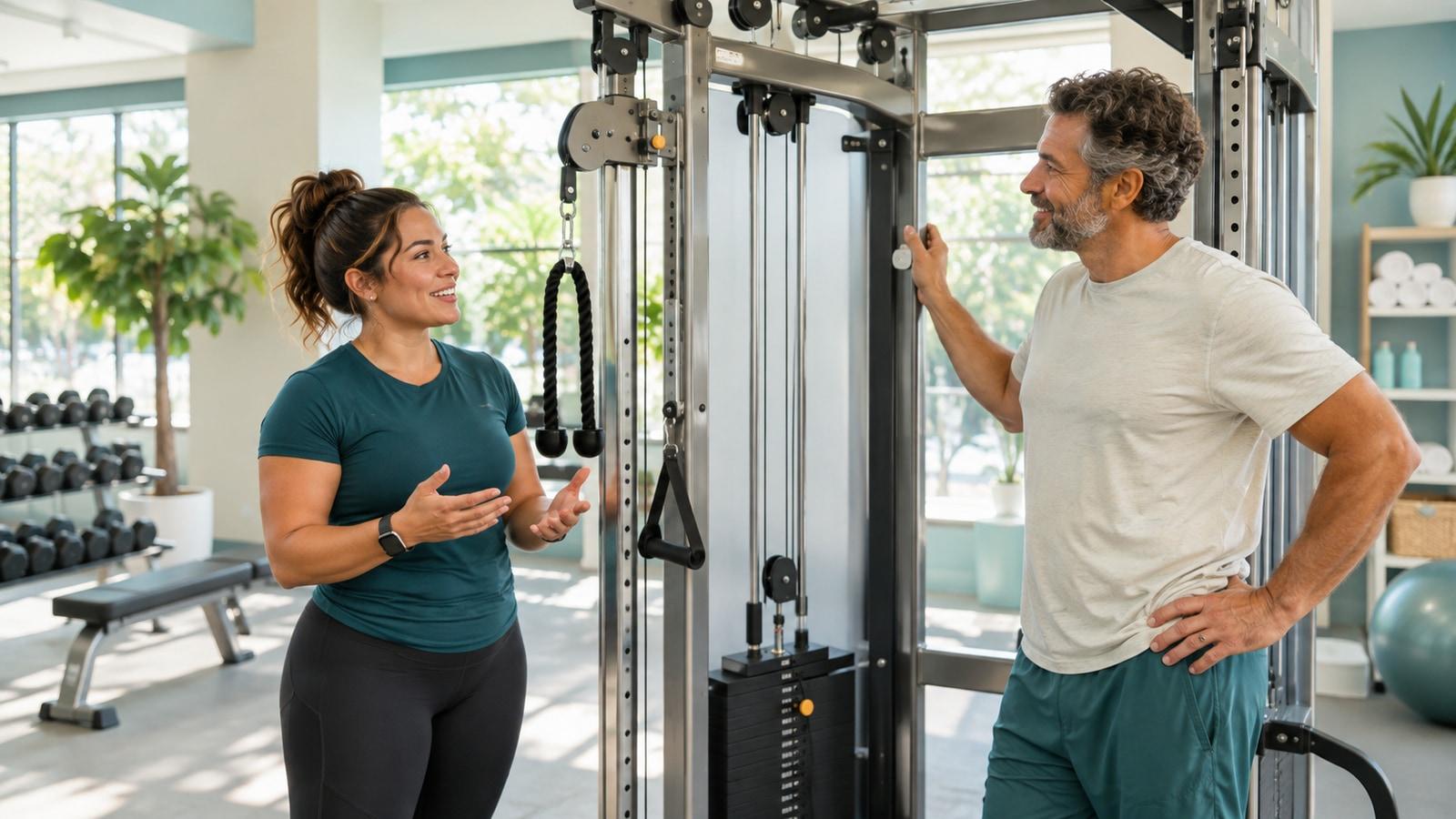
The cable station at the gym can look like a collection of pulleys, pins and handles with no obvious starting point. Once someone shows you the adjustments, it can be a flexible place to practice pulling and pressing movements.
Your first visit can be about learning one setup rather than using every attachment. Ask a qualified staff member to demonstrate the exact machine, then choose a manageable resistance and move slowly.
Identify the parts
Look for the weight stack, selector pin, cable, pulley adjustment and attachment clip. Machines differ, so ask how each part works before changing anything. The pin should be inserted fully into the chosen weight plate, and the attachment should be secured according to the machine's instructions.
Check the cable, handle and clip for obvious damage. If something looks worn, catches or moves unexpectedly, tell staff and use another station. Don't attempt to repair gym equipment yourself.
Adjust the pulley and resistance only when the weight stack is at rest. Keep fingers clear of moving plates and pulleys. If you can't reach an adjustment comfortably, ask for assistance rather than climbing or pulling on the cable.
Choose a simple first movement
A standing cable row is one option. An instructor can set a handle near chest height and show you where to stand. With a comfortable stance, hold the handle securely and draw it toward your body, then let your arms return slowly while maintaining balance.
Keep the movement controlled rather than leaning back or jerking to move the weight. Breathe out during the pull and breathe in as you return. Start with light resistance so you can learn the path and stop easily.
The exact position depends on the machine and your body. If you have a shoulder, back or balance concern, ask a physical therapist or clinician whether a row is suitable and what range to use. A seated option or another exercise may be more appropriate.
Give yourself room
Check that the area behind and beside you is clear. Stand where the cable has a smooth path and the attachment doesn't strike another person or piece of equipment. Wear secure footwear and avoid placing a bag where you might step on it.
Some movements require you to step away from the machine before beginning. Ask the instructor how to take up the cable tension and return the handle safely when finished. Don't let go of a loaded handle and allow it to snap back.
If the machine has two cables, learn one side first. There is no need to add a complicated two-handle movement before you understand the adjustments.
Let the resistance fit the movement
The number on the stack is a setting on that machine, not a score. Choose an amount you can pull and return without holding your breath, losing your stance or using momentum. A smaller number may be the right one for learning.
If the weight pulls you off balance or you can't control the return, reduce it and ask for help. If a movement causes sharp pain, numbness or dizziness, stop and seek guidance. Don't increase the weight to make the exercise feel more legitimate.
Some cable stations allow small changes in pulley height; others use fixed positions. Record the setting that worked so you can recreate it, but check the machine again next time because another person may have adjusted it.
If the stack moves unevenly or the cable rubs against another part of the station, stop and ask staff to inspect it. The problem may be the machine or setup, and it isn't something you need to solve by pulling harder.
Ask about alternatives and access
If standing at the station is uncomfortable, ask whether a seated row or another setup is available. If the attachment is difficult to grip, an instructor or therapist may know of a suitable handle. Your access needs and comfort are part of the setup, not an afterthought.
You can also use a different form of resistance. Dumbbells, bands, machines or bodyweight movements may be more practical depending on your space and health. A cable machine is an option, not a requirement for strength training.
Finish and put the equipment back
Return the weight stack to rest with control, then follow the gym's instructions for removing or leaving the attachment. Keep the cable from swinging into the walkway. Wipe the handle if the facility asks members to do so.
If you notice a problem with the pin or pulley, tell staff so the next person doesn't have to discover it during a set. Leave the station in a safe position.
Build from one familiar setup
Try asking: “Can you show me how to set the pulley and do a light row on this model?” Once that feels comfortable, a professional can help you add another movement and plan rest between sessions.
You don't need to master the whole cable station in one day. Learn the controls, check the attachment and use a weight you can return slowly.