










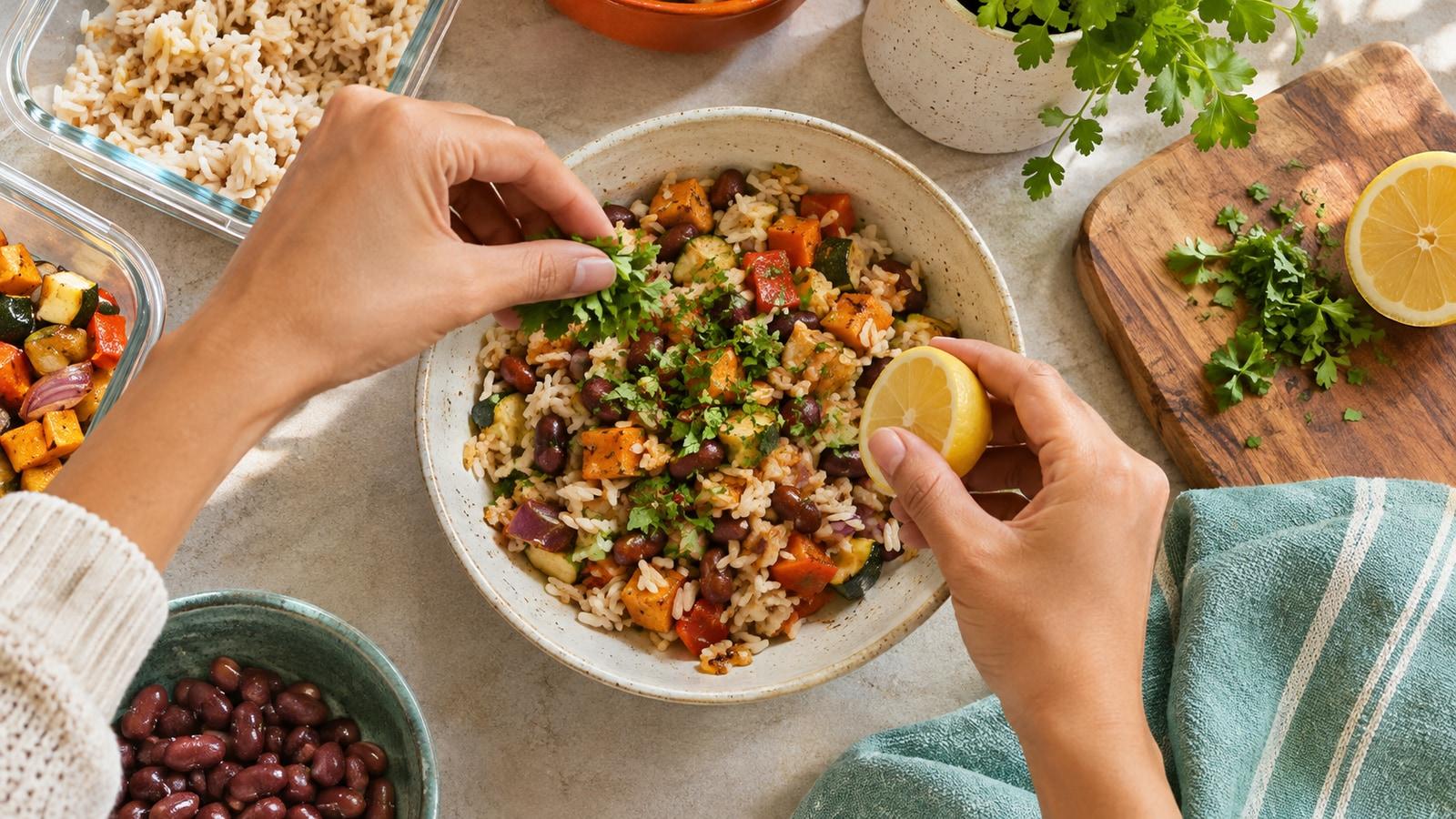
The grain bowl you made on Monday looked great at lunch. By Tuesday, the greens are limp, the crunchy topping isn't crunchy and the sauce has disappeared into the rice. None of that means meal prep is a bad idea. It usually means the ingredients need to spend the night in separate containers.
Think of a leftover bowl as a few prepared parts you assemble later, rather than one finished dish you expect to stay the same for days. A little separation can make a quick lunch taste much closer to the meal you intended.
Start with a base you want to eat again
Rice, quinoa, barley, farro and other cooked grains can all serve as a base. Choose what you enjoy and prepare it according to the package directions. You don't need a special grain or a large batch; a cup or two of cooked leftovers from dinner can be enough for the next day's meal.
Let the grain's planned use guide the seasoning. A lightly seasoned batch can go in several directions: lemon and herbs one day, a savory ginger dressing another. If dinner already has a strong flavor, lean into it rather than trying to turn it into something entirely different.
Refrigerate cooked grains promptly in a shallow container. Rice needs particular care: cool and refrigerate it within one hour of cooking, use it within 24 hours and reheat it only once. Don't leave grains on the counter for hours while you finish other tasks. If you're packing lunch away from home, use an insulated bag and cold packs to keep perishable foods cold until you're ready to eat.
Keep the sturdy and delicate parts apart
Roasted carrots, cooked beans and cooked chicken can be stored in their own covered containers or portioned with the grains if that makes the morning easier. Raw leafy greens and crisp vegetables are usually better kept separately so they don't get weighed down by moisture.
Wash fresh produce under running water and dry it before packing. Put sliced cucumber or greens in a separate compartment, and add them after reheating the warm components. If you prefer the entire bowl cold, chill the cooked ingredients promptly and assemble the bowl when you're ready to eat.
A small container is useful for a crunchy topping. Nuts, seeds or toasted pita pieces can be added at the end, if they suit your dietary needs. If you have a nut allergy, choose a topping that's safe for you and check ingredient labels and cross-contact risks.
Give sauce its own little container
Dressing everything in advance can leave the grains soggy or overly concentrated. Pack sauce separately and add a spoonful at a time. You can always add more, but it's harder to rescue a bowl after every part is coated.
Try a simple combination you already like: plain yogurt with herbs, olive oil and lemon, or a small amount of a favorite bottled dressing. Taste first, especially with a salty sauce. If you prefer a milder meal or acidic foods bother you, use a gentler topping and skip ingredients that make you uncomfortable.
If the sauce contains dairy or another perishable ingredient, refrigerate it and keep it cold in transit. Don't assume a dressing is shelf-stable once opened or mixed; follow its storage directions.
Change one or two things for the second meal
You don't need five separate recipes for a useful batch of grains. Try changing the finishing touches:
- Pair rice and cooked chicken with cucumber, herbs and a yogurt dressing.
- Add white beans and roasted vegetables to farro, then finish with a little olive oil and parsley.
- Combine quinoa and cooked lentils with chopped greens, and add a dressing you enjoy just before eating.
Use foods that fit your preferences and any medical instructions. If a particular ingredient doesn't appeal to you, replace it. The point is a satisfying combination, not a formula where every bowl must have the same components.
If your appetite is smaller, pack a portion that looks manageable and keep extra food available if you want it later. If a bowl leaves you hungry, add another component or a side. Convenience should make lunch easier, not turn it into a test.
Reheat only what needs heating
Move the grain and any cooked protein into a microwave-safe dish, leaving the cold greens and sauce aside. Reheat leftovers to 165°F, stirring or rearranging so the food heats evenly. Reheat rice only once, and only as much as you plan to eat now. Then add the cold components and crunchy topping.
Cold leftovers are another option when they've been cooked, cooled and stored safely. Keep them refrigerated until serving. If you're unsure how long something sat out, don't rely on smell or appearance as proof that it is safe.
Keep the storage plan short and clear
Refrigerate perishable foods within two hours of preparation, or within one hour if the temperature is above 90°F. Set the refrigerator to 40°F or colder. Many cooked leftovers can be used within three to four days, but follow the shorter one-hour cooling and 24-hour refrigerated window above for rice. Freeze suitable components for later, and label containers with the date so the decision is easier when the week gets busy.
Build tomorrow's bowl from the ingredients that still fit that window, then change the dressing or topping. A few separate containers can be the difference between eating leftovers because you have to and looking forward to lunch.