










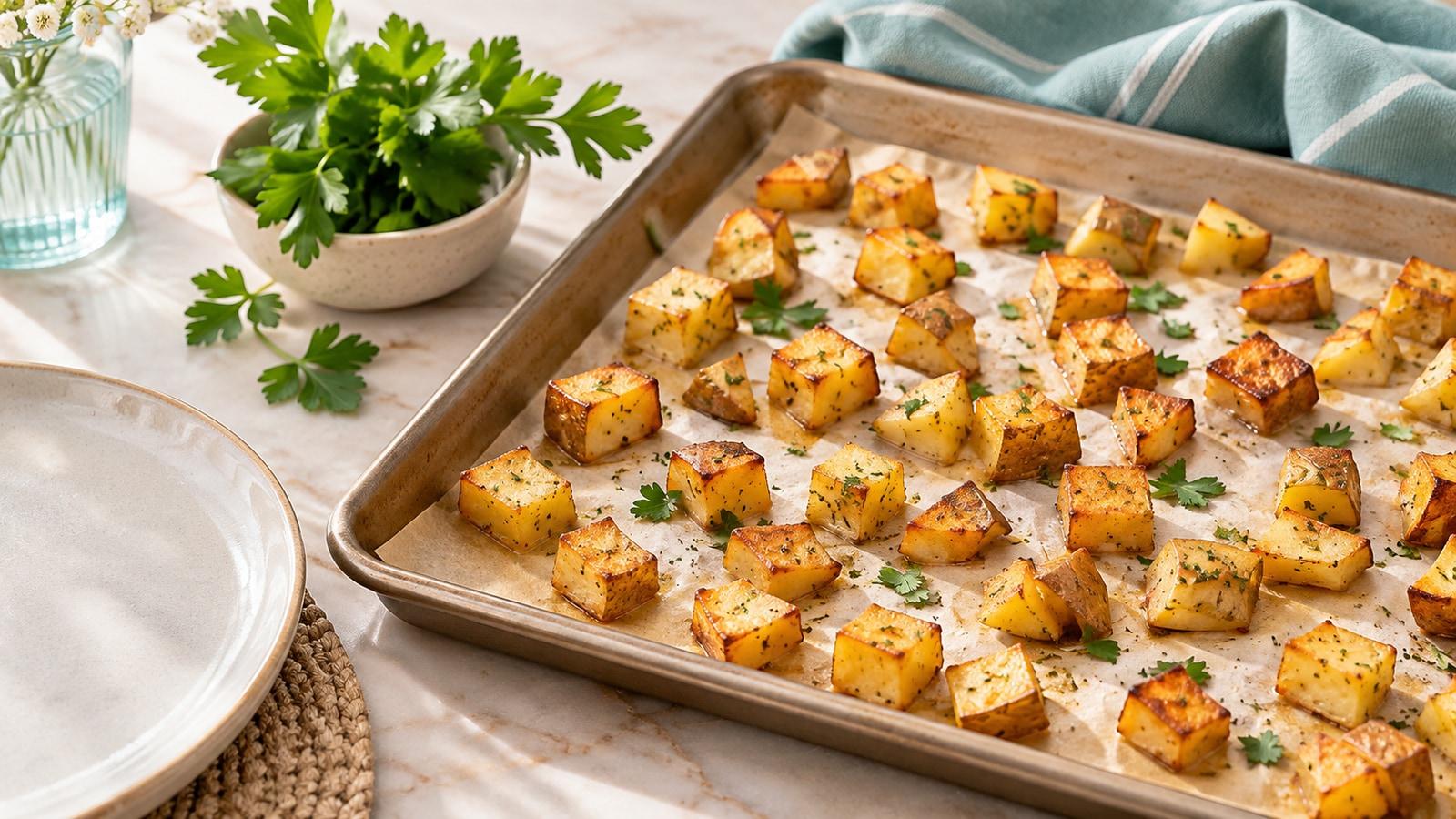
You cut the potatoes, spread them on a pan and put them in the oven. Half an hour later, some pieces are brown, some are still firm and the ones in the middle seem to have steamed. Breakfast is still possible, but the potatoes aren't quite what you had in mind.
A few small decisions make the next batch easier to manage: cut pieces to a similar size, give them space and check the middle before serving. Here's a practical way to think about the process, whether the potatoes are a side for eggs or one part of a bigger breakfast.
Start with the potato and the pan
Most everyday potatoes can be roasted, although the texture will vary. A waxier variety tends to hold its shape; a starchier one may have a fluffier interior. Choose one you like rather than making a special trip for a particular label.
For a starting batch, scrub two medium potatoes under running water and cut them into roughly half-inch pieces. Leaving the skin on is fine if you enjoy it. Cut away any green, damaged or sprouting areas before cooking. Dry the pieces with a clean towel so water isn't pooling on the pan.
Use a rimmed baking sheet with enough room to spread the pieces in a single layer. If the potatoes cover one another, divide them between two pans or cook a smaller batch. A crowded pan can trap moisture, which makes browning less even.
The shape is flexible. Small cubes cook differently from thick wedges, though, so avoid mixing tiny pieces with much larger ones. If you prefer larger chunks, give them more time and check their centers.
Roast until the centers are tender
Heat the oven to 425°F. Toss the potato pieces with about two teaspoons of olive oil and any seasonings you enjoy. Spread them out on the baking sheet, then roast until golden and tender, turning them once during cooking.
Start checking around 20 minutes, but treat that as a first look rather than a finish line. The potato variety, size of the pieces, pan and oven can all change the time. Pierce a larger piece with a fork; if the center is still firm, return the pan to the oven and check again.
Give the pan room in the oven and use mitts when you move it. If one side is browning much faster, turn the pieces and adjust the pan's position. Aim for golden rather than very dark edges. Keep an eye on the smallest pieces, which may finish first.
Want to add onions or peppers? They can cook at a different pace from potatoes. Cut them into similar pieces, add them later if they're browning too quickly, and check that everything is tender before serving. Fresh herbs can wait until the pan comes out.
Why aren't they browning evenly?
Look at the pan before adding more oil. Pieces stacked together or spread across a damp surface can soften without developing much color. Next time, dry them well and make a little more space. A second pan often solves a larger batch better than piling the pieces higher.
If the edges are dark but the middle is firm, the pieces may be too large for the heat or cut unevenly. Try smaller, more consistent pieces next time, and give the current batch more time at a lower heat if needed. If they're tender but pale, leave them in a little longer and watch closely.
Potatoes won't stay equally crisp after refrigeration. That doesn't mean the leftovers are unusable; it just helps to expect a softer texture. Reheating a single layer in the oven can help bring back some color, while a microwave is a quicker choice when crispness matters less.
Make them part of breakfast
Potatoes don't need to carry the whole meal. Add a fully cooked egg, yogurt, cottage cheese, tofu or another protein food you enjoy. Fruit or cooked vegetables can round out the plate. Put toppings on the table separately if the people eating want different combinations.
If your appetite is smaller while taking a GLP-1 medicine, dish up an amount that feels manageable and keep the rest refrigerated. You can have more later or add another food when you're hungry. A smaller first serving is an option, not a number you have to hit.
Seasoning can stay simple: try garlic powder and pepper before roasting, or add chopped parsley afterward. A spoonful of yogurt or a little salsa on the side changes the flavor without making everyone commit to the same topping. If acidic or spicy foods bother your stomach, choose something milder.
For a different potato-and-bean meal, our stuffed sweet potatoes with black beans and lime yogurt use a whole soft potato instead of a roasted breakfast side.
Save the extras for another morning
Refrigerate cooked potatoes promptly in a shallow covered container: within two hours of cooking, or within one hour if the surrounding temperature is above 90°F. Keep the refrigerator at 40°F or colder. Use cooked leftovers within three to four days, or freeze a portion for later.
Reheat leftovers to 165°F, checking the center with a food thermometer. Spread them out if using the oven, or stir and check several pieces if using a microwave. Add any cold toppings after reheating, and don't use smell alone to decide whether food left out too long is safe.
The next batch doesn't have to be identical. Once you know how your pan and oven handle a small tray, change the seasoning or the side—not all the variables at once—and keep the version you actually enjoy.