










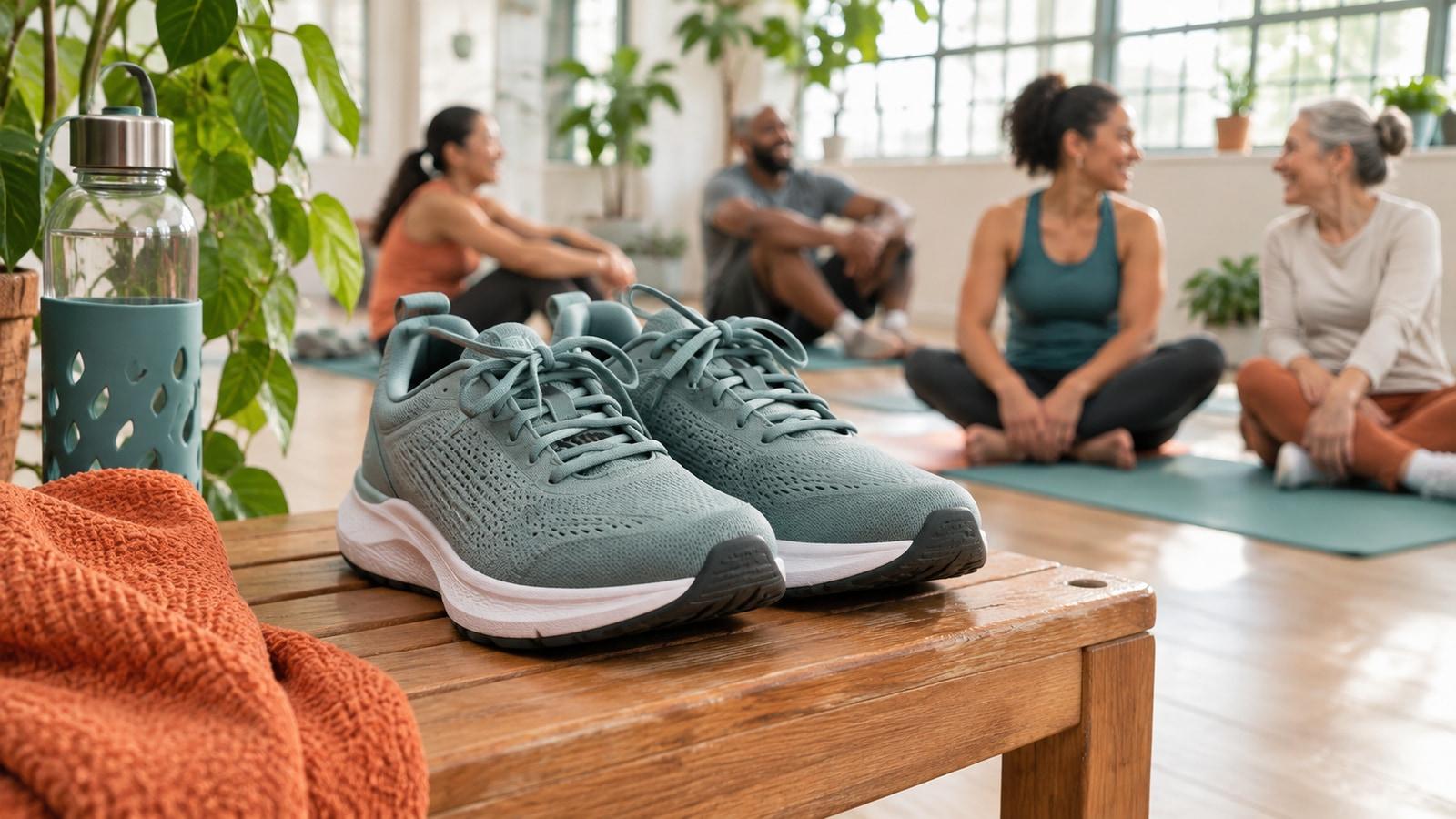
You've found a gym class you want to try. Now you're looking at a wall of sneakers, wondering whether you need the pair labeled “training,” “running,” or something more technical. The good news: your first class doesn't require you to solve footwear once and for all.
Start with what you'll actually do in the class and how the shoes feel on your feet. A comfortable, well-fitting pair suited to the movements is more useful than a fashionable label or an expensive promise.
Find out what happens in class
Read the class description or ask the instructor what a typical session includes. A gentle circuit using machines and light weights may involve different movements from a dance class with turns and side steps. A cycling class has another set of equipment considerations.
Ask about the floor, too. Will you move on a gym floor, a studio surface, or outdoors? Does the class require a particular kind of shoe? The instructor can explain the practical expectations, although your own comfort and any medical guidance should also count.
If you've been invited to try a class, you can ask whether your current sneakers are suitable before buying anything. Some people already own a pair that works for a first session. Others may need a different fit or type of shoe.
Think beyond forward movement
Many people reach for a running shoe because it's the athletic shoe they already know. Running shoes are designed around running, while a mixed gym class may include side steps, turns, or changes of direction. A cross-training shoe is designed for a mix of activities and may be worth trying for that kind of class.
That doesn't mean every running shoe is wrong or every cross-trainer will feel right. Shoe designs vary, as do feet. Try options that match the class and pay attention to how secure and comfortable you feel when you move in them.
For a class with a specific activity—such as indoor cycling or a court sport—ask what equipment is appropriate. You don't necessarily need a separate pair for every activity you try, especially while you're still deciding what you enjoy.
Try the movements your class uses
Wear the socks you expect to use in class when trying shoes. Give your toes room, check that the widest part of your foot feels comfortable, and make sure your heel feels secure. Our walking-shoe fit guide covers those basics in more detail.
For a mixed class, the next question is how the shoe feels when you move in more than one direction. If the store permits it and you feel steady, try a few slow side steps or a gentle turn. Notice whether your foot slides toward the edge of the shoe or the heel lifts. There is no need to jump around the shop to test a first pair.
Think about the class surface too. A shoe that feels secure on a carpeted shop floor may feel different on a smooth studio floor. Ask the instructor about the facility's footwear rules and the store about its return policy before you buy. A pair that hurts or feels unstable is worth discussing with a foot-care professional.
If your class uses a stationary bike, ask the instructor whether ordinary trainers are suitable for its pedals before considering a cycling-specific shoe. Equipment varies, and a first visit can help you decide what you actually need.
Consider your own foot-care needs
If you have diabetes, reduced sensation, a history of foot wounds, or another condition affecting your feet, ask your clinician or foot-care professional whether you need specific footwear guidance. You may not feel rubbing in the same way someone else does, so your usual way of judging a shoe may need to change.
Bring any prescribed inserts or supports when you try shoes, and ask how they should fit together. Don't assume that adding a thick insert to a tight shoe will solve the problem; it may change the space available for your foot.
Pain, a blister, or a new area of rubbing is a reason to stop and check what's happening. If you have a medical condition that affects healing or sensation, contact your care team about any foot concern according to the plan they've given you.
Make the budget decision easier
The most expensive pair isn't necessarily the best fit. Decide what you can comfortably spend, then compare options within that range. A store's return policy can matter, especially if you're trying a new type of class. Ask whether you can return a pair after wearing it indoors and what condition it must be in.
Look at the shoes you already own. Are the soles worn unevenly? Is the upper torn, or does the heel no longer feel secure? If they feel uncomfortable or unstable, it may be time to look for another pair. You don't need to replace shoes on a date picked from an advertisement; use their condition, comfort, and your needs as part of the decision.
After the first class
Notice how your feet feel during and after the session. Was there enough room in the toe area? Did your heel stay in place? Did a seam rub? Bring those observations to the store, instructor, or foot-care professional if you need help making a change.
You can also tell the instructor if a movement doesn't feel comfortable. Many classes offer alternatives, and taking one is a practical way to learn. Your shoes should support the activity you choose; they don't need to be a barrier to starting.