










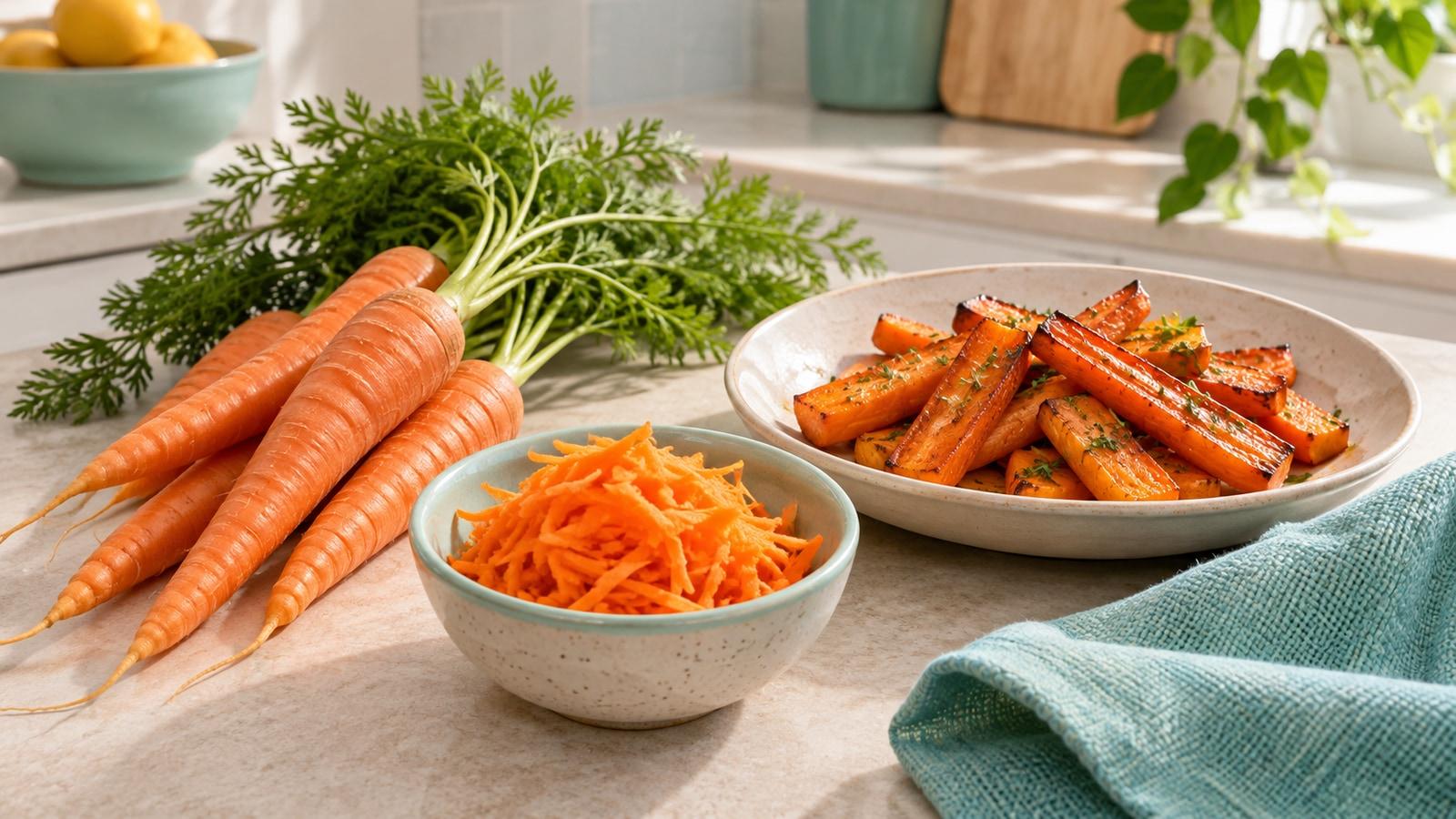
A bag of carrots is easy to buy and surprisingly easy to forget. If raw sticks aren't appealing, that doesn't mean the bag has to sit in the fridge until the carrots go limp. The same vegetable can be grated into a salad, softened in soup, or roasted until its edges brown.
Here's how to choose a preparation that fits the meal—and what to do with the rest.
Start with carrots in good condition
At the store, look for firm carrots without obvious soft, spoiled, or damaged areas. Whole carrots, peeled baby carrots, shredded carrots, and frozen pieces all offer different shortcuts. Pick the one you're most likely to use.
Keep fresh carrots refrigerated. If leafy tops are still attached, remove them before storing the roots. Follow the package instructions for pre-cut carrots, and throw away produce that looks rotten.
When it's time to prepare whole carrots, wash your hands and scrub the carrots under running water with a clean produce brush. You can peel them if you prefer; wash them before peeling. Use a clean cutting board, especially if you also prepared raw meat or poultry.
For crunch: grate or slice them raw
Thin slices make a crisp addition to a sandwich or salad. A box grater produces smaller pieces that are easier to mix into slaw, grain bowls, or a cold bean salad. Keep your fingers away from the grater as the piece gets short; save the end for another use instead of trying to grate every last bit.
For a snack, cut washed carrots into sticks and serve them with a dip you enjoy. Hummus, yogurt dip, or a small portion of a favorite dressing can add a different flavor. If the dip is perishable, keep it refrigerated until serving.
Raw carrots can be difficult to chew and are a choking concern for young children. If you need a prescribed texture because of a swallowing or chewing condition, follow your care team's instructions. Don't assume that shredding a raw carrot makes it suitable for every person.
For a softer bite: steam or microwave
Cut carrots into pieces of similar thickness so they cook more evenly. For steaming, place them in a steamer basket above simmering water and cover the pot. Check one of the thicker pieces with a fork, taking care around the steam. Cook a little longer if you prefer it softer.
For the microwave, put similarly sized pieces in a microwave-safe dish with a little water and cover it as the dish instructions allow. Heat in short intervals, stir or rearrange, and check the texture. The time will vary with the amount, the size of the pieces, and your microwave.
Drain carefully: the dish and steam will be hot. Add a little olive oil, herbs, or a squeeze of lemon if you like. Plain carrots work too, particularly when the rest of the meal already has a sauce.
For browned edges: roast them
Roasting is useful when the oven is already on for dinner. Cut washed carrots into pieces that are roughly the same size. Toss them with a little oil and spread them on a baking sheet with some space between them.
A 400°F oven is a practical starting point. Turn the pieces partway through and check them for tenderness; small pieces finish sooner than thick ones. You can take them out when they're just tender or leave them a little longer for more browning.
Try cumin or thyme before roasting, or add fresh parsley afterward. If the carrots are going into several meals, keep the seasoning simple and add different flavors at the table. A crowded pan may produce softer, steamed-looking carrots rather than browned edges.
Make them part of a meal
Carrots can sit alongside foods you already cook rather than requiring a new recipe. Add cooked pieces to lentil soup, put grated carrot into a chicken wrap, or serve roasted carrots with fish and a grain. A dip made with beans or yogurt can turn raw carrots into a snack with another component.
If a GLP-1 medicine has changed your appetite, choose a preparation that sounds appealing that day. Some people may prefer softer cooked vegetables to a large raw salad; others like the crunch. Neither option treats medication side effects. If nausea or early fullness regularly makes it hard to eat or drink enough, contact your care team.
Carrots provide fiber and vitamin A precursors. A varied meal can include vegetables alongside a protein food and another side you enjoy. You don't have to finish a large plate of carrots to make a meal worthwhile.
Keep the rest useful
Refrigerate cut carrots and cooked leftovers promptly in covered containers. For travel, use an insulated bag with a cold pack. Perishable foods shouldn't sit at room temperature for more than two hours, or one hour when the temperature is above 90°F.
When reheating cooked leftovers, heat them to 165°F throughout. A splash of water can help keep them from drying out, but it doesn't replace checking that they are heated evenly.
If you have just a few carrots left, add them to the next soup, roast them alongside another vegetable, or grate one into a salad. Choosing the texture first makes it easier to use what you have.