










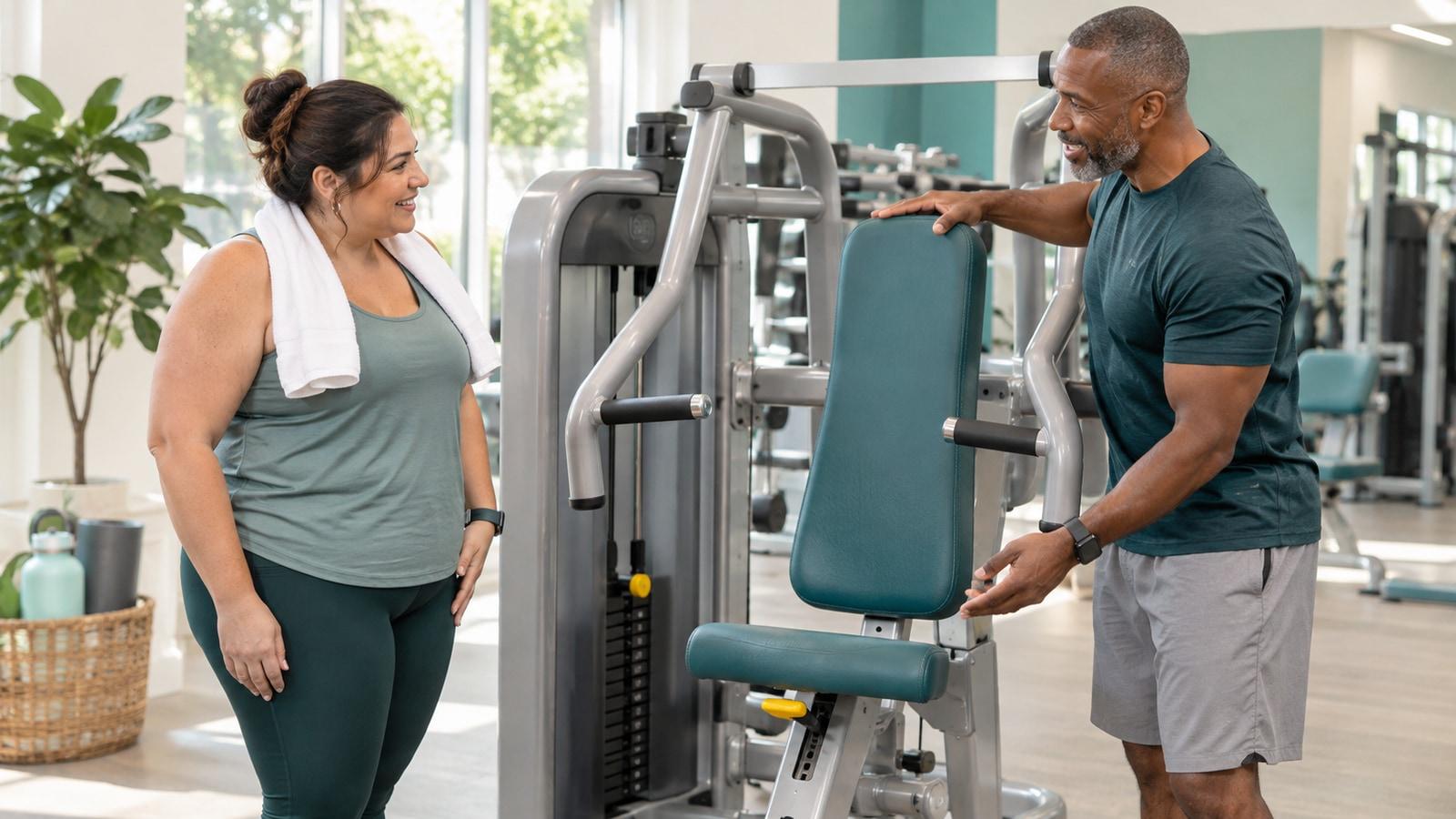
The chest-press machine may be one of the more approachable pieces of gym equipment: you sit down and press handles forward. But if the seat is too high, the handles are behind you, or the previous person left a heavy weight selected, that simple movement can feel awkward fast.
Take a minute to adjust the machine for your body before you start. The exact controls vary by brand, so it’s fine to ask a staff member to show you how the seat, handles, and weight selector work.
Find a supported position
Sit with your back against the backrest. Adjust the seat so the handles are roughly level with the middle of your chest, and place your feet securely on the floor or the machine’s foot supports. You should be able to reach the handles without sliding forward or stretching your shoulders backward.
Some machines let you change the starting position of the handles. If yours does, set them so they begin around the front of your chest rather than far behind it. The goal is a position that feels accessible and comfortable before you add effort. If the machine has a foot lever that brings the handles forward, ask staff how it works.
Keep a natural, comfortable position through your back. You don’t need to flatten yourself against the pad or arch dramatically. If you can’t reach the handles while staying supported, check the adjustments or try another machine rather than forcing the fit.
Choose a light starting resistance
Move the pin to a low setting before you begin. A manageable weight lets you press and return the handles smoothly without holding your breath, lifting off the seat, or throwing your body forward. You can adjust it after a few practice repetitions.
Numbers on machines aren’t always comparable. A setting that felt light on one chest-press machine may feel different on another because the equipment moves differently. Focus on whether you can control the movement and stay comfortable, not on matching someone else’s stack.
If you’re unsure how to move the pin or whether it is fully seated, ask staff. Don’t adjust a weight stack while it’s moving, and report any damaged cable or part before using the machine.
Try the press
Hold the handles with your thumbs around them and your wrists comfortably in line with your forearms. Breathe out as you press the handles forward. Straighten your arms without locking your elbows forcefully, then bend them slowly to return the handles toward the start.
Keep the movement controlled in both directions. You don’t have to push the handles so far that your shoulders roll forward or let them travel behind you on the return. If the range feels uncomfortable, stop and ask whether the seat or starting position needs adjustment.
You may notice work in your chest, shoulders, and arms. Sharp pain isn’t the goal. If you feel it, stop rather than pushing through. A trainer can check your setup; a clinician or physical therapist can help with persistent pain or a known injury.
Solve the common setup problems
The handles feel too high or low. Change the seat height a little and sit back again before testing the reach. The middle of the chest is a useful starting reference, though equipment designs differ.
Your shoulders feel stretched before you press. Check whether the handles can be brought forward or whether the machine has a foot-assisted start. If you still can’t reach comfortably, choose another option.
You have to rock forward to move the weight. Lower the resistance and practice a slower press. The backrest should provide support; you shouldn’t need to turn the movement into a full-body shove.
Your wrists bend back. Reduce the load and check your grip so the handles sit securely in your hands. Ask someone qualified to watch a repetition if the position still feels awkward.
Make a note for next time
Your first session might consist of a few easy practice presses, a rest, and one comfortable set. There’s no prize for exhausting your arms while you’re still learning the controls. Leave enough energy to keep the return slow and controlled.
Write down the machine name, seat setting, handle setting if applicable, and resistance that felt manageable. When you return, check each adjustment again—someone else may have changed it. A note makes the setup quicker without assuming your needs will always be identical.
If you’ve had shoulder, chest, arm, or back surgery or an injury, follow your rehabilitation instructions and ask your care team whether this movement is appropriate. A trainer can help with equipment, but an exercise plan after an injury should reflect your own restrictions.
Fit it into the rest of your week
The chest press is one possible strength exercise, not a requirement for a successful gym visit. You might pair it with other movements a professional has helped you choose, or simply practice the machine and come back another day.
If you’re managing your weight or taking a GLP-1 medication, a routine you can repeat matters more than the number on the stack. Rest when you feel unwell, and talk with your care team about symptoms that persist or interfere with eating and drinking. The first goal is a setup that lets you move comfortably and confidently.