










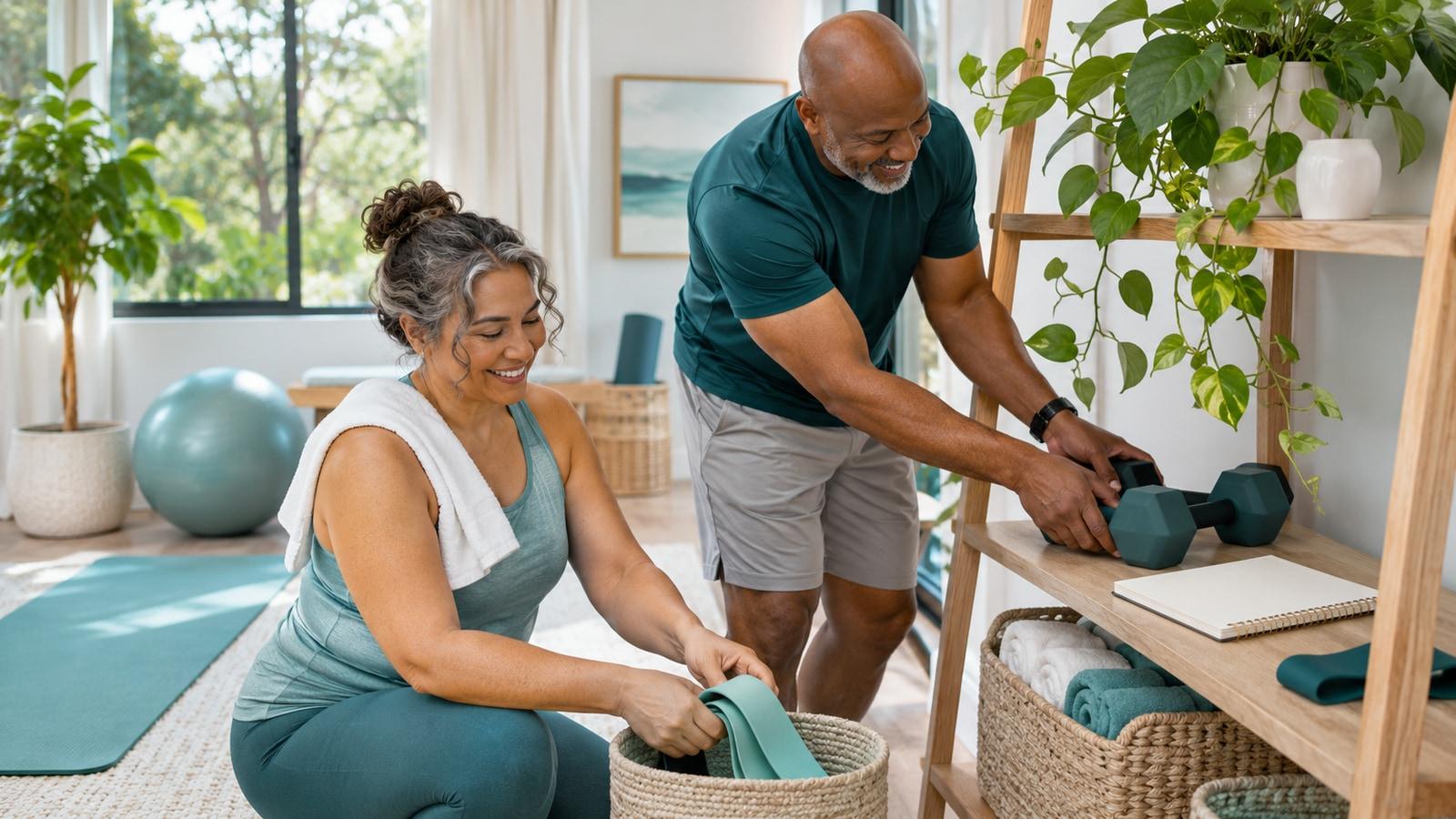
You wrote down “row: three sets,” but the next time you open your notebook, the adjustable dumbbells are on a different setting and the bench has been moved. If several people share a small workout space, a useful log needs a little more detail than the name of the exercise.
You don’t need a spreadsheet or a perfect streak. A few notes about the equipment and how the movement felt can make it easier to set up next time and compare sessions fairly.
Record the setup that changes
For an adjustable bench, note the position or setting you used. For a cable system, record the pulley height and attachment. For a resistance band, write down the brand or a description as well as the color; one company’s “medium” band may feel different from another’s.
If you use a chair, step, or support for an exercise, describe it in a way you’ll recognize: “solid kitchen chair against the wall” or “bottom step with rail.” You’re recording the setup that worked, not creating a rule that you must use the same item forever. If a piece of equipment is damaged or unstable, stop using it and sort that out before the next session.
These details matter because a change in setup can change how an exercise feels. Ten repetitions with a short band, for example, may not feel the same as ten with a longer one. A note helps you avoid treating those two sessions as a direct comparison.
Keep the entry short
A useful line might look like this:
"Seated row — blue fabric band, looped around fixed anchor at chest height; 2 sets of 8; felt manageable, last two slower.
For a dumbbell movement, record the weight of each dumbbell, not just “20 pounds” if that could mean a pair or a single weight. If you alternate arms, note whether your count is per arm or total. For a timed activity, record the actual time you moved and any breaks if those details help you plan.
You can add the date and one short comment about comfort or effort. “Left wrist uncomfortable; stopped after one set” is more useful than pushing through so the numbers look consistent. A paper notebook, phone note, or shared whiteboard all work; use whichever you’ll actually look at again.
Make a system everyone can use
If you share adjustable weights, agree on a simple way to identify settings. You might return them to a low setting after use or leave a note on the rack. If several people keep logs, give each person a separate page or heading so one person’s numbers don’t become another person’s starting point by accident.
Keep the shared space safe and easy to reset. Put loose plates, bands, and handles back where they won’t become tripping hazards. Check that collars or locking mechanisms are secure according to the equipment instructions before lifting. A log is helpful, but it isn’t a substitute for checking the equipment each time.
If the equipment you planned to use is occupied, record the alternative rather than waiting indefinitely. “Wall push-up instead of bench press” is a different exercise, and that’s okay. Keeping the distinction in your notes makes the next comparison more meaningful.
Look for patterns, not perfect numbers
Compare entries with similar setups over time. You might notice that the same weight feels steadier, that you need fewer pauses, or that a different seat position is more comfortable. Those observations can be useful even if the number of repetitions hasn’t changed.
Not every session will look the same. Sleep, illness, stress, schedule changes, and ordinary variation can affect how much you feel like doing. If you take a GLP-1 medication and feel nauseated or unusually tired, a lighter session or rest may be the right choice. Discuss persistent symptoms or difficulty eating and drinking with your care team.
If a movement repeatedly causes pain, stop and ask a qualified professional for advice. A log can help you describe what happened, but it can’t diagnose the problem. Note the exercise, equipment, and what you felt so you have something concrete to discuss.
Decide what’s worth tracking
Some people enjoy recording every set; others only need a reminder of the weight and chair height. Start small. If a detail never changes and doesn’t affect your setup, you can leave it out. If you keep forgetting which attachment worked, add it.
A log should support your routine, not turn it into homework. Give yourself permission to record a shorter workout, a substitution, or a rest day without treating it as a failure. The point is to make the next session easier to begin and easier to understand.
Before you put the equipment away, write down the one or two settings you’d otherwise forget. That small note can save you time when the bench and weights have been rearranged before your next session.