










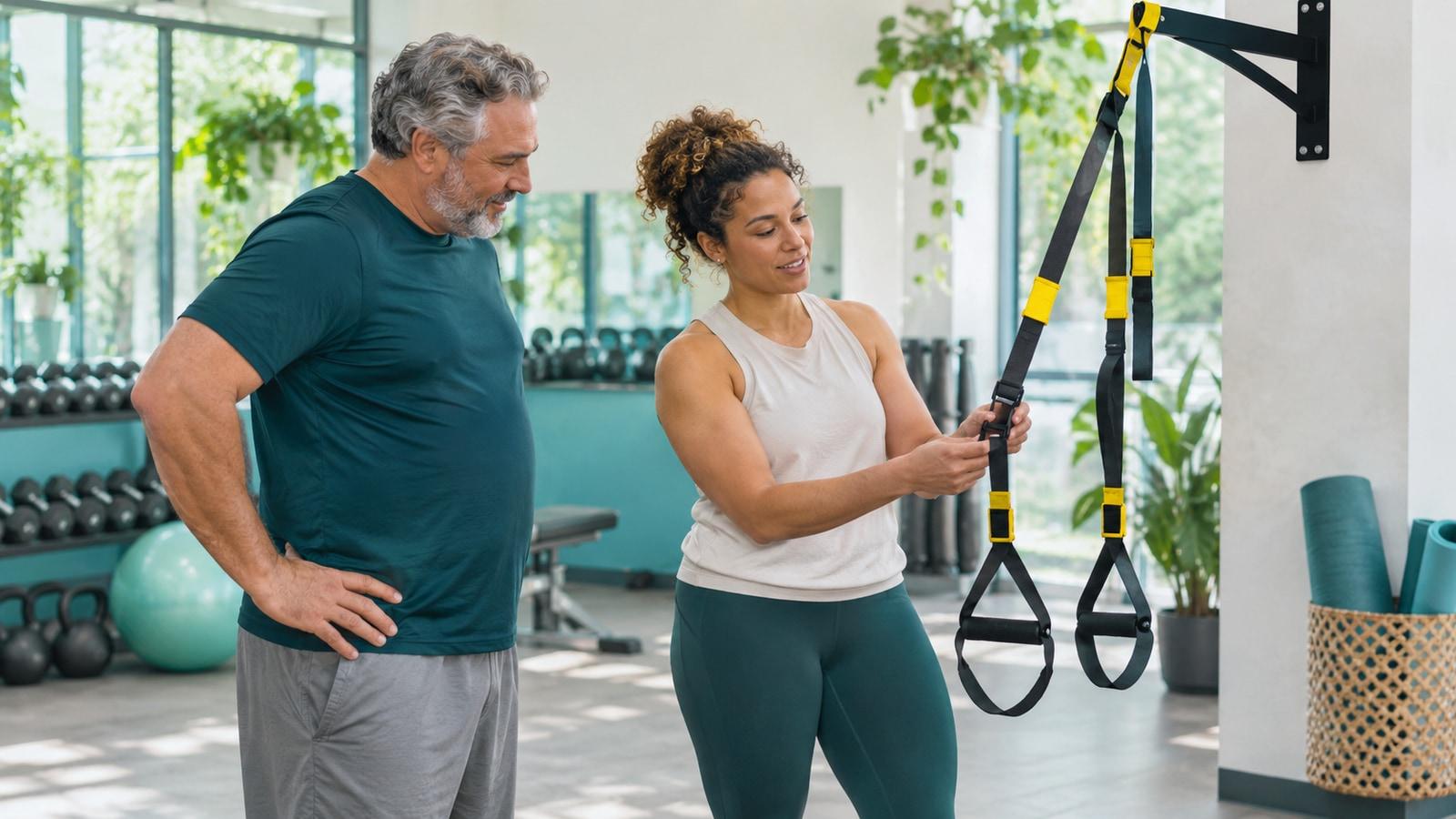
A suspension trainer uses straps and handles anchored to a stable point. You lean or move while holding the handles, changing the challenge by changing your body position. It can be useful in a gym or at home, but the anchor and setup deserve attention before the first repetition.
Start with the instructions for your specific equipment and ask a qualified instructor to demonstrate it. A strap that looks secure isn't enough; the anchor, surface and available space all need to be appropriate for the movement.
Check the anchor first
Use the anchoring system supplied or recommended by the manufacturer, attached to a strong, secure point designed to support the load. Follow the product's instructions for the particular anchor. Don't loop straps around a fixture just because it seems sturdy, and avoid sharp edges that could damage the material.
If using a door anchor, follow the manufacturer's exact directions for the door and which side to use. Make sure the door cannot be opened by someone else during exercise. If you can't confirm that the door and anchor are suitable, choose a different setup or wait for qualified help.
Inspect straps, stitching, buckles and handles for wear before use. Don't use damaged equipment. Test the setup as the manufacturer directs, and stop if anything shifts, slips or makes you uncertain.
Give yourself a clear, nonslip area
Remove furniture, cords and loose rugs from the space where you'll move. Wear footwear that grips the floor and make sure the surface won't become slippery. Keep other people and pets away from the straps and anchor.
Adjust strap length before starting, using the product's instructions. Ask an instructor to check that both handles are even when the exercise calls for it. Know how to return to an upright position and release the handles safely.
If you're in a shared gym, check the setup yourself even if someone used it just before you. The strap length or anchor may have been changed for a different exercise, and your own starting position may need a different adjustment.
If balance, grip, shoulder or other health concerns make the setup uncertain, talk with a clinician or physical therapist first. A stable chair, a machine or a different exercise may be a better fit.
Begin with a manageable angle
For many suspension exercises, body angle changes how much resistance you feel. An instructor can show you a position that lets you move slowly without losing balance or holding your breath. Start conservatively; you can change the angle later if appropriate.
Avoid stepping into a position you can't safely return from. If the straps go slack unexpectedly, your feet slide or your body swings, stop and reset. The movement should feel controlled rather than like a tug-of-war with the anchor.
You don't need to match another person's angle or perform an advanced variation. Equipment and body mechanics differ, and your first goal is learning the setup.
Try a simple movement with instruction
A supported squat is one possible starting movement. Hold the handles, stand in the position the instructor recommends and bend your knees and hips through a comfortable range. Use the straps for the amount of support you need, then return to standing smoothly.
A standing row is another option a trainer may demonstrate: lean back only as far as you can control, then draw yourself toward the handles and return slowly. Keep breathing and avoid shrugging or jerking. If either movement causes discomfort or feels unstable, stop and ask for a different variation.
Begin with a few controlled repetitions and rest. There is no need to add speed, deep range or a difficult angle while you're learning.
Know when to stop
Sharp pain, dizziness, numbness, a slipping grip or a moving anchor means the session should stop. Return to a stable position if you can do so safely and ask for help. Don't keep using a questionable anchor to finish a set.
Severe chest pain, significant breathing difficulty or fainting can require emergency care. For persistent or new discomfort, contact your clinician before resuming. Follow any individual exercise restrictions you've been given.
Plan for the rest of the routine
A suspension trainer is one tool, not a complete program by itself. A qualified professional can help you choose movements for different muscle groups and schedule recovery. You can also use bodyweight exercises, bands or machines if those fit your space and abilities better.
If you're exercising at home, keep the equipment stored where it won't become a trip hazard. Recheck the anchor and straps each time rather than assuming yesterday's setup is still secure.
Ask for a demonstration
Try: “Can you show me how to anchor this model, choose a starting angle and stop safely?” Ask the instructor to watch the first few movements and explain any adjustments.
The straps can make exercise flexible, but the safe setup comes first. Use the manufacturer's system, keep the area clear and choose a movement you can control.