










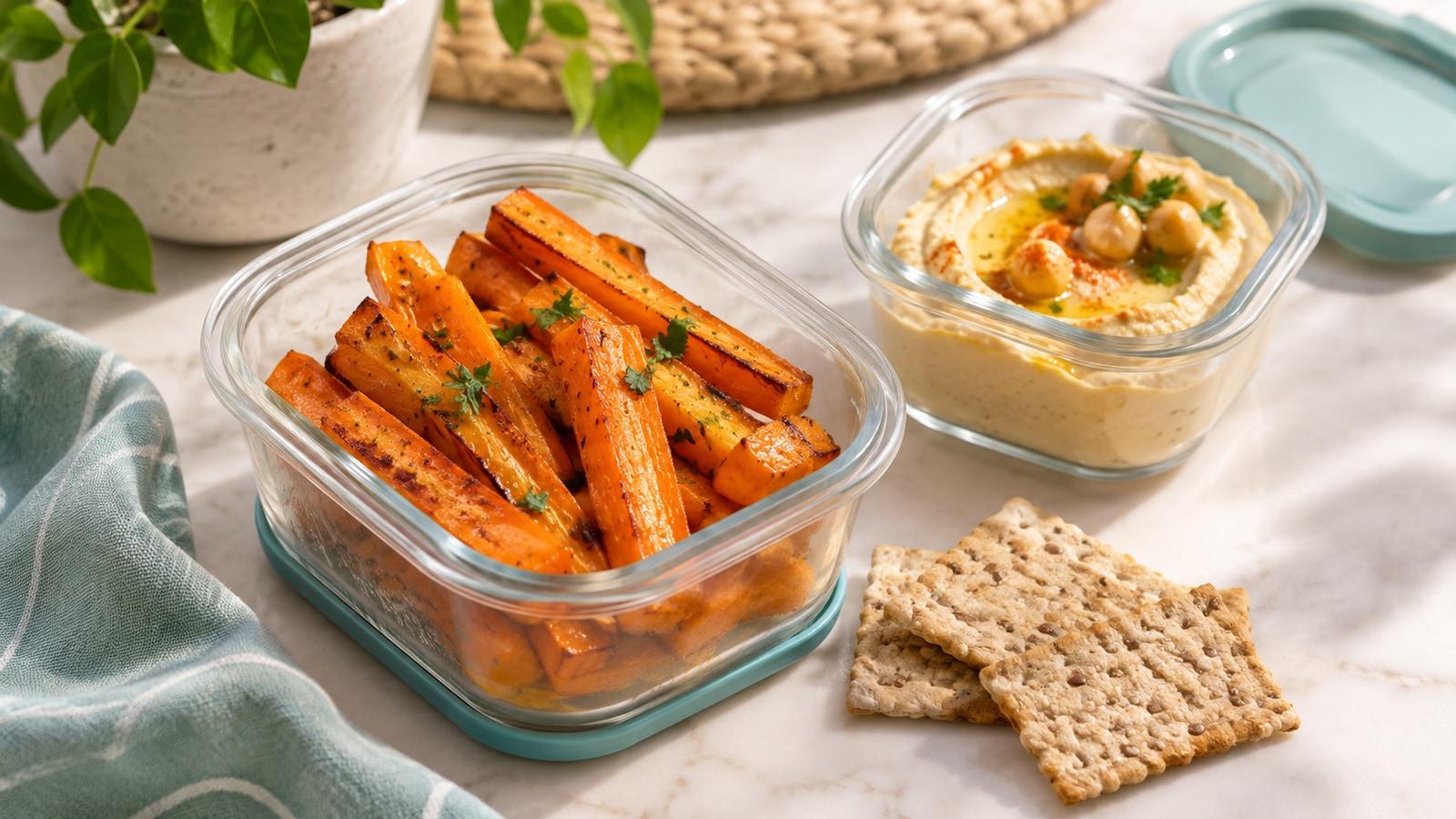
Hummus and carrots are easy to pack, but roasting the carrots gives the snack a softer texture and a little sweetness. Put the hummus in a small container, add the carrots beside it, and bring crackers separately if you want some crunch.
This is a useful snack for a workday or a trip when you have a way to keep it cold. Roast the carrots when you’re already using the oven, then make one or two cups for later.
What you need
Makes: about 2 snack cups
Prep: about 10 minutes
Cook: about 20–25 minutes
- 4 medium carrots
- 1 teaspoon olive oil
- ½ teaspoon ground cumin or paprika, optional
- ½ cup prepared hummus
- Whole-grain crackers, optional
- Lemon wedges or chopped parsley, optional
Hummus varies in thickness, salt, and flavor. Choose one you enjoy, or use a homemade version that has been stored safely. Check the label for sesame, which is commonly present as tahini and is a common allergen.
Roast and pack
- Heat the oven to 425°F. Wash your hands and rinse the carrots under running water. Peel if you like, then cut into sticks that will fit your containers.
- Toss the carrots with oil and cumin or paprika if using. Spread them on a baking sheet in a single layer.
- Roast for about 20–25 minutes, turning once, until tender and lightly browned. Thick pieces may need longer than thin ones.
- Serve warm with hummus, or refrigerate the cooked carrots promptly in a shallow container for later. When packing, put hummus and carrots in separate compartments; add crackers just before eating.
If reheating leftover carrots, heat them to 165°F. They can also be eaten cold after safe storage. Keep hummus and carrots refrigerated until serving, or use an insulated bag with a cold pack when traveling.
Choose the carrot texture you like
Thin sticks cook quickly and may become very soft. Thicker ones hold their shape but take longer. Cut the pieces to a similar size and check the largest one with a fork before removing the tray.
For more browning, leave space between the carrots. A crowded pan traps steam and produces a softer result. That’s fine if you prefer a tender snack; it just gives a different texture from a spaced-out tray.
If you don’t want to roast a small batch, add the carrots to a tray of vegetables you’re already cooking. Keep the seasonings mild enough to work with the hummus, and set aside the pieces you need before adding a sauce to the rest.
What the hummus adds
Hummus is commonly made with chickpeas, which provide plant protein and fiber. A scoop can make the carrot snack more substantial and gives the vegetables a creamy dip. Product recipes differ, so use the label to compare protein, sodium, and serving size rather than assuming every hummus is the same.
Start with a portion that fits your appetite. If you’re getting used to eating more beans or fiber, make changes gradually and see what feels comfortable. A small cup can be paired with a meal later, or you can add crackers if you want a larger snack.
Some hummus contains sesame as tahini. If sesame is an allergen for you or someone eating the snack, choose a suitable sesame-free product and check for cross-contact. Wheat crackers contain gluten; choose labeled gluten-free crackers or skip them if needed.
Change the flavor without changing the routine
Cumin gives carrots a warm, earthy note; paprika adds a different flavor. Both are optional. Lemon at the table adds brightness, while parsley brings freshness. If your hummus is already strongly flavored, keep the carrots plain the first time.
Roasted bell pepper, cooked sweet potato sticks, or cucumber can replace some carrots. Cucumber doesn’t need roasting and gives a crisp contrast. Cut vegetables into pieces that are easy to dip and appropriate for the person eating them.
For a softer snack, cook the carrots until a fork slides through easily. For more texture, take them out when tender but still holding their shape. The hummus can be loosened with a little water and stirred with a clean spoon if it’s too thick for dipping.
Packing safely
Hummus and cooked carrots are perishable. Refrigerate them promptly and keep them cold until eating. When traveling, use an insulated container and a cold pack rather than leaving the cup in a warm car or on a desk all afternoon.
Perishable foods shouldn’t sit at room temperature for more than two hours, or one hour when the temperature is above 90°F. Pack crackers separately so they stay crisp, and bring a clean spoon if you don’t want to dip directly into the container.
If you make several portions, label them and follow the hummus package’s storage guidance. Use clean containers, and don’t return food that has been sitting out to the main tub.
The snack is simple to scale: roast a few carrots, add a portion of hummus, and choose a crunchy side only if you want one.