










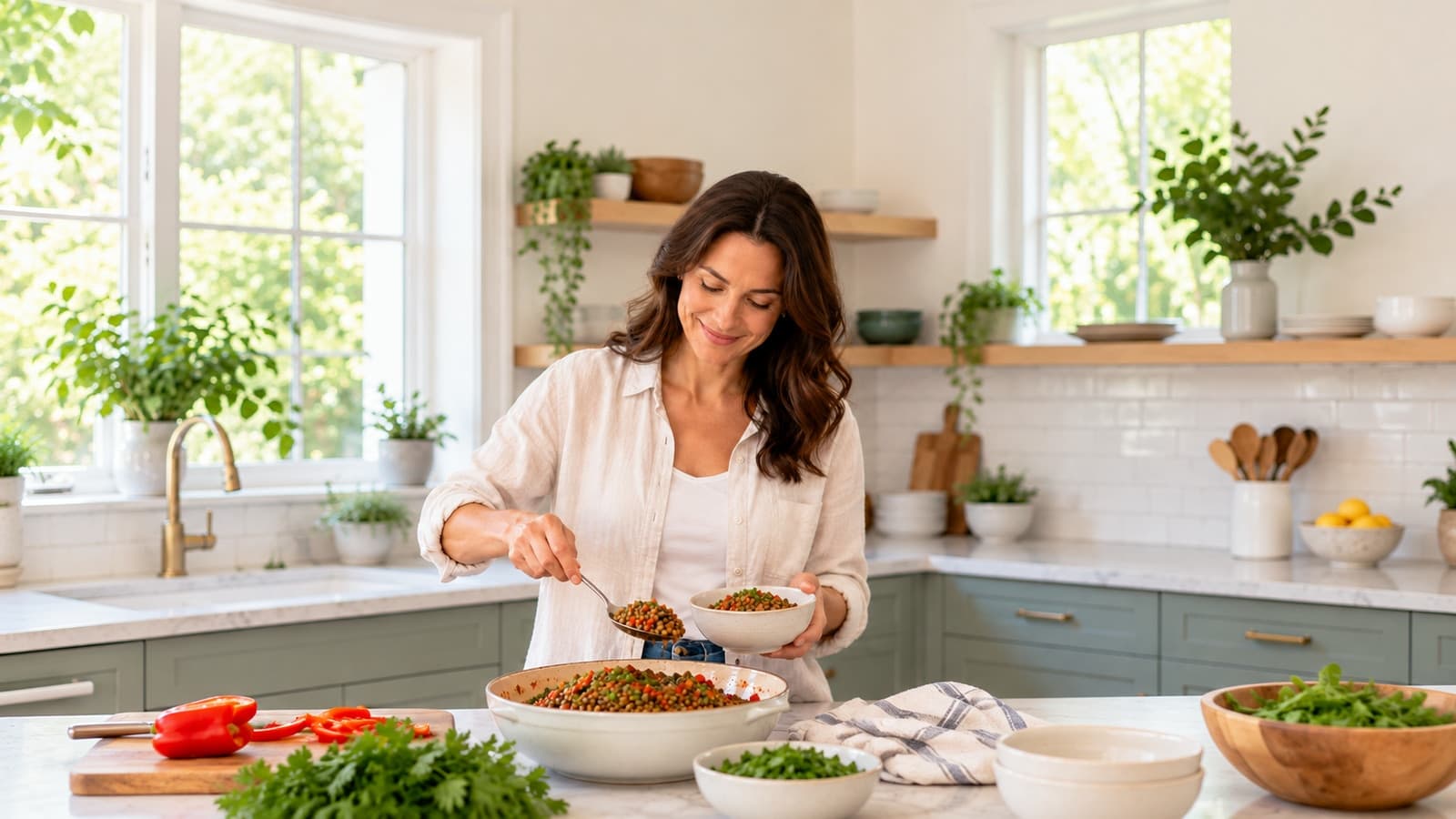
A smaller appetite can make a familiar meal feel like too much. If you're eating less at a time, it helps to have a few ingredients on hand that work in small portions and can be turned into something you actually want to eat.
Iron-containing foods are one place to look. They include both plant and animal options, so you can choose ideas that fit your preferences, budget and health needs.
Where iron appears in food
Meat, poultry and seafood contain iron. So do foods such as lentils, beans, peas and some fortified cereals and breads. The types and amounts differ, and the body doesn't absorb every form of iron in exactly the same way.
Plant foods and fortified products provide nonheme iron. Pairing a plant source with a food containing vitamin C can help your body absorb that iron. Sweet peppers, tomatoes, citrus fruit, strawberries and broccoli are examples of foods that contain vitamin C.
That pairing is a useful food idea, not a guarantee about your individual iron level. Food choices can support iron intake, but they do not diagnose or automatically treat a deficiency.
A few small-meal combinations
Try a small bowl of lentil soup with a little tomato, beans with sliced sweet pepper, or hummus with a few pieces of pepper and bread. If you prefer animal foods, a modest portion of chicken or fish can be part of a rice bowl or sandwich.
Breakfast can work too. Check whether a cereal is fortified with iron, then pair a portion with strawberries or another fruit you enjoy. A label can help you compare serving sizes and see whether the product contains added iron.
You don't have to combine every ingredient in a single perfect meal. Keep the idea flexible: choose an iron-containing food, add a vitamin C-containing food when it suits the meal, and adjust the portion to your appetite and care plan.
Make the practical part easier
Keep a can of beans or a pouch of lentils in the pantry if they're convenient for you. Frozen peppers, a jar of tomato sauce or a piece of fruit can make a pairing possible without a separate grocery trip. Rinse or prepare packaged foods according to the directions and your preferences.
Leftovers can help when cooking a full meal isn't appealing. Put a small amount of chili over rice today and save the rest for another meal. If beans or other foods bother your stomach, you don't need to force them; try another option and discuss persistent digestive trouble with your care team.
For more general meal ideas, see getting enough nourishment with a smaller appetite.
Don't guess at a deficiency
Feeling tired can have many causes. It doesn't automatically mean you need iron, and an online list of symptoms can't confirm the reason. If fatigue, weakness or another concern is affecting your day, describe it to a health professional and ask what evaluation is appropriate.
Iron supplements are different from adding beans to lunch. Too much supplemental iron can be harmful, and iron can interact with some medicines. Ask a pharmacist or health professional before starting one, and keep supplements safely away from children.
If you've already been told you have an iron deficiency, follow your individual treatment plan. A food article should not replace that plan, and you can ask how meals fit alongside it.
Choose what you'll use
Pick one or two combinations that sound good rather than buying a long list. A small bowl, a familiar flavor and ingredients that are easy to keep around can make nourishment feel less like another assignment.
If your appetite remains so low that you struggle to eat enough across the day, let your care team know. You deserve a plan that works for the size of the meals you can manage.