










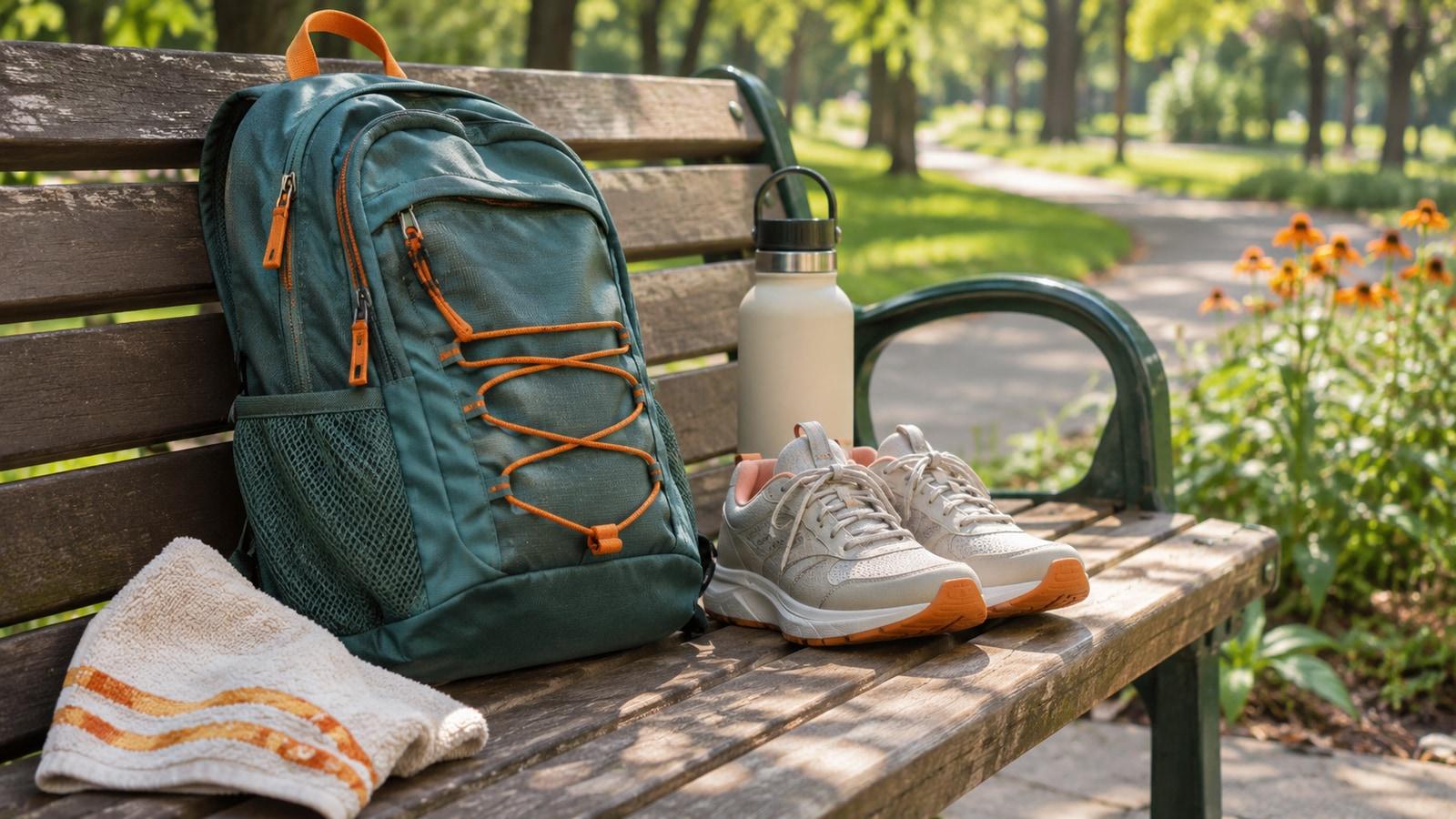
Walking with a weighted backpack—sometimes called rucking—has become a popular way to add challenge to an ordinary route. It can also change how the walk feels on your shoulders, back and legs. More weight isn't automatically better, and it isn't a required next step for a useful walk.
Before adding a load, think about why you want the change, how your current walks feel and whether you have any health or mobility concerns to discuss with a professional.
What changes when you carry a load?
A backpack adds weight that your body has to carry while moving. The effort can vary with the load, your walking speed, the slope and the terrain. A familiar flat route may feel different once a pack is added, and an uneven trail introduces another variable.
Research on carrying loads has examined changes in energy demand and movement, but a particular study's load or participants don't provide a universal starting weight for everyone. Fitness, prior injuries, equipment and goals differ. Avoid copying a number from a social post as though it were a personal recommendation.
If you already enjoy walking, you can also change the route, pace or duration when appropriate. A weighted pack is one option, not the only way to make an activity interesting.
Think about the conditions you can control. A familiar level path with places to stop offers a different experience from a steep trail with loose stones. You can decide what kind of outing you want before deciding whether to carry anything extra.
Start with the walk you have
Notice how you feel during and after your usual route. Is it comfortable? Are you recovering well? Does the surface feel stable? If you're new to walking for exercise, returning after an injury or managing a condition that affects balance, joints or breathing, talk with a clinician or physical therapist before adding a load.
If you've been given activity restrictions, follow them rather than treating a backpack as an exception. A physical therapist can help you decide whether carrying a load makes sense if a past injury or balance concern makes the answer less clear.
A manageable walk without added weight is a complete activity. You don't need to make it harder simply because someone else does.
Check fit and stability
If you decide to try a pack, use one that fits comfortably and can secure its contents so they don't shift. Adjust both shoulder straps according to the pack's design. Place heavier items close to your back and secure them rather than letting them roll around. Avoid a setup that pulls sharply on one side, swings as you move or makes you feel unsteady.
Practice putting the pack on and taking it off safely. Choose a clear, familiar route and pay attention to the surface. If you use a mobility aid, consider how the pack changes your balance and ask the professional who helps with the aid for advice.
There is no need to carry a heavy object or improvise a loose load. A secure, comfortable setup and a conservative plan matter more than reaching a number.
Change one thing at a time
Adding weight, distance, hills and speed on the same day makes it hard to tell what caused discomfort. If you try a new load, keep the rest of the walk familiar and give yourself time to see how you feel afterward. A shorter loop near home makes it easier to stop and take the pack off if the fit isn't right.
Pay attention to shoulder pressure, back or joint discomfort, balance and breathing. Stop if the pack causes pain, numbness, unusual dizziness or another concerning symptom. A mild adjustment to straps doesn't replace an assessment for persistent pain.
If you're using a GLP-1 medicine and nausea or difficulty eating or drinking affects your activity, bring that up with your care team. Follow any individual fluid or activity instructions you have; generic advice may not fit another health condition.
Ask whether it serves your goal
If you want to build strength, a balanced strength program adapted to your needs may answer a different question from carrying a pack. If you want time outdoors, an unweighted walk may be exactly what you need. If the pack makes the activity unpleasant or difficult to fit into your day, you can choose another approach.
If you're unsure how the load fits with an injury or mobility aid, an instructor or therapist can help with the setup and alternatives. You might ask what signs to watch for and how to judge effort. Otherwise, notice whether the pack makes a familiar walk more enjoyable or simply less comfortable.
Keep the next walk flexible
Severe chest pain, significant trouble breathing, fainting or another medical emergency warrants urgent help. For new or persistent discomfort, contact your clinician. Don't keep adding weight while waiting to see if a problem goes away.
A weighted backpack can be an interesting variation for some people. The better choice is the one that fits your current ability, feels secure and leaves you wanting to move again—not the one with the heaviest pack.