










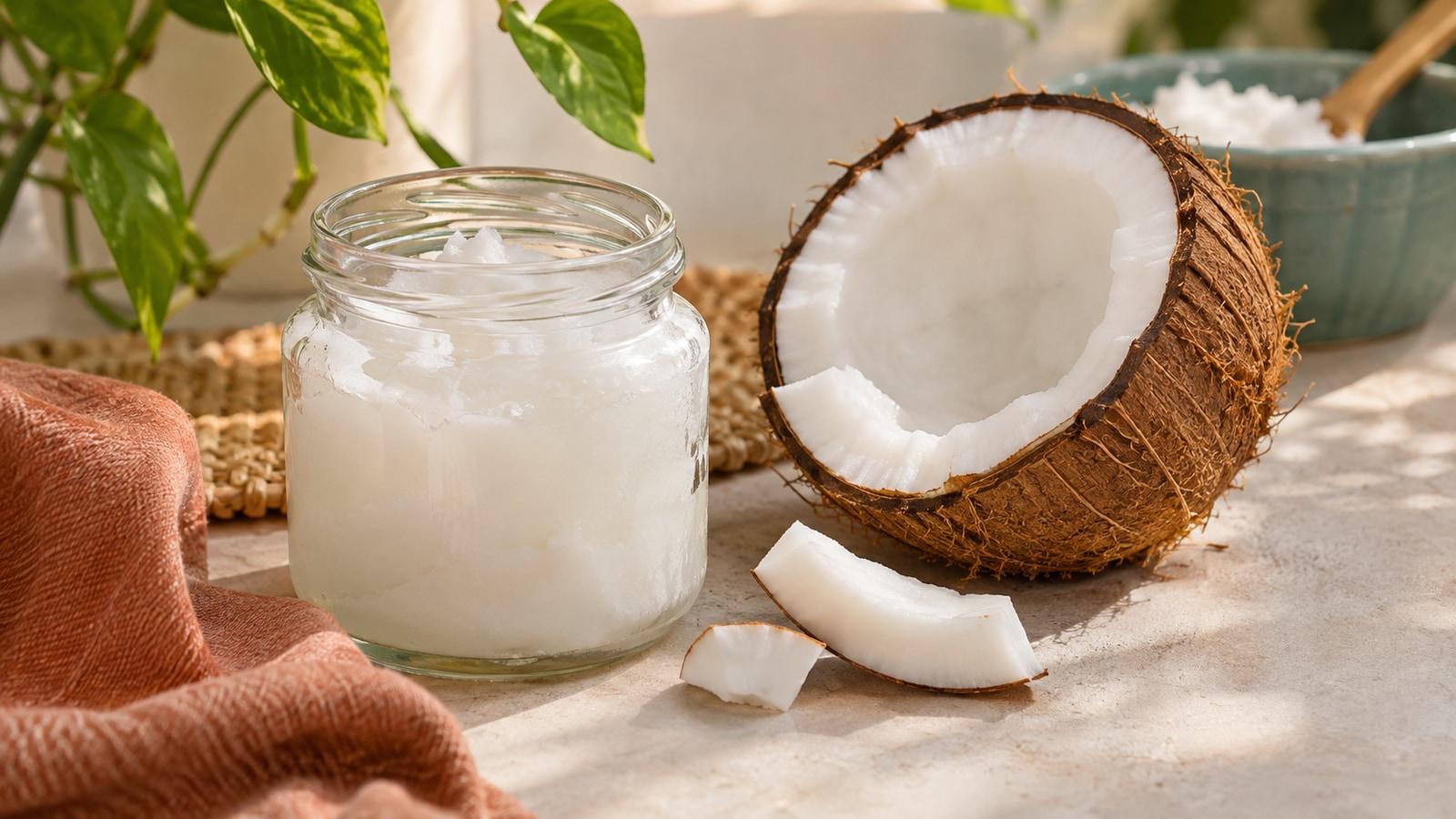
Coconut oil and MCT oil are often sold next to each other. Their labels may both mention medium-chain fats, and some MCT oils are made from coconut oil. It would be easy to assume they're the same thing in different bottles.
They aren't identical. Coconut oil contains a mix of fatty acids. Many products sold as MCT oil are made to contain higher proportions of particular medium-chain fats. The exact mix depends on the product, and the difference matters when someone quotes a study about one oil as proof about the other.
What does MCT mean?
MCT stands for medium-chain triglyceride. A triglyceride is a form of fat made from a glycerol backbone and fatty acids. “Medium-chain” refers to the length of those fatty-acid chains; you'll sometimes see them identified by the number of carbon atoms they contain.
Two examples often discussed in MCT products are caprylic acid, called C8, and capric acid, called C10. Another is lauric acid, or C12. You don't have to memorize the names to shop for cooking oil, but they help explain why two products advertised as containing MCTs can have different compositions.
The term is used somewhat differently across products and research. If a claim sounds specific, look at which fatty acids were actually studied or listed rather than assuming every product labeled MCT has the same mix.
What is in coconut oil?
Coconut oil contains several fatty acids, including a substantial proportion of lauric acid. It also contains other fats, including longer-chain saturated fatty acids. Calling it “all MCTs” flattens those differences.
Lauric acid is sometimes grouped with medium-chain fatty acids because it has 12 carbon atoms. Its digestion and transport have characteristics that differ from the shorter C8 and C10 fats commonly emphasized in concentrated MCT oils. That doesn't make lauric acid inherently good or bad; it means the label alone doesn't tell the whole story.
A bottle of MCT oil may be made from fats originally found in coconut or palm oil, but it has been processed to produce a different fatty-acid mix. Check the individual label for what that product contains. “From coconut” describes a source; it doesn't mean the oil has the same composition as ordinary coconut oil.
Can you swap research about one for the other?
Not automatically. If a study used an MCT oil rich in C8 and C10, it tested that preparation under the conditions of that study. It didn't necessarily test the coconut oil in your pantry.
Some research has looked at MCT oil and body weight or other health measures. Results vary, and a short study in a particular group cannot promise a specific result for you. Claims that adding a spoonful of either oil will make body fat disappear go well beyond what a product label can establish.
The rest of the eating pattern also matters. Oil adds fat and energy to a meal. Whether you're drizzling it over vegetables or adding it to coffee, it makes sense to consider why you want it there: flavor, cooking use, or an instruction from your healthcare team.
What about cooking?
Choose an oil for the dish you're making and follow the product's storage and use instructions. Coconut oil can contribute a coconut flavor, depending on the product; another oil may suit a different recipe. MCT oils vary too, so check the label rather than assuming every bottle is intended for the same cooking method.
If you like coconut oil in a familiar dish, you don't need to treat one ingredient as the sole measure of the meal. If you prefer olive, canola, or another oil for flavor or price, that's a practical choice as well. Someone managing cholesterol or another health condition can ask a dietitian how different fats fit into their overall eating pattern.
If you're taking a GLP-1
Some people taking GLP-1 medicines experience nausea or other digestive symptoms. A concentrated oil isn't required for treatment. If you notice that a particular food or amount doesn't sit well, make a note of it and discuss persistent symptoms with your care team. Avoid forcing a food or supplement because an online post says it is necessary for the medicine to work.
If a clinician has recommended a specific MCT product for a medical nutrition reason, ask before changing it. That advice may have a purpose unrelated to a general weight-management claim.
Three label questions
When you're comparing bottles, ask yourself:
- Is this ordinary coconut oil or a product specifically labeled MCT oil?
- Does the label identify the fatty acids or explain how the product is intended to be used?
- Am I choosing it because I like the flavor or have a specific reason—or because a claim promises an outcome it can't guarantee?
Coconut oil contains a mix of fats, including lauric acid. MCT products can contain a different mix. Knowing what is actually in the bottle is more useful than assuming the two names mean the same thing.