









Every day brings a fresh opportunity to understand ourselves better, and that includes changes happening with our hair. Noticing shifts in your hairline can be a bit unsettling, but gaining clarity is the first step towards a renewed sense of confidence. Many men wonder, "Is my hairline actually receding, or am I just imagining things?" It's a common question, and thankfully, there are clear signs to help you identify if your hairline is changing and what steps you might consider next.
At Fresh Day Meds, we believe in empowering you with knowledge and supportive solutions. Understanding the early indicators of a receding hairline can help you take proactive steps, embracing a fresh approach to your hair health journey.
What Does a Normal Hairline Look Like?
Before we dive into what a receding hairline looks like, let's understand what's generally considered normal. A mature hairline, which typically develops in men in their late teens to late twenties, often sits slightly higher than a juvenile hairline. It might form a gentle 'M' shape, but the key is that it's relatively stable and doesn't continue to move backward significantly.
Think of it as a subtle evolution, not a dramatic retreat. This natural maturation is different from actual hair loss and is a normal part of aging for many men. The distinction lies in the progression and the pattern of the change.
Key Signs of a Receding Hairline
Identifying a receding hairline early can make a big difference in managing hair loss. Here are some clear signs to look for:
1. The 'M' or 'V' Shape
One of the most classic indicators of a receding hairline is when it begins to form a distinct 'M' or 'V' shape. Instead of a relatively straight or gently curved line across your forehead, you'll notice that the hair at your temples starts to thin and move backward, while the hair in the middle of your forehead might remain relatively untouched. This creates the characteristic peaks and valleys.
This pattern is often associated with male pattern baldness, a common form of hair loss.
2. Hair Thinning at the Temples
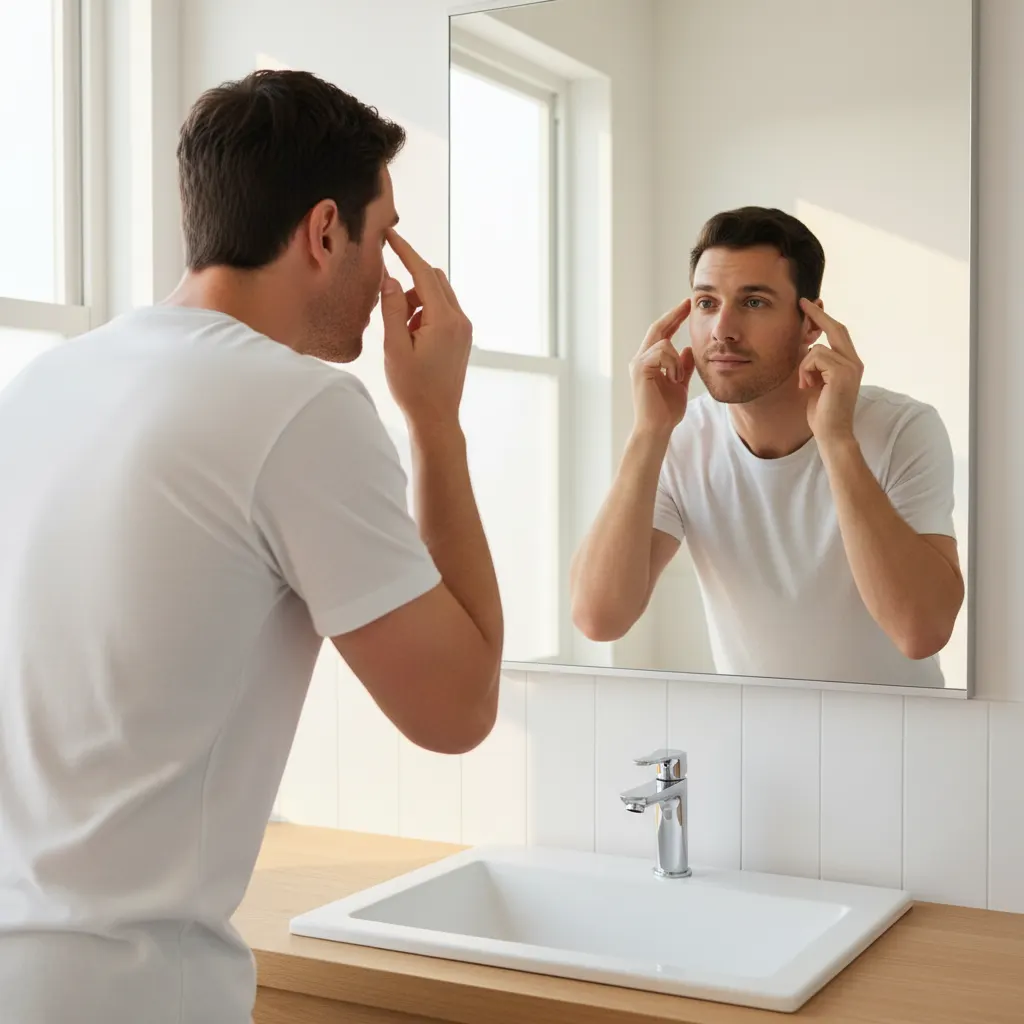
Pay close attention to the hair around your temples. Is it looking less dense than it used to? Are individual hairs finer or shorter? This thinning can be one of the earliest and most telling signs. You might also notice that it's harder to style your hair in certain ways because of this reduced density.
Run your fingers through your hair at the temples and compare it to other areas of your scalp. Any noticeable difference in thickness or texture can be an indicator.
3. Increased Hair Shedding
While some daily hair shedding is normal (we typically lose 50-100 hairs a day), a significant increase can be a red flag. Are you finding more hair than usual on your pillow, in your shower drain, or on your brush? If the amount of hair you're losing seems to be escalating, especially from the front of your scalp, it could be a sign of a receding hairline.
Keep an eye on the types of hairs you're losing too. If they are mostly short, fine hairs, it suggests your hair follicles are shrinking, a common characteristic of male pattern baldness.
4. A Higher Forehead
As your hairline recedes, your forehead might appear larger or higher than it used to. This is a visual consequence of the hairline moving backward. If you find yourself thinking your forehead looks more prominent, it's worth taking a closer look at your hairline.
5. Photos Don't Lie: The Comparison Test
One of the simplest and most objective ways to track changes is to compare current photos with older ones. Look at pictures from a few years ago – even just a year ago – and compare your hairline then to how it looks now. This can provide undeniable evidence of recession. Remember, progress is often subtle, and photos offer a clear, visual timeline.
What Causes a Receding Hairline?
The most common cause of a receding hairline in men is androgenetic alopecia, more commonly known as male pattern baldness. This condition is primarily genetic and hormonal, influenced by dihydrotestosterone (DHT), a derivative of testosterone. DHT can shrink hair follicles, leading to shorter, finer hairs and eventually, no hair growth at all.
Other factors like stress, certain medications, nutritional deficiencies, and lifestyle choices can also contribute to hair loss, but male pattern baldness is the leading culprit when it comes to a receding hairline.
Embracing a Fresh Approach to Hair Health
If you've identified signs of a receding hairline, don't despair. Every sunrise is a chance to start over, and that applies to your hair health too. There are effective, science-backed solutions available to help manage hair loss and encourage regrowth. Options like finasteride and minoxidil are widely recognized for their ability to maintain existing hair and stimulate new growth.
At Fresh Day Meds, we offer supportive, accessible solutions to help you on your journey. Consult today to understand your options, and discover how you can embrace a fresh path to healthier, fuller-looking hair. Remember, change doesn't start on Monday—it starts today. A new you is waiting.