










You move the bathroom scale a few inches and the display changes. Before trying to interpret the number, take a look at the scale’s surroundings and its instructions.
Start with the surface under the scale. A firm, level floor and a consistent setup can make readings easier to compare, although they don’t turn a home device into a medical test.
Give it a stable place
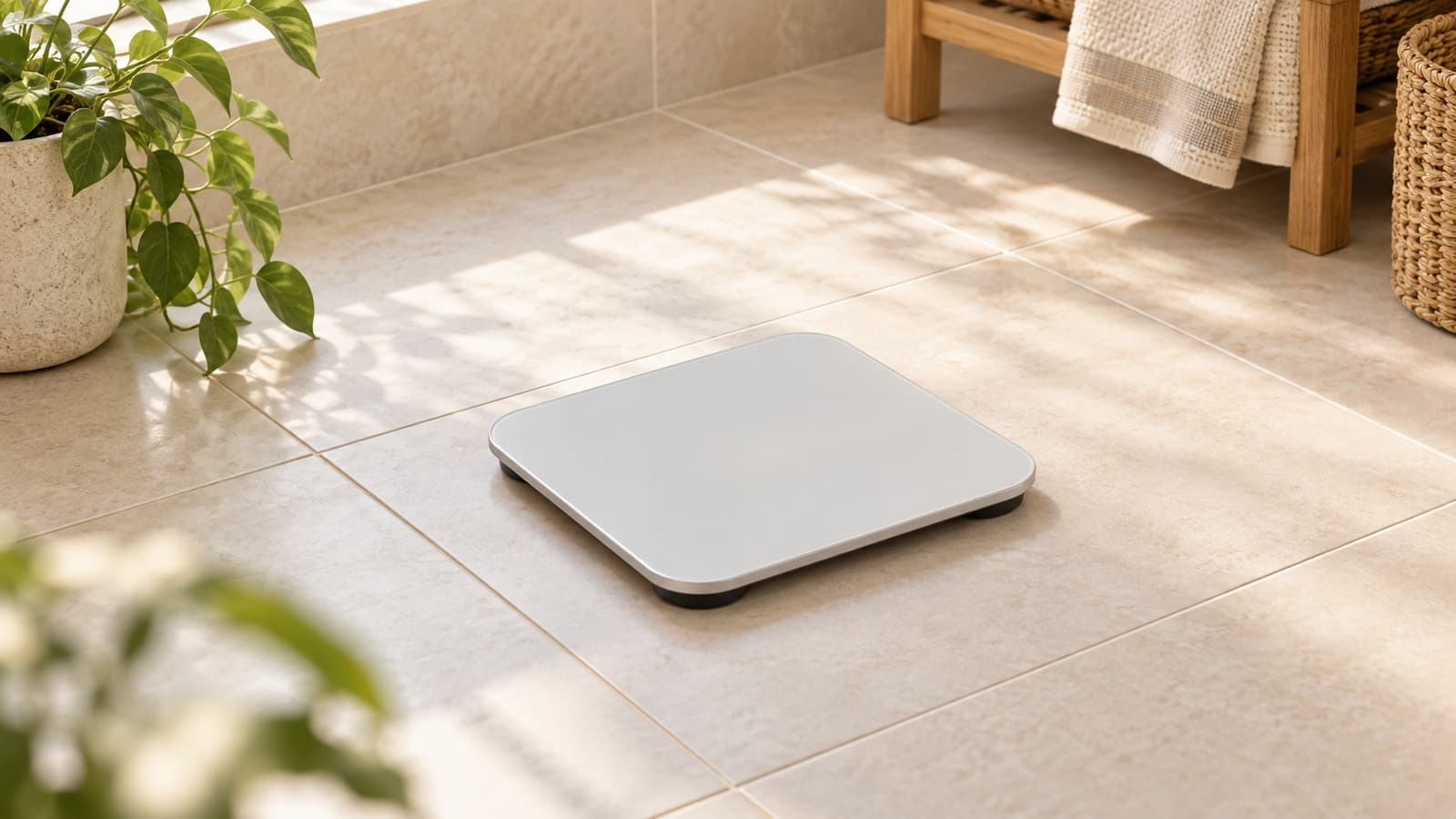
Put the scale on a hard, flat surface rather than a thick rug or uneven floor. Check that all of its feet rest securely and that nothing is caught underneath. If you use the same spot each time, you remove one avoidable source of variation.
Allow the device to show that it’s ready before stepping on, following its own directions. Some models need a particular start-up or reset process after they’ve been moved. Analogue models may need their pointer set to zero; don’t assume a digital model works the same way.
Stand still with your weight distributed evenly and use a stable support nearby if you need one for balance. If standing on a scale isn’t comfortable or safe, ask the care team about an accessible way to obtain any measurement they need.
If you store the scale between uses, put it back on the same suitable surface before checking. Follow the model’s instructions after moving it; some devices need time or a reset before they are ready to display a reading.
Compare like with like
Time of day, clothing and recent food or drink can affect what a scale displays. If you choose to monitor at home, use a similar time and conditions when practical. The same scale is generally more useful for following your own pattern than switching among several devices.
If you get an unexpected result, check the units first. A device set to kilograms won’t show the same number as one set to pounds. You can also check whether the display is stable and whether the battery or reset indicator calls for attention. Follow the manufacturer’s instructions for your model.
Repeatability and accuracy are different
If you step off, let the scale reset and check again, similar results suggest the device is repeating that measurement under those conditions. They don’t prove the device is accurately measuring your weight. A careful recheck may reveal a difference, but avoid getting caught in a cycle of repeated checks. Ask your care team or the manufacturer for help if you remain concerned.
For a device that continues to behave oddly, consult its manual or contact the manufacturer about battery replacement, capacity or calibration. If you compare it with another scale, differences in devices and conditions can make a direct comparison imperfect. Your clinic or pharmacist may be able to suggest an appropriate way to check a concern.
Decide whether the number is useful
You don’t have to weigh yourself at home just because you own a scale. Ask your clinician whether a measurement is needed and what frequency fits your situation. If seeing the number is stressful, discuss alternatives such as a blind weigh-in or a different way to track progress.
A single reading cannot tell you how much body fat or muscle changed. If you notice a sudden unexpected change or feel unwell, contact your care team rather than treating it as an equipment problem alone. Don’t change medication or eating patterns based on one measurement.
A quick reset checklist
- Firm, level floor and scale feet clear of objects.
- Correct units and a display that has settled.
- Similar timing and clothing when comparisons matter.
- Manufacturer directions followed after moving or resetting the device.
- A plan for discussing unexpected changes with your clinician.
Our progress-beyond-weight guide offers other topics to discuss. Once the setup is sensible, give the number its proper place: useful information in context, not a judgment.