










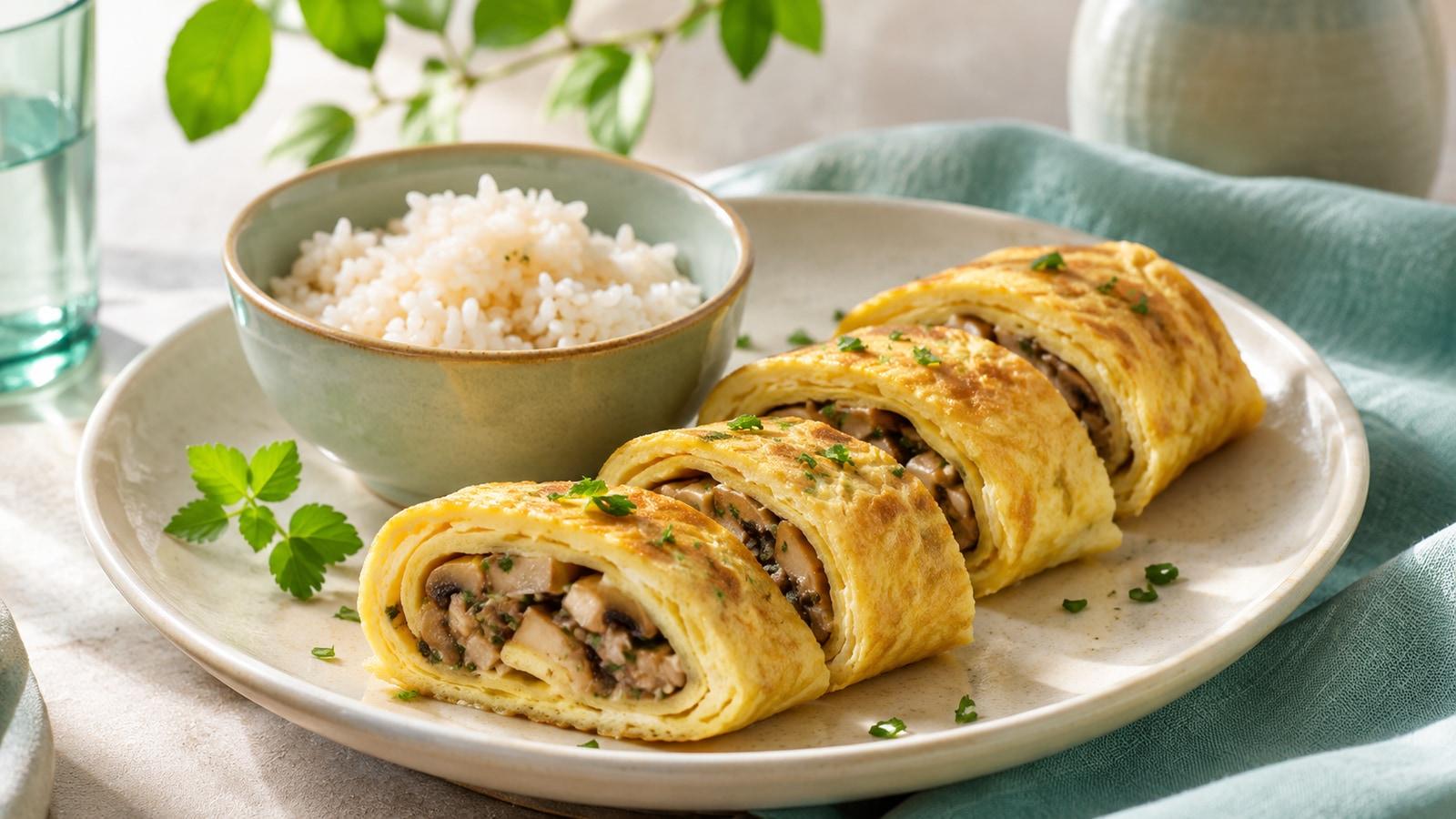
A rolled omelet makes a simple egg breakfast feel a little different. This Japanese-style version uses a thin layer of cooked mushrooms and a small amount of soy sauce for a savory flavor, with warm rice on the side.
Traditional rolled omelets are often prepared in several thin layers. Here the method is simplified for a small skillet: cook one thin omelet fully, add the mushrooms and roll it gently. It may not look perfect on the first try, and that's fine—the goal is a meal you enjoy.
Ingredients
This starting recipe is intended for one or two portions, depending on what else you're serving.
- 2 large eggs
- ½ cup finely chopped mushrooms
- 1 teaspoon low-sodium soy sauce, or an amount to taste
- 1 teaspoon water
- 1 teaspoon neutral oil, divided
- ½ cup cooked rice for serving
- Sliced scallion or chopped herbs, optional
Soy sauce can be salty, so start with a small amount. If you need to avoid soy or gluten, choose a suitable alternative and check its label. Mushrooms vary in moisture; finely chopping them helps the filling fit inside the roll.
Use freshly cooked rice or rice that was cooked, chilled and stored safely. If using leftovers, reheat them to 165°F before serving. Keep the eggs refrigerated until you're ready to cook.
Prepare the mushroom filling
Rinse the mushrooms under running water and pat them dry, then chop finely. Heat about half the oil in a nonstick skillet over medium heat. Add the mushrooms and cook, stirring, until tender and most of their released moisture has evaporated.
Transfer the mushrooms to a clean plate. A dry filling is easier to roll and less likely to make the eggs watery. If you're adding scallion, rinse and slice it with a clean knife and keep it separate for serving.
Wipe the skillet carefully if needed and lower the heat. A smaller pan makes a thicker omelet; a wider pan makes a thinner one. Choose a pan you can handle comfortably and use a spatula that fits underneath the egg.
Cook the eggs and roll
Beat the eggs with the soy sauce and water. Add the remaining oil to the skillet, then pour in the egg mixture. Tilt the pan gently so the egg spreads in an even layer.
Cook over medium-low heat until the egg is fully set and no liquid egg remains. If the bottom browns too quickly, reduce the heat and cover the pan briefly to help the top cook. The egg dish should reach 160°F; check an adequately thick portion with a food thermometer where practical.
Spread the cooked mushrooms over the egg, leaving a small border. Using a spatula, lift one edge and roll or fold the omelet over the filling. Transfer it to a clean plate and slice into pieces. If it breaks, serve it folded or in sections; it will still make a good breakfast.
Wash hands, bowls, utensils and surfaces that touched raw egg. Don't taste the uncooked mixture or place the cooked omelet on a plate that held raw ingredients.
Serve with rice
Place the warm rice beside the omelet and add scallion or herbs if you like. You can also serve cooked vegetables or another side that makes the meal satisfying. Keep the toppings separate if people at the table prefer different flavors.
For a milder dish, use less soy sauce or leave it out and add herbs at the end. A small amount of sesame oil or seeds could change the flavor, but sesame is an allergen for some people; use only ingredients that are safe for the person eating.
If your appetite is smaller, start with a few slices and some rice, then save the rest safely. If you want a larger meal, add another side rather than treating the portion as a fixed rule.
Make preparation easier
Wash and chop the mushrooms ahead and refrigerate them in a covered container. If you cook rice in advance, cool and refrigerate it within one hour, use it within 24 hours and reheat it only once. On the morning you serve the omelet, reheat the rice and cook the eggs fresh.
If rolling feels awkward, make a folded omelet instead. Let the egg set fully, add the mushrooms to one side and fold the other side over. The final shape can be different while the ingredients and safe-cooking steps stay the same.
Store leftovers safely
For rice, follow the one-hour cooling and 24-hour storage guidance above. Refrigerate cooked egg promptly, within two hours or within one hour if the surrounding temperature is above 90°F. Keep the refrigerator at 40°F or colder; use cooked egg leftovers within three to four days or freeze suitable portions.
Reheat leftovers to 165°F, including the center, and add fresh toppings afterward. Reheat rice only once, stirring or rearranging it so it warms evenly; heat only the amount you'll eat. Don't leave cooked rice sitting out through the morning.
The roll is a small change in presentation that makes familiar eggs and mushrooms feel fresh. Take your time with the spatula, cook the eggs through and enjoy the version that comes out of your pan.