










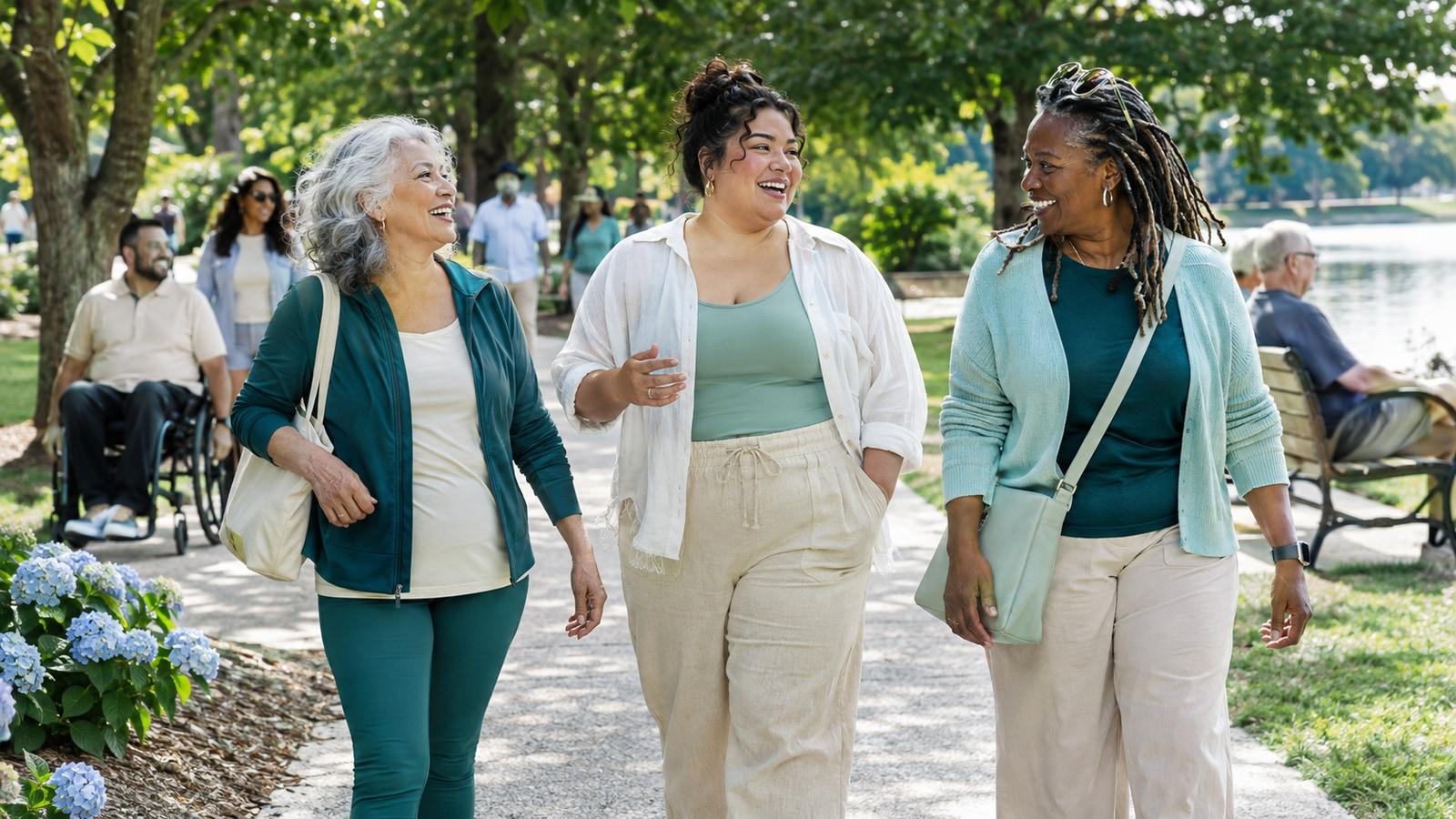
The idea of a walking group sounds great right up until you imagine everyone disappearing around the corner while you’re still tying your shoe. If pace is what’s stopping you from joining, you’re not alone. A little homework can help you find a group where you can enjoy the company without treating every outing like a race.
The best group for you is one that matches what you want from the experience. That might be conversation, a regular reason to get outside, or a route you feel more comfortable exploring with others. You don’t have to earn your place by keeping up with the fastest person.
Ask what “all paces welcome” means
That phrase is friendly, but it can mean different things. Before your first walk, send the organizer a quick message or make a call. Try asking:
- How long is the route, and how much time do people usually take?
- Is the route flat, paved, and accessible for mobility aids?
- Does the group have a slower group or someone who walks at the back?
- Where does everyone regroup, and are there planned stops?
- Can I turn around early or try part of the route?
You don’t need to give a medical history. “I’m looking for a relaxed pace and may need a break” is plenty. Notice whether the response makes you feel welcome and gives you enough information to decide.
If the group posts a typical pace in minutes per mile, treat it as a starting point rather than a test. Terrain, heat, conversation, and stops all change how a walk feels. Ask how the numbers work in practice: a group that pauses at every intersection can feel very different from one that walks the whole route without stopping.
Choose a first walk with an easy exit
A loop with a shortcut, an out-and-back route, or a gathering near a café gives you options. Look for nearby parking or transit, a restroom, and somewhere to sit. If you use a cane, rollator, wheelchair, or other mobility aid, ask about the actual route surface rather than assuming a paved park is fully accessible.
Consider arriving a few minutes early. That gives you time to find the organizer, locate the restroom, and ask where the group plans to regroup. You might say, “It’s my first time, and I’m going to take the route at my own pace. Is there a good place to turn around if I need to?”
There’s no prize for staying out longer than you planned. Trying twenty minutes and heading home can tell you a lot about the group, the path, and what you’d like to do next time.
Give yourself permission to walk your own walk
Some groups naturally split into smaller clusters. Others stay together and adjust their speed. Either can work if the organizer is clear about the plan and you feel comfortable with it. If the group moves faster than expected, you can slow down, take a break, or turn back. You haven’t ruined anyone’s walk.
Having a walking buddy can help, especially on the first visit. You could invite a friend who enjoys a similar pace or ask whether a regular member would be happy to walk with someone new. A good companion makes room for conversation without repeatedly asking whether you can go faster.
And if the group really is too quick, that is useful information about the group, not a verdict on you. Try a different event, ask whether there’s a shorter route, or arrange a small walk with a friend. Some communities also have indoor walks that avoid uneven sidewalks and unpredictable weather.
Think beyond the number on your watch
It’s tempting to judge the whole outing by distance or speed. You might notice other things instead: Did you enjoy the route? Did the conversation make the time pass quickly? Was getting there convenient? Did you feel welcome enough to come back?
Those details matter because a routine has to fit your life. If your week is busy, a short walk after a regular errand may be easier to repeat than a long event across town. If the outing leaves you worn out for the rest of the day, a shorter route or a longer break may make the next one more enjoyable.
If you’re taking a GLP-1 medication and have nausea or another symptom on the day of the walk, it’s fine to skip or shorten it. Contact your care team if symptoms persist, are severe, or make it difficult to eat or drink. You can also ask a clinician or physical therapist for help choosing activity when you’re managing a health condition or a change in mobility.
Your first visit is just a visit
You don’t need to sign up for a season or promise to be there every week. Think of the first outing as a chance to see whether the group works for you. Ask a few questions, bring what you need, and decide afterward whether you’d like to return.
Walking with other people can make movement feel more social and less like another item on a list. The right pace is the one that lets you take part comfortably enough to enjoy being there.