










You find a class that sounds fun, arrive on time, and discover that the instructor gives every direction while facing the mirror with music playing. The movements may be accessible, but the way they're explained isn't working for you.
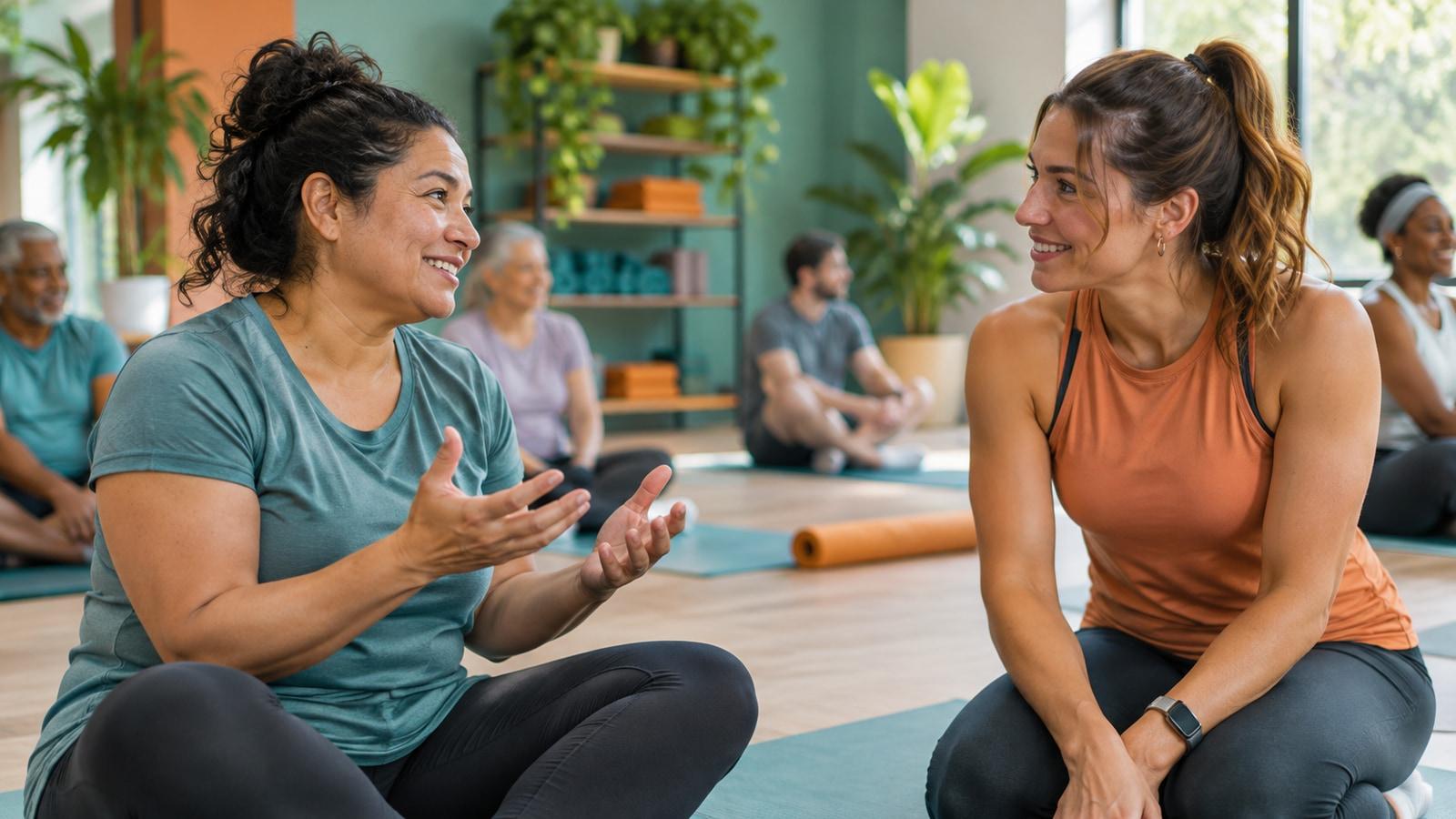
Communication needs vary. Some people prefer an interpreter, some use captions or written instructions, some rely on visual demonstrations, and many use a combination. You know what helps you follow along; a good conversation with the instructor can make that easier to arrange.
Ask about the class before you book
A short message or conversation can save you from having to solve everything in the first five minutes. You could ask what the class involves, how the instructor gives cues, whether music is continuous, and what communication options are available.
Be specific about what would help. For example: “I follow visual demonstrations best. Can I see the instructor throughout the class?” Or: “I use an interpreter. Where would be a good place for us to stand so I can see both of you?”
If the class includes fast transitions or uses equipment you're unfamiliar with, ask whether the instructor can show you the sequence and safety features beforehand. A written outline or a quick demonstration can give you a useful reference during the session.
Choose a position that works for you
The front row isn't automatically the right answer. You may want a clear view of the instructor's face, hands and full body, or you may need to see an interpreter as well. Lighting, glare, mirrors, and the movement of other participants can change what is comfortable.
Try a position and adjust it if needed. You can tell the instructor, “I'll move if I can't see the next demonstration.” If the room layout changes between classes, check again rather than assuming the same spot will always work.
For a cycling class, a pool session or a class with stations, ask how cues will be visible from your particular location. A visual signal for a transition may be useful, but it should be agreed on in advance so you know what it means.
Agree on cues for changes and safety
Instructors often use short spoken phrases to signal a new exercise, a slower pace or the end of a set. Ask what signals they can use consistently and how they will get your attention before giving an important direction.
Some people like a raised hand, a demonstration before a transition, or a written sequence on a board. Others need a different approach. The goal is not to invent one universal signal; it's to establish a method you can actually notice while moving.
Discuss emergency instructions too. Ask how you would be alerted if the room needed to be cleared and where exits are located. If a piece of equipment has a stop control, have someone show it to you before the class begins.
Make the first visit an opportunity to learn
Arriving a little early can give you time to see the room, meet the instructor and try the setup. Ask them to demonstrate unfamiliar equipment and the choices available if a movement doesn't feel right.
You can choose an easier variation, pause, or leave a movement out. If you have an injury, chronic condition or other concern about a particular activity, discuss suitable options with a qualified professional. A class should offer a way to participate that fits your needs; you don't have to match the pace of the person beside you.
If you miss a direction, ask for it to be repeated or shown. That is useful feedback about the communication setup, not an interruption you need to apologize for. After class, you can mention a moment that worked well and one that was hard to follow.
Think about the format, not just the title
Two classes with the same name can feel very different. One may use a set sequence and another may change movements rapidly. One instructor might demonstrate from the front; another may walk around the room. Ask about the specific session rather than relying only on its description.
Recorded classes can also vary. Captions, clear demonstrations and a visible instructor may help, but captions alone might not show which movement is being performed. Preview a few minutes when possible. Make sure your space is clear and that you can follow the instructions before adding equipment.
If a class isn't a good fit, that is information about the class, not proof that exercise classes aren't for you. You might prefer a smaller group, an instructor who can show the sequence beforehand, or a different activity altogether.
Keep the parts you enjoy
Movement can be a way to spend time with people, practice a skill, or take a break from the rest of the day. It doesn't need to be framed as a test of discipline or a way to earn food.
Start with an activity you're interested in and the communication support that makes participation possible. When you can see what's happening and ask questions comfortably, it's easier to focus on the class itself—and decide whether you want to come back.