










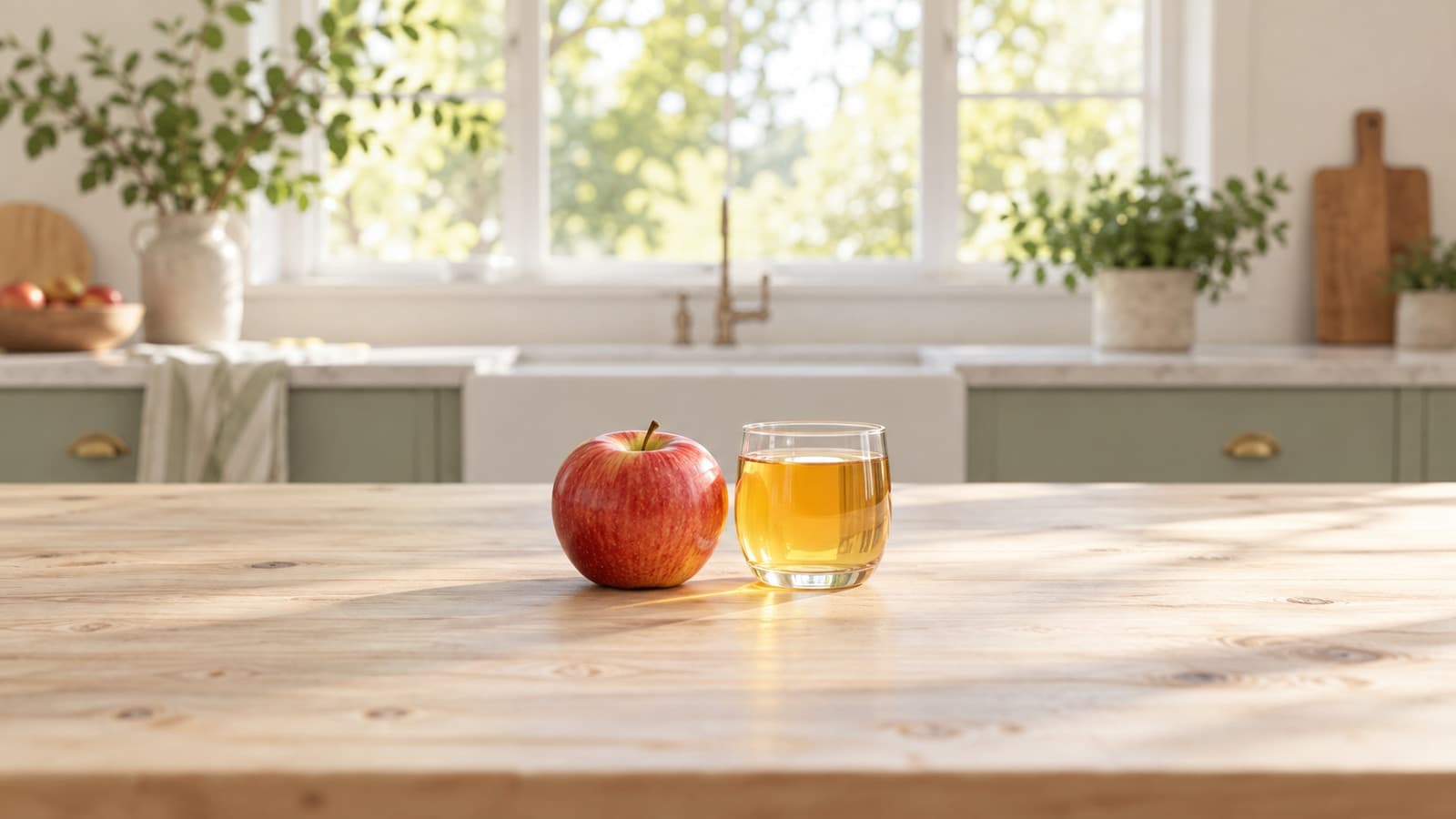
An apple and a glass of apple juice start with the same fruit, but they aren’t quite the same experience. One takes a little time to bite and chew; the other is easy to drink with breakfast or on the go.
Both can be enjoyed, but preparation changes what is in the glass and how it feels to consume. If you’re choosing between them, fiber, texture and the role each plays in your day are useful places to start.
What happens to the fiber?
Whole fruit contains fiber along with water and other nutrients. When fruit is juiced, some of the pulp and fiber may be left behind. Many juices contain little or no fiber, although the amount varies by product and preparation.
That doesn’t mean juice contains nothing useful, or that every glass is a problem. It does mean a glass of juice and a piece of fruit are not automatically identical sources of fiber. If fiber is the reason you’re choosing one, check the product information or consider the whole fruit when it’s comfortable for you.
Smoothies are different again. A smoothie made by blending the whole edible fruit can retain more of the fruit’s fiber than strained juice. Recipes vary, so think about what actually went into yours rather than assuming every smoothie is the same.
Fullness can feel different
In a small study, 58 adults visited for lunch on different days. Before the meal, they had apple in different forms, including whole apple, applesauce and juice. The researchers matched the portions for several features and then measured fullness and the food eaten at lunch.
The whole apple produced higher fullness ratings than the applesauce or juices, and participants ate less overall at that meal. It’s an interesting result about a particular lunch, not proof that eating an apple will lead to long-term weight loss for everyone.
You may notice your own difference in satisfaction between eating fruit and drinking it. A glass of juice can go down quickly; a whole fruit offers a different texture and pace. Neither experience needs to become a strict rule.
Read the drink name
“Fruit drink,” “juice cocktail” and “100% juice” may describe different products. Some fruit drinks contain added sugar, so the ingredient list and nutrition panel can help you understand what you are buying. Choose a drink for the role you want it to play rather than relying on the picture on the front.
If you enjoy juice, a modest glass with a meal is one possible choice. If you’re thirsty and want something without the fruit flavor or sweetness, water may be a comfortable option. Consider your appetite and any fluid guidance you’ve received.
For a person with diabetes, the amount and timing of carbohydrates may be part of an individual plan. Ask your care team how juice fits your routine rather than adjusting medicines on your own.
Make a choice that fits the moment
Whole fruit can travel well, though not every fruit is equally easy to pack. A small container of sliced fruit or a piece that keeps in a bag may be handy at work. Frozen fruit can be ready when fresh produce isn’t available, and canned fruit is another convenient option.
If your appetite is reduced while taking a GLP-1, think about what you can comfortably manage and whether you are eating enough overall. Fruit or juice alone may not make a satisfying meal. Pairing fruit with another food you enjoy is one option, and a dietitian can help if meals are consistently difficult.
If you’re increasing fiber, take your time. Our guide to adding fiber comfortably offers a gradual approach.
Keep the comparison useful
Choose whole fruit when you want its texture and fiber. Enjoy juice when it suits your taste and circumstances. What matters is understanding the difference and building a routine that feels workable, not turning the decision into a test you can pass only one way.