










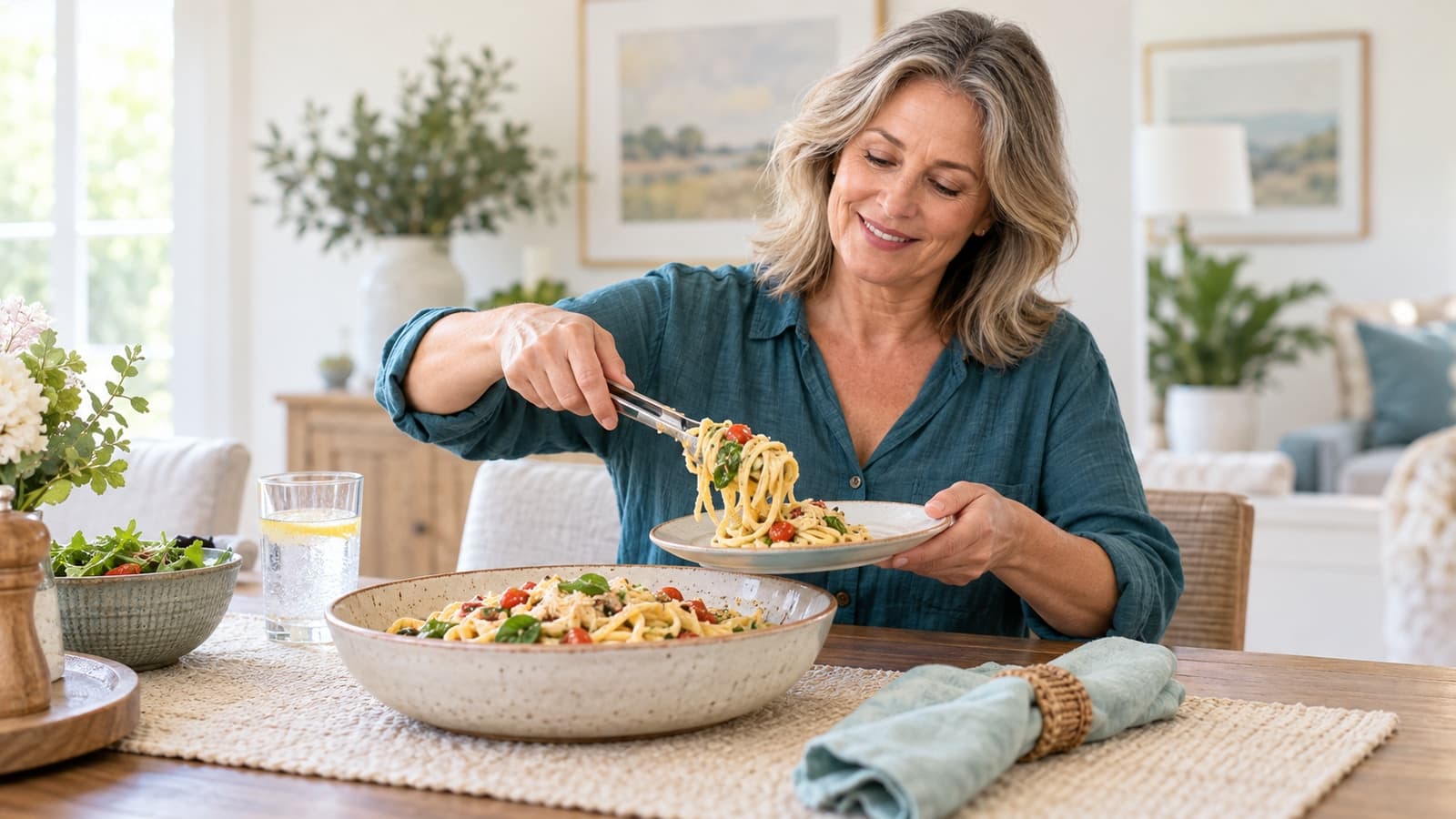
Every family has its own version of the meal: the sauce simmered for hours, a dish made for a particular celebration, or a recipe someone knows by feel rather than by a written list. You may have spent years looking forward to it.
Then your appetite changes during GLP-1 treatment. You still care about the gathering, but the portion you'd usually serve yourself no longer feels comfortable. You might wonder how to take part without disappointing the person who cooked.
A tradition can keep its meaning even when your plate looks different. The food, the people and the stories around it can all remain part of the day.
Decide what you want to keep
Think about what makes the occasion meaningful to you. Is it cooking beside a relative? Tasting the sauce together? Sitting at a crowded table, telling the same stories, or sending leftovers home with everyone?
There may be more than one way to take part. You can help prepare the meal, learn a technique from someone you love, set the table or bring a dish. None of those roles depends on eating a particular amount.
You might still want to enjoy the food itself. Serve an amount that feels comfortable and remember that you can have more if you want it. If you feel satisfied sooner than expected, saving a portion safely for later is another way to enjoy the meal.
Talk to the cook before the gathering
If someone shows love by putting a generous serving on your plate, a short conversation beforehand can prevent an awkward moment. Try: “I'm really looking forward to your pasta. My appetite has been smaller lately, so I'd like to serve myself and save some for tomorrow.”
The amount you share about medication or weight is up to you. If you'd rather keep it simple, “Could I start with a smaller serving?” is enough. You can also reassure the cook that a smaller plate isn't a review of the food.
Some people will understand immediately; others may need a gentle reminder. If the conversation becomes uncomfortable, change the subject or ask a trusted person to help redirect it. You get to decide how much detail to share.
Make the gathering flexible
Family-style serving lets people choose what and how much to put on their own plates. If the occasion involves a long afternoon, you might eat a little at the table and enjoy something else later. Another person may prefer to take a small serving home.
If you're hosting, ask guests whether they have food needs or preferences without assuming everyone wants the same change. The familiar dish can stay on the table alongside other options. A meaningful recipe doesn't need to be redesigned to count as a good choice.
Follow ordinary food-safety practices when cooling, storing and reheating leftovers. If someone else prepared the dish, ask what's in it when allergies or other dietary needs matter.
Let the tradition evolve on purpose
Perhaps the meal always included a second helping, but what you really value is learning how your grandmother seasons the sauce. Ask her to show you, record the recipe together, or invite another family member into the kitchen.
You could tell the story behind a dish while you cook, share a portion with a neighbor, or make the meal on an ordinary weekend rather than waiting for a holiday. These are possibilities, not tasks required to make food meaningful.
It's also okay to feel a little disappointed if a familiar experience has changed. Some adjustments take time. Give yourself room to notice what you miss and what still feels enjoyable.
Get support if eating is becoming difficult
A smaller appetite shouldn't leave you unable to eat enough across the day. If nausea, pain, weakness or a shrinking list of tolerated foods is making meals difficult, tell your care team. A dietitian can help you build a plan around the foods and traditions that matter to you.
For more ways to talk with people close to you, read our guide to family support during GLP-1 treatment. The recipe can remain familiar even as you find a different way to enjoy it.