










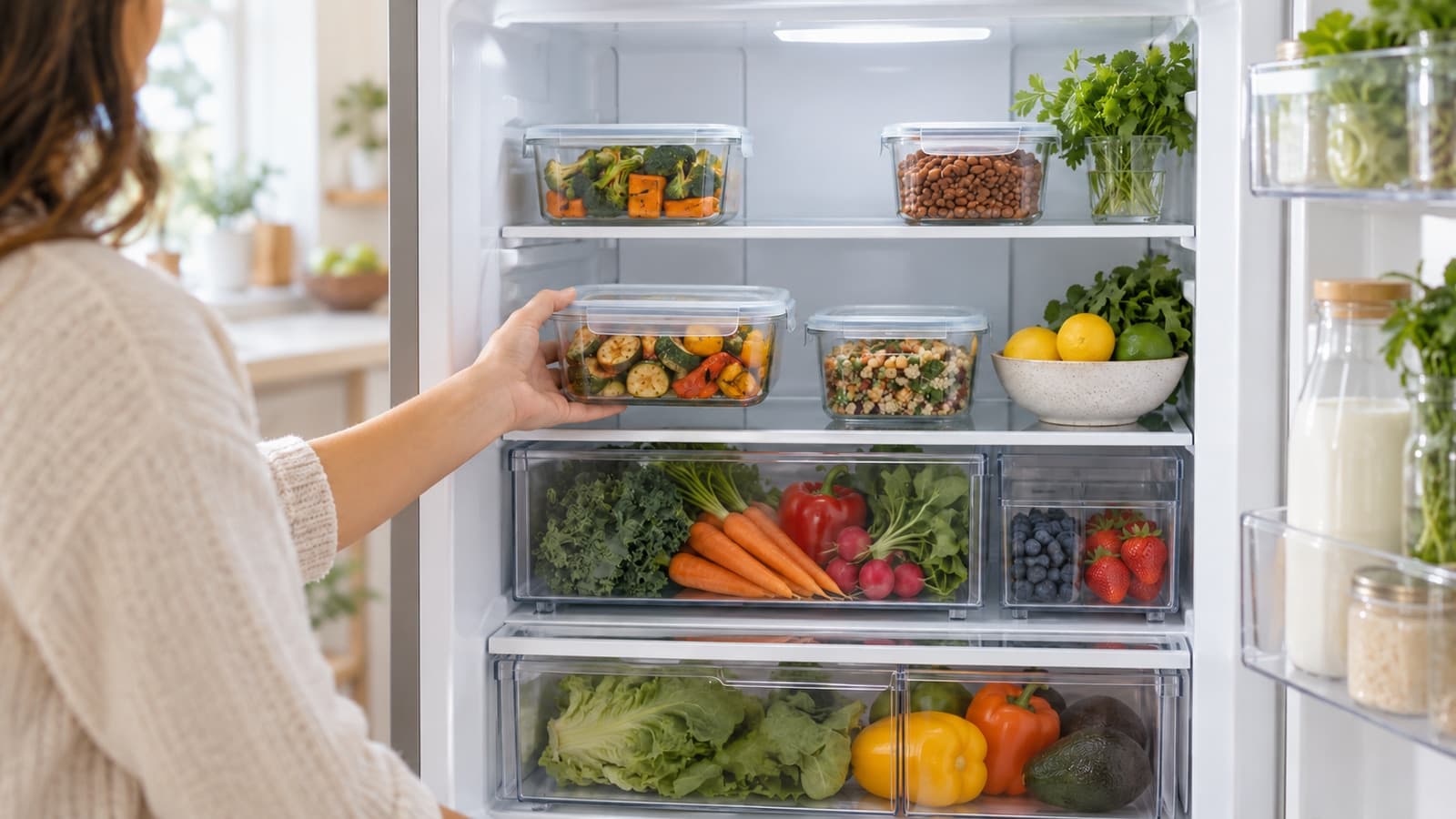
A small refrigerator can hide a surprising amount of food. A half-used container goes behind a carton, a few cooked vegetables slide to the back, and suddenly dinner is a guessing game.
You don't need a matching set of organizers to fix it. Give the things you plan to eat soon a visible home, while leaving enough space for the refrigerator to do its job.
Start with a quick reset
Make the food you want to use easy to see. Clear one shelf or a small section rather than taking everything out at once. Wipe spills, check containers and put refrigerated food back promptly.
If you don't know how long a perishable food has been there or whether it was kept cold safely, don't rely on a sniff to decide. Throw it out. A clean refrigerator is useful, but keeping food safe matters more than rescuing every leftover.
Before rearranging, check the temperature. The refrigerator should stay at 40°F or below. An appliance thermometer gives you a reading to check rather than leaving you to guess from the setting on the dial.
Give leftovers a place near the front
Choose a section of a shelf for cooked food, opened perishables or ingredients you expect to use soon. Clear, covered containers can help you see what's inside. A piece of tape with the food and date is useful if several containers look alike.
The date tells you when the food went in; it doesn't make every item safe for the same number of days. Check the storage guidance for the particular food. If you won't use a suitable leftover within its safe refrigerator window, freeze it while it is still safe.
Try placing a cooked protein, a vegetable and a sauce where you can see them. They don't have to become one prescribed meal. They might turn into a wrap today and a plate with toast tomorrow.
Separate raw and ready-to-eat food
Keep raw meat, poultry and seafood sealed in a container or leakproof bag on a lower shelf, away from food that won't be cooked before eating. A rimmed tray can help contain a leak, but it doesn't replace secure packaging. Clean spills promptly.
Keep eggs in their original carton in the main part of the refrigerator rather than the door. Follow the storage directions on other products, including anything that needs refrigeration after opening.
If you share a refrigerator, explain which area holds raw food and which is for cooked leftovers. That small agreement is often more useful than a complicated color-coded system no one remembers.
Leave room to move things
It's tempting to pack every inch of a compact fridge. Cold air needs room to circulate, though, so avoid wedging containers tightly together. Choose containers that fit the shelf and are easy for you to lift and open.
Put everyday items where you can reach them without moving a stack of heavy dishes. If clear bins help, use them sparingly and check that they don't obstruct airflow. A shallow tray can make a few small containers easier to pull forward.
For groceries and leftovers that need refrigeration, put them away within two hours, or within one hour if exposed to temperatures above 90°F. Divide a large batch into shallow containers so it can cool more quickly.
Match the plan to your appetite
If you're taking a GLP-1 and eating different amounts than before, buying or preparing a smaller batch may make it easier to use food while it's at its best. Smaller containers can help you see what's available, but they aren't a limit on how much you can eat.
Keep a couple of flexible additions on hand, such as bread, a cooked grain or fruit, so you can make a meal larger when you want one. Our one-week grocery guide can help with the shopping side.
Once a week, look at your use-first area before making a list. Dinner might already be there.