










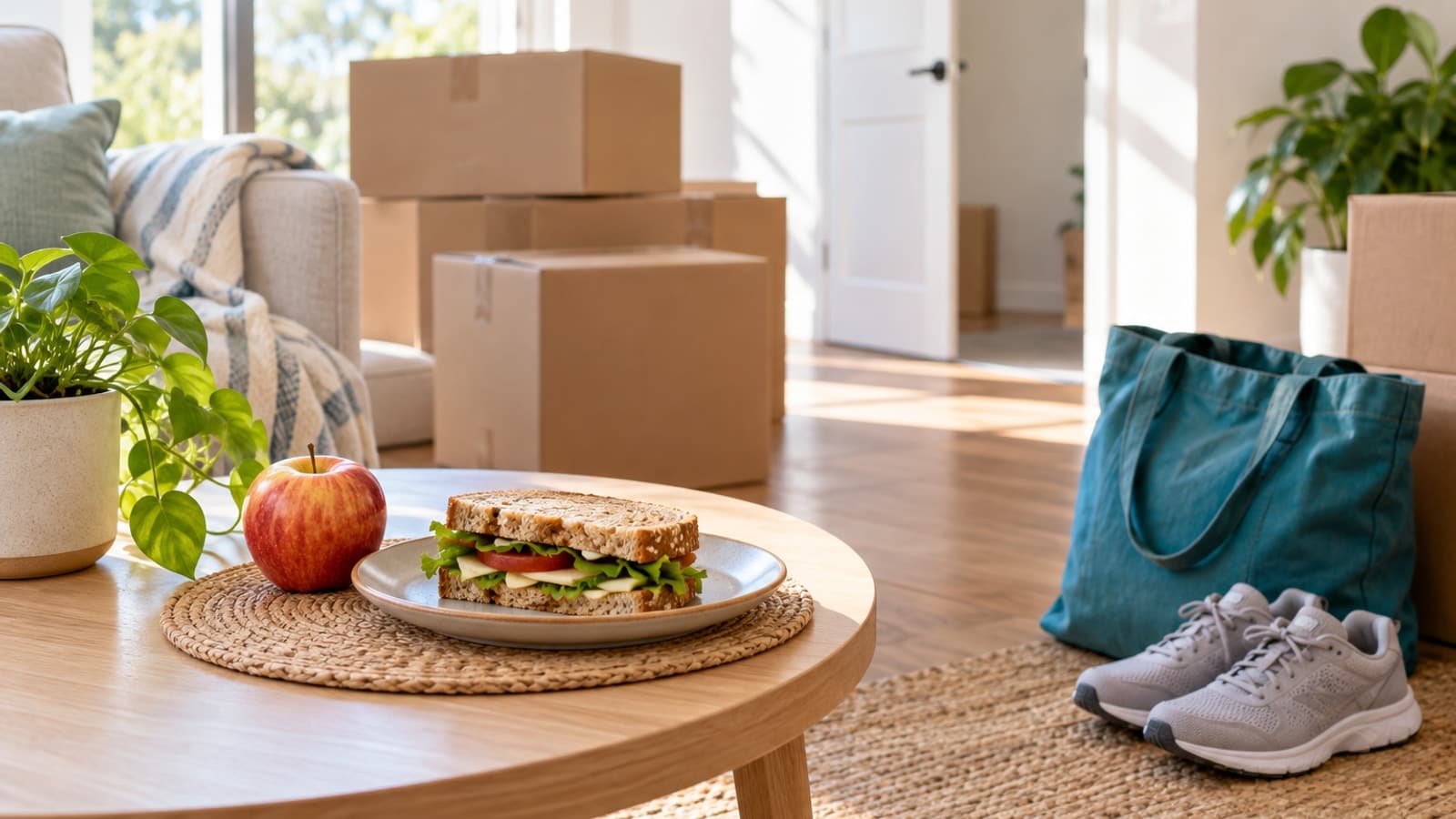
A routine that worked last month may stop fitting when you move, change jobs, care for someone, or face a demanding season. During GLP-1 treatment, it’s worth adjusting the plan early rather than waiting until food, refills, and follow-up all become harder at once.
Choose the basics worth protecting
Think about the few things that keep the day manageable: access to food, fluids, prescribed medicine, and enough rest. Decide where each one fits in the new schedule. A plan doesn’t have to look impressive to be useful.
If cooking time has disappeared, keep a short list of easy meals and groceries you can reliably obtain. If a lunch break moved, find a realistic eating opportunity instead of hoping hunger will remind you at the right moment.
Make the movement plan smaller if needed
You may need to replace a longer workout with shorter activity that fits the day. A familiar walk, a brief home routine, or movement with someone you’re caring for may be more practical for a while, depending on your health and ability.
This is a good time to choose what you can repeat, not to add a demanding challenge. If symptoms or fatigue make activity difficult, tell your care team rather than forcing the old routine into a changed situation.
Check the treatment logistics early
A move or job change may affect your address, pharmacy access, insurance, or appointment availability. Update the relevant team before a refill is due. Ask what information they need and how much time the process usually takes.
Keep medicine storage instructions in mind during a move or long day away. Don’t leave supplies somewhere unsuitable just because other belongings are being packed together. Ask the pharmacist about the exact product when you’re uncertain.
Give yourself a date to reassess
Choose a point to look at what is working: perhaps after the first full week of the new schedule. Adjust one obstacle at a time. A supportive person may be able to help with groceries, a shared meal, or remembering an appointment.
Tell your clinician if the change is affecting eating, symptoms, or consistent treatment. Your care plan should be able to respond to your life. A simpler routine can keep you supported while you work out what the next normal looks like.