










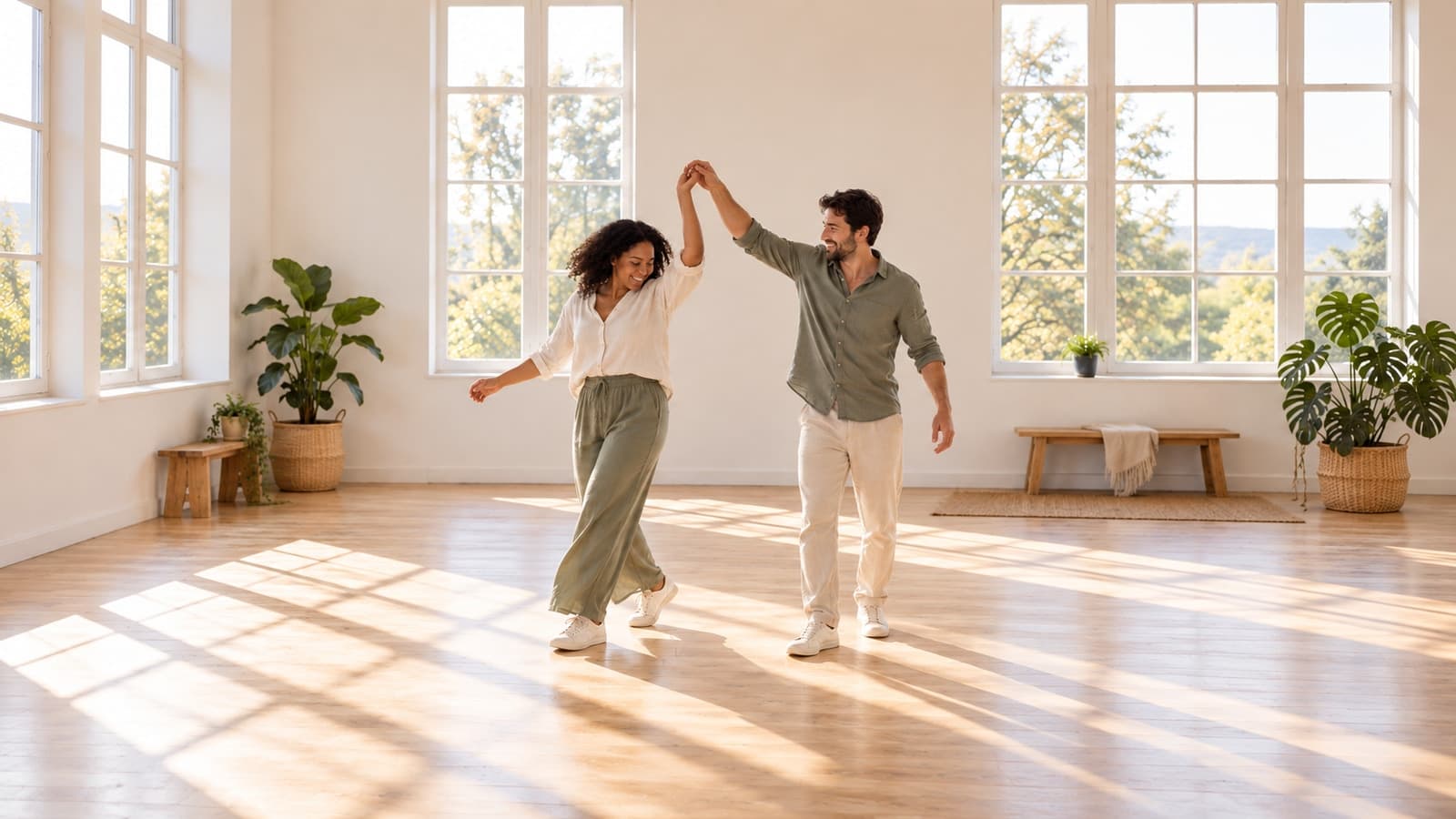
Have you ever finished a walk and immediately checked how many calories your watch estimated? There’s nothing wrong with liking numbers. But if every activity feels like a calculation, it can be easy to miss the part you actually enjoyed.
Movement can have a purpose beyond a calorie total. It can be a chance to learn a skill, spend time with someone, get outside or simply hear a favorite song. Those reasons belong in your routine too.
Start with what sounds appealing
Think of something you’ve enjoyed before, even if it was years ago. Maybe it was swimming, dancing, throwing a ball, tending plants or walking through a market. You don’t need to be good at it to try again. You might also be curious about an activity you’ve never done.
Make a short list without asking which option burns the most. Next to each idea, write what appeals to you: the music, the company, the quiet or the chance to learn. That gives you a reason to show up that isn’t dependent on what a device displays.
If nothing sounds appealing yet, pick a low-pressure experiment. Try one beginner class, a short video at home or a walk in a place you like. One attempt is information, not a commitment to a new identity.
Make it social, if you want to
A friend can turn a walk into a conversation or make a first class less intimidating. You might arrange a regular meet-up, invite someone to play a casual game or join an accessible community group. It’s also fine if you prefer time alone. The right amount of company is the amount that makes the activity better for you.
Look for practical details before signing up: cost, transportation, accessibility, the pace of the group and whether beginners are welcome. Ask an instructor what adaptations are available. You deserve an activity that fits your abilities and feels welcoming.
A shared activity doesn’t have to be competitive. You can meet for ten minutes, take breaks or choose a different route together. The conversation may be the part you remember most.
Let skill replace the score
Choose something small you’re curious to learn. In a dance class, it might be one step. In the pool, it could be getting comfortable in the water. In a garden, it might be learning how to care for a plant. A goal like that gives you a way to notice progress without judging the shape of your body.
If you use a fitness device, decide whether its feedback is useful for that activity. You might leave the calorie screen unopened, track time only or leave the device at home. There’s no requirement to record a session for it to count.
Physical activity can support health, sleep and everyday function in many ways. How an activity feels and whether you enjoy it are useful pieces of information alongside any numbers you choose to keep.
Keep comfort in the plan
Start at a level that feels manageable. If you have a health condition, an injury or questions about what is safe, ask a healthcare professional before changing your activity. Adaptations, breaks and mobility aids can all be part of participating.
Stop if you feel unwell. Call 911 for new or unexplained chest pain, or if you think you may be having a heart attack. Severe breathing trouble or fainting also needs emergency help. Rest is a valid choice on a day when you’re unwell or need recovery.
If you take a GLP-1 and find that a smaller appetite makes it difficult to eat around activity, discuss your routine with your prescriber or a dietitian. Movement should fit alongside food and rest, not become a reason to skip them.
Ask a different question afterward
Instead of “Did I burn enough?” try “Would I like to do that again?” Maybe the answer is yes, but at a different time. Maybe you liked the class and disliked the commute. Keep the part that works and change the part that doesn’t.
Our guide to building an exercise routine has more ideas for starting comfortably. A routine can support your health and still leave room for play.