










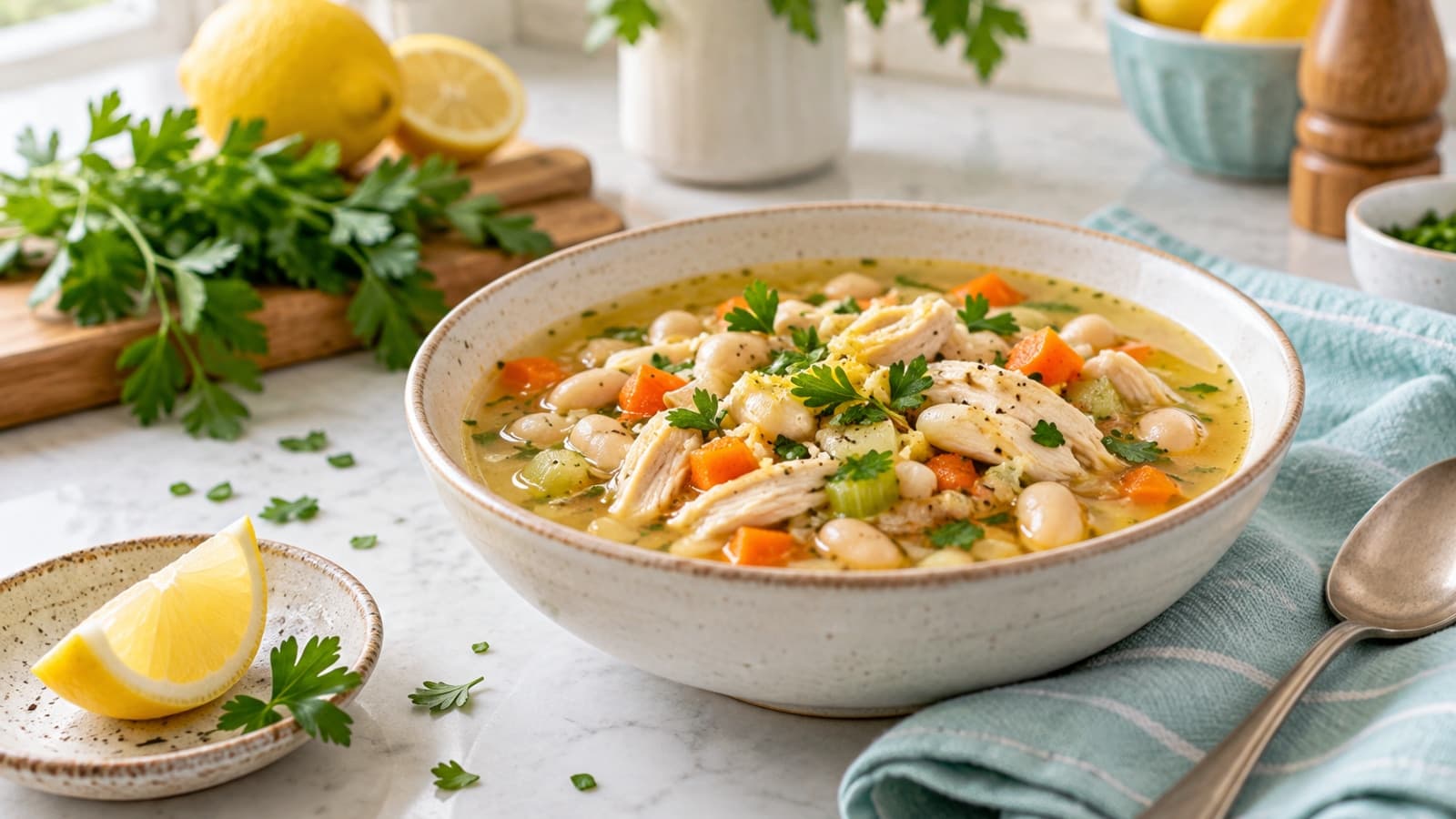
A container of cooked chicken and part of a can of white beans can turn into a good lunch. Add broth, a few vegetables and a squeeze of lemon, and you have a soup that's easy to serve in the amount you want.
This is a flexible starting idea, not a rigid portion plan. Make a little more if you're feeding someone else or want leftovers, and change the ingredients to suit your kitchen.
What to gather
Start with a small pot and ingredients that are already cooked. For a couple of bowls, you might use:
- About 2 cups of chicken or vegetable broth.
- About 1 cup of safely cooked, shredded chicken.
- Half a 15-ounce can of white beans, drained and rinsed.
- A handful of cooked carrots, zucchini or another vegetable you enjoy.
- Lemon juice and chopped parsley or another herb, to taste.
These amounts are a place to begin. Add more broth for a soupier bowl or more vegetables if you like a fuller one. If you use fresh vegetables, rinse and cook them until they're as tender as you prefer. Follow the package directions for frozen vegetables before adding them.
Check the broth and any prepared chicken for ingredients you avoid. Broths vary in sodium and flavor, so taste before adding salt. Use a dairy-free broth if that's important to you; the soup doesn't need cream to work.
Put it together
Warm the broth in a saucepan, then add the cooked vegetables, beans and chicken. Bring the soup to a boil, stirring so it heats evenly. If you're using leftover chicken, the reheated chicken and soup should reach 165°F throughout; use a food thermometer to check.
Turn off the heat and add a little lemon juice. Taste after the soup has cooled enough to do so safely, then decide if you want more. Add herbs at the end for a fresher flavor. If lemon doesn't sit well with you, leave it out or offer a wedge separately.
The chicken should have been cooked and stored safely before it goes into the pot. If you're starting with raw chicken, cook it separately to 165°F, using a clean thermometer, before shredding and adding it. Wash the board, utensils and hands after handling raw poultry.
Choose a texture you like
Shredded chicken and soft beans make the soup easy to eat with an ordinary spoon. Cut vegetables smaller or cook them longer if you prefer them tender. Mashing a few beans into the broth can make it slightly thicker without adding a dairy ingredient.
If a mixed texture isn't appealing, serve the chicken or vegetables separately and add what you want to each bowl. You can also use a different bean or omit it. Some people find beans cause gas, so choose an amount that feels comfortable to you.
Toast, a few crackers or a cooked grain can sit alongside the soup. They make it easier to adjust the meal without changing the whole pot. If you need a specific food texture for swallowing or another medical reason, follow the guidance you've been given.
Save the extra safely
Divide leftover soup into shallow covered containers and refrigerate within two hours, or one hour if it has been exposed to temperatures above 90°F. Keep the fridge at 40°F or below. Properly handled soups generally keep for three to four days in the refrigerator; freeze a portion you won't use in that window.
When you reheat leftover soup, bring it to a boil and let it cool enough to eat comfortably. Labeling a freezer container with the date and contents makes the next lunch easier to recognize.
If your appetite is smaller while taking a GLP-1, start with the bowl that sounds good and keep a side or another portion available. Our guide to eating enough with a smaller appetite has more ideas for the rest of the day.