










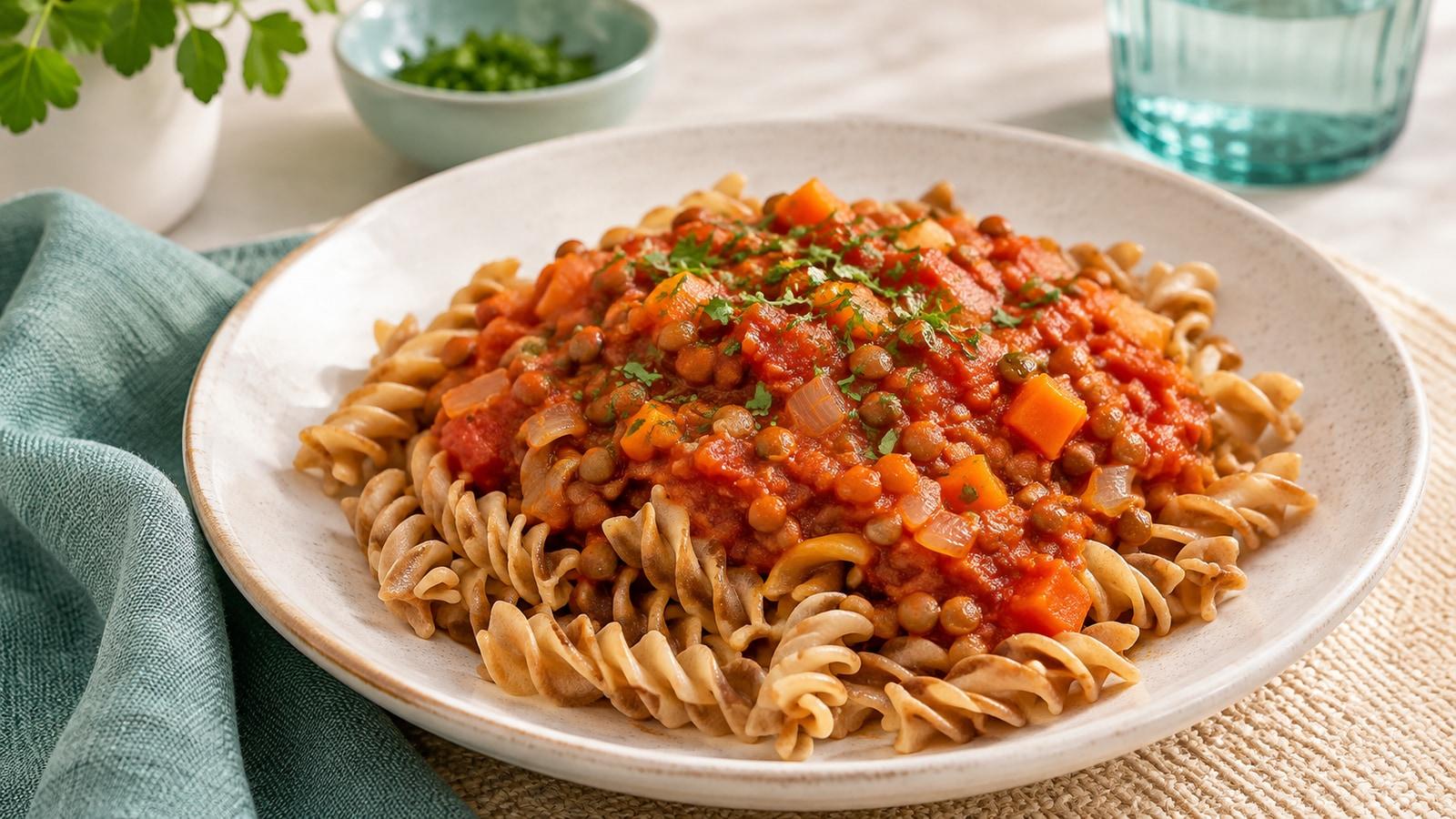
On a night when you want pasta with a hearty tomato sauce, lentils are a useful option. They simmer with onion, carrot, and tomatoes, giving the sauce texture without making the meal complicated. Spoon it over whole-grain pasta and add parmesan or herbs if you like.
This is a lentil-based take on a familiar sauce, not a promise that it will taste exactly like a meat bolognese. The lentils have their own mild flavor and keep a little bite, especially if you choose a variety that holds its shape.
Ingredients
Makes: about 4 servings
Prep: about 15 minutes
Cook: about 25 minutes, using cooked lentils
- 8 ounces dry whole-grain pasta
- 1 tablespoon olive oil
- 1 small onion, finely diced
- 1 carrot, finely diced
- 1 celery stalk, finely diced
- 2 garlic cloves, minced
- 1 teaspoon dried oregano
- 1 can (28 ounces) crushed tomatoes
- 2 cups cooked brown or green lentils, drained
- ¼–½ cup water, as needed
- Black pepper and chopped basil, optional
- Grated parmesan or a dairy-free alternative, optional
Cook the lentils ahead according to their package directions, or use a ready-cooked version. If they’re canned, drain and rinse them. The sauce comes together while the pasta water heats, making this an approachable weeknight dinner.
Make the sauce
- Wash your hands and rinse the carrot, celery, and any fresh herbs. Dice the vegetables into small pieces so they soften at a similar pace.
- Heat the oil in a wide pot over medium heat. Add onion, carrot, and celery. Cook, stirring occasionally, for about 7–8 minutes, until softened. Add garlic and oregano and stir for another 30 seconds.
- Pour in the tomatoes and add the cooked lentils. Add ¼ cup water and bring to a gentle simmer. Cook uncovered for about 15 minutes, stirring occasionally. Add more water if the sauce becomes too thick.
- Meanwhile, cook the pasta according to its package directions. Reserve a small cup of pasta water before draining.
- Taste the sauce and add pepper if you like. Toss the pasta with some sauce, adding a splash of reserved pasta water if needed. Serve the remaining sauce at the table with basil or cheese.
Small cuts make a difference
The onion, carrot, and celery form the base of the sauce. Dice them finely if you want them to blend into each forkful. If you like a chunkier sauce, leave them a little larger and give them more time to soften before adding the tomatoes.
If the vegetables begin to stick, lower the heat and add a spoonful of water. The goal is a soft, savory base, not dark or burnt pieces. Give the carrots a taste before adding the lentils; they should be starting to soften because acidic tomatoes can slow further softening.
Crushed tomatoes make a relatively smooth sauce. Diced tomatoes give you a chunkier result; you can break them up with the spoon as they cook. Different brands vary in thickness. If yours are very watery, let the sauce simmer uncovered a little longer.
Choosing lentils and pasta
Brown or green lentils generally keep their shape, while red lentils tend to soften and break down. If you already have cooked red lentils, they can make a thicker, smoother sauce, but you may need extra water. Don’t add dry lentils directly to this short-simmered sauce; cook them separately with the liquid and time specified on the package.
Lentils provide plant protein and fiber, and whole-grain pasta contains fiber too. Keep a little extra sauce separate if someone wants a saucier plate, or save it for a baked potato the next day.
Pasta shapes with ridges or curves catch sauce well, but use whatever shape you enjoy. Whole-grain pasta can have a firmer texture than white pasta; start checking it near the shorter end of the package’s cooking range. Reserve a little cooking water before draining, because it helps loosen the sauce as you toss.
Whole-grain wheat pasta contains gluten. If you avoid gluten, choose a suitable labeled pasta and check the other packaged ingredients. Cooking times and textures vary, particularly for lentil- or chickpea-based pastas, so follow the directions on the box.
Ways to serve it
A green salad or cooked vegetables can sit alongside the pasta. For a softer meal, use a smaller pasta shape and simmer the sauce until the vegetables are tender. If you like heat, add chili flakes to your own bowl rather than the whole pot.
Cheese is optional. A dairy-free alternative, chopped basil, or a drizzle of olive oil can finish the plate instead. If you’re cooking for different appetites, serve the pasta and sauce separately so everyone can choose the balance that suits them.
Save some for later
Place leftover pasta and sauce in shallow containers and refrigerate within two hours, or one hour above 90°F. Keep the fridge at 40°F or below and use within three to four days. They can be stored separately if you want the pasta to keep its texture. Reheat leftovers to 165°F, stirring and adding a little water if the sauce has thickened. Keep fresh herbs and cheese for the end.
Extra sauce can also top a baked potato or accompany roasted vegetables. If freezing it, use a freezer-safe container with room for expansion and label it with the date. Thaw in the refrigerator, then reheat thoroughly.