










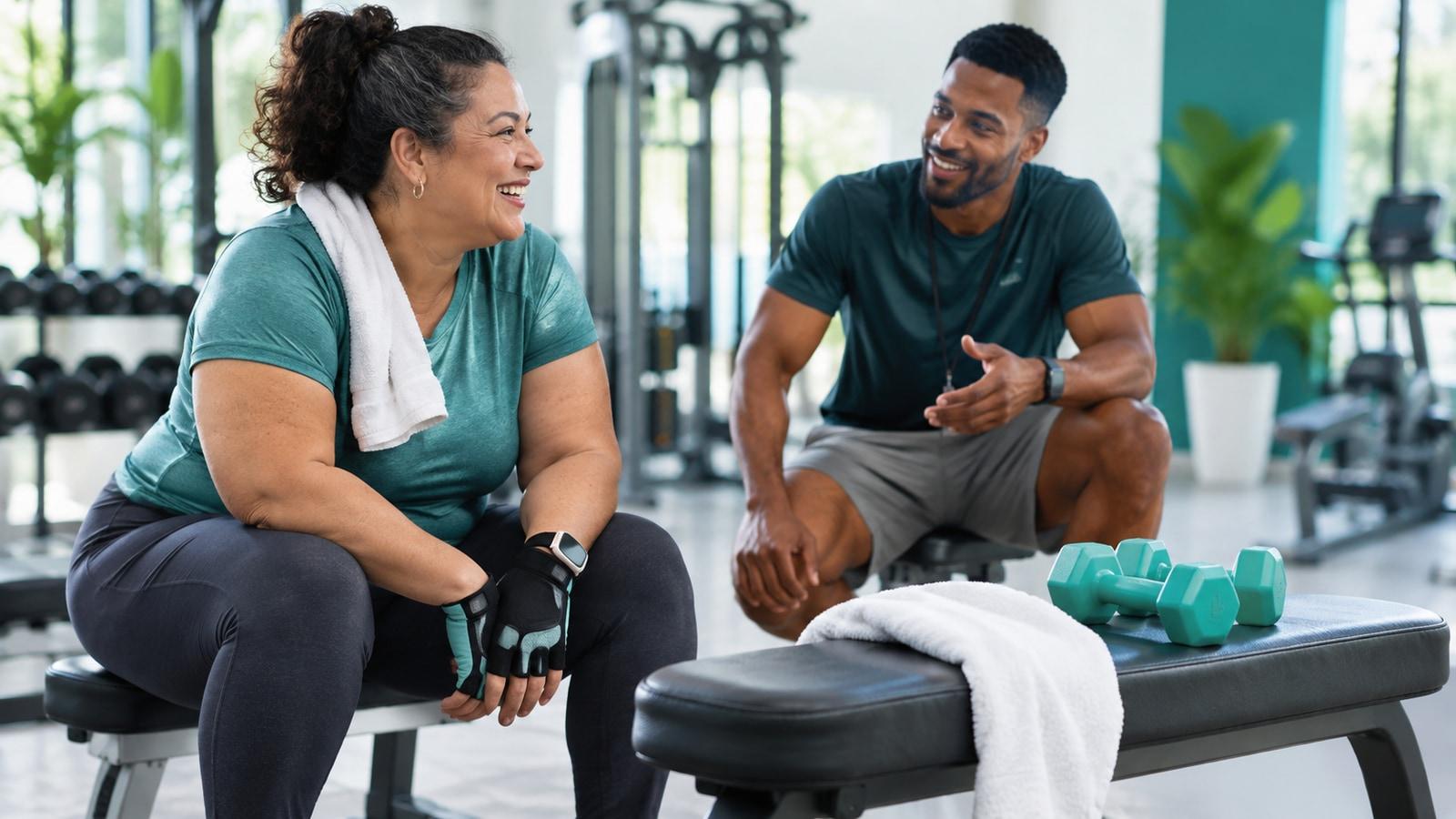
Your legs may feel ready for another set, but your hands have a different opinion. Gripping dumbbells, bars, or machine handles can feel unfamiliar at first. A little pressure is expected; pinching skin, a growing blister, or a grip that makes your wrists ache is a reason to pause and change something.
You don’t need perfectly smooth palms to lift, and you don’t need to collect calluses as proof that a workout counted. The goal is a grip that feels secure enough for the movement and hands that are comfortable enough to use afterward.
Notice where the handle sits
Pick up a light weight and pay attention to how it rests in your hand. Are you gripping so tightly that your fingers and forearms tense up before you start? Is the handle sliding or folding the skin of your palm? Is your wrist bent into an uncomfortable position?
Ask a qualified trainer to look at your grip for the specific exercise. The best hand position depends on the movement and the equipment; a deadlift, a dumbbell press, and a cable handle don’t all feel the same. They can help you find a secure hold and choose a weight you can control without over-squeezing.
Handle size and texture matter. A thick handle may be harder to hold comfortably for a smaller hand, while a rough or worn surface may create more friction. If one piece of equipment bothers your hands, another handle or machine may be a better fit. Check that equipment is clean and in good condition before using it.
Take the first few sessions gradually
Repeated friction and pressure can produce thickened skin or blisters. If you’re new to lifting, give your hands time to get used to the activity rather than adding a large amount of gripping work at once. You can start with a manageable weight, take breaks, and notice how your hands feel later that day.
A hot spot or tender patch is useful information. Stop and look at the area instead of waiting until the end of the workout. You might shorten the session, choose an exercise that doesn’t rub the same spot, or adjust the equipment with help. Continuing to grip through a painful blister can make the experience less pleasant and may damage the skin further.
Your grip can also tire before the muscles you intended to exercise. That’s not unusual when a movement is new. Rest, reduce the load, or ask for an alternative rather than letting a weight slip because you’re determined to finish a number of repetitions.
Do you need gloves?
Some people prefer lifting gloves because they reduce direct rubbing. Others find that gloves change the way a handle feels or make it harder to hold. If you try them, look for a fit that doesn’t bunch up in your palm and still allows you to hold the equipment securely.
Gloves aren’t a fix for a weight that’s too heavy or a painful grip. They also need regular cleaning and drying according to the care instructions. If your hands become irritated by a material or a seam, try a different option or lift without gloves if that is comfortable.
There are other grip accessories, but they aren’t essential for a beginner. Ask a knowledgeable professional how an accessory changes the exercise before using it, and make sure you can release the equipment safely.
Care for irritated skin
Wash your hands after using shared equipment. If you notice a blister or broken skin, keep the area clean and protect it with an appropriate dressing; avoid further friction while it heals. Don’t cut a callus with a blade or pull away skin. If you’re unsure how to care for a wound, especially if you have diabetes, reduced sensation, circulation problems, or another condition that affects healing, ask your care team.
Contact a clinician if an area becomes increasingly red, warm, swollen, painful, or develops drainage, or if it isn’t healing. Seek prompt care for a serious injury. Numbness, persistent tingling, or pain in the wrist or hand also deserves attention rather than an assumption that it’s just normal workout soreness.
Let your hands guide the setup
Before the next session, note which handle bothered you and what helped. Was the bar rough? Did the glove seam fold over? Did your wrist feel better with a lighter weight? A specific observation gives a trainer something useful to work with.
Strength training can be part of a weight-management routine, but every session doesn’t need to involve a heavy grip. Seated movements, machines, bands, and other activities can be adapted to different needs. If you take a GLP-1 medication and feel unwell, it’s fine to rest and discuss persistent symptoms with your care team.
Comfortable hands won’t automatically make every lift easy, but they remove one unnecessary distraction. Start with equipment you can control, adjust when something rubs, and give your skin a chance to recover.