










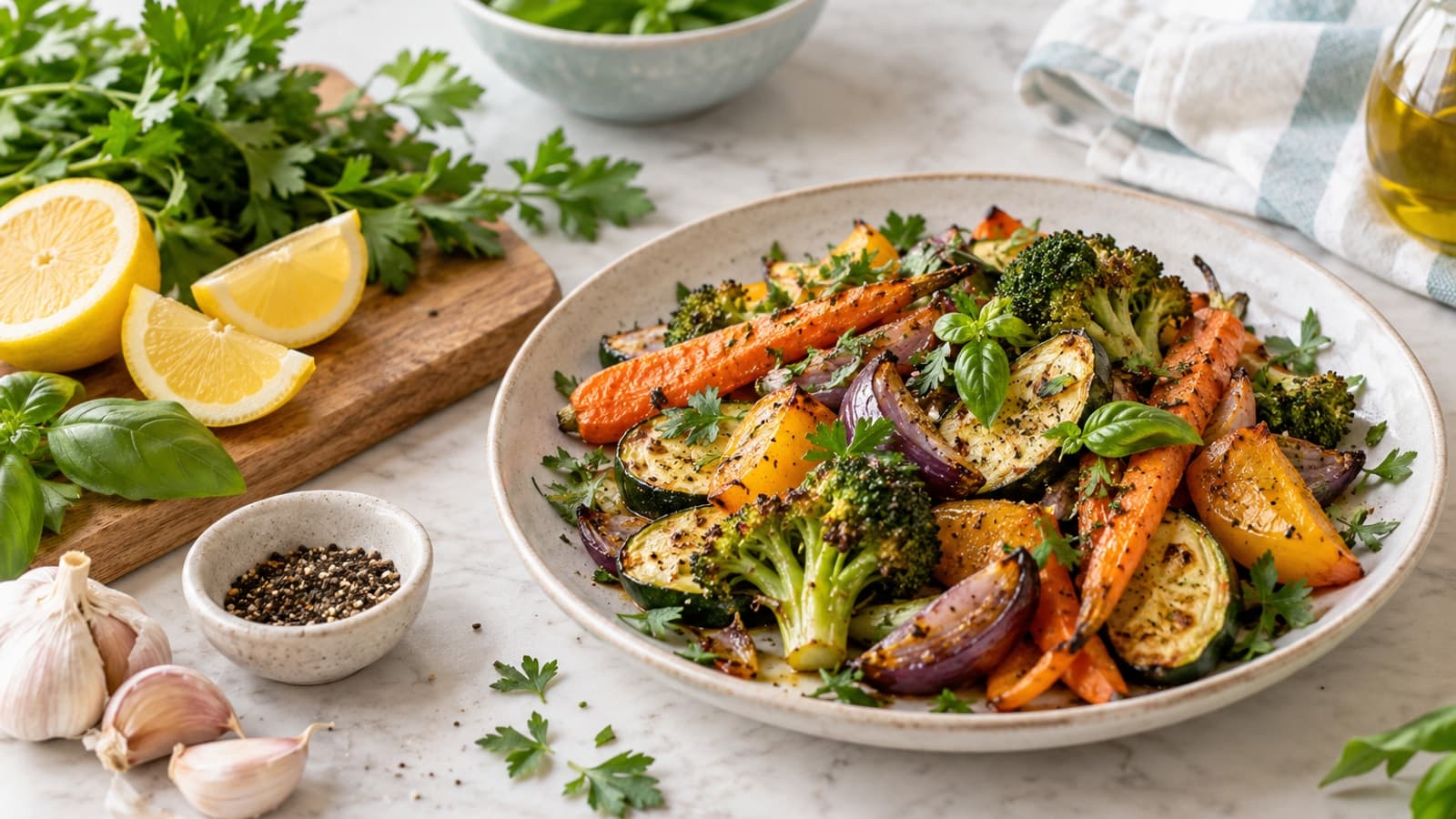
A squeeze of lemon can wake up a bowl of beans. Garlic and herbs can make roasted vegetables smell like dinner instead of an obligation. If you've been asked to watch sodium, those small choices can make familiar food more enjoyable.
A lower-sodium meal can still have plenty of flavor. Start with a dish you already like and change one part at a time.
Build flavor in layers
Try onion or garlic at the beginning of a savory dish, then add herbs, spices or a squeeze of citrus near the end. Vinegar can bring brightness to a salad or soup. Toasted spices can change the character of a familiar grain or vegetable.
Think about what the meal is missing. Does it need acidity, warmth, freshness or a little crunch? A spoonful of chopped herbs or a squeeze of lemon may do more for that particular plate than another pinch of salt.
If citrus or spicy foods bother your stomach, choose another route. Roasted garlic, mild herbs or a little vinegar in a dressing may be more comfortable for you. Taste is individual, and so is digestive tolerance.
Check the ingredients doing the quiet work
Broth, sauces, dressings, canned foods and ready-made meals can contribute sodium even when they don't taste especially salty. Compare the Nutrition Facts panels of products you would use in the same way.
Start with serving size. If one broth lists a cup and another lists half a cup, compare equivalent amounts. A “reduced sodium” product has less than its reference product, but it may still contain more sodium than another option on the shelf.
No-salt-added beans or a lower-sodium broth can be convenient starting points. If you already have regular canned beans, draining and rinsing them may fit the dish; check the label and your own nutrition guidance when comparing choices.
Three ordinary meals to adapt
Soup: Start with a broth that fits your plan, then add beans or chicken, vegetables and a grain. Finish with herbs or a little lemon if you enjoy it.
Rice bowl: Use plain rice, a protein food and cooked vegetables. Add garlic, ginger or a checked sauce on the side so you can choose the amount.
Roasted vegetables: Toss your favorites with a little oil and season with pepper, paprika or an herb blend. Pair them with fish, tofu or another protein you like.
These are flexible ideas, not prescriptions. If you use a spice blend, check the ingredients: some contain salt, while others don't. A homemade mix can be as simple as garlic powder, pepper and dried herbs.
What about salt substitutes?
Some products replace part or all of the sodium with potassium. That can be a concern for people with certain kidney conditions or who take particular medicines. Before using a potassium-based salt substitute, ask a clinician or pharmacist, especially if you have kidney disease or take medicines that affect potassium.
You don't have to buy a substitute to make food taste good. A few seasonings you already use may be enough, and it's fine to keep a favorite flavor in the mix while gradually changing the rest.
Fit the plan to your appetite
On a GLP-1, a smaller portion may be more comfortable. That doesn't mean it needs to be flavorless or nutritionally sparse. A modest bowl of soup with protein and a side, or part of a rice bowl saved for later, can be a useful starting point.
If you have a sodium target from your care team, use that personalized advice. Our food-label guide can help you compare products without making every grocery trip a math assignment.
Keep the changes you enjoy. A lower-sodium routine is easier to repeat when dinner still tastes like something you wanted to eat.