










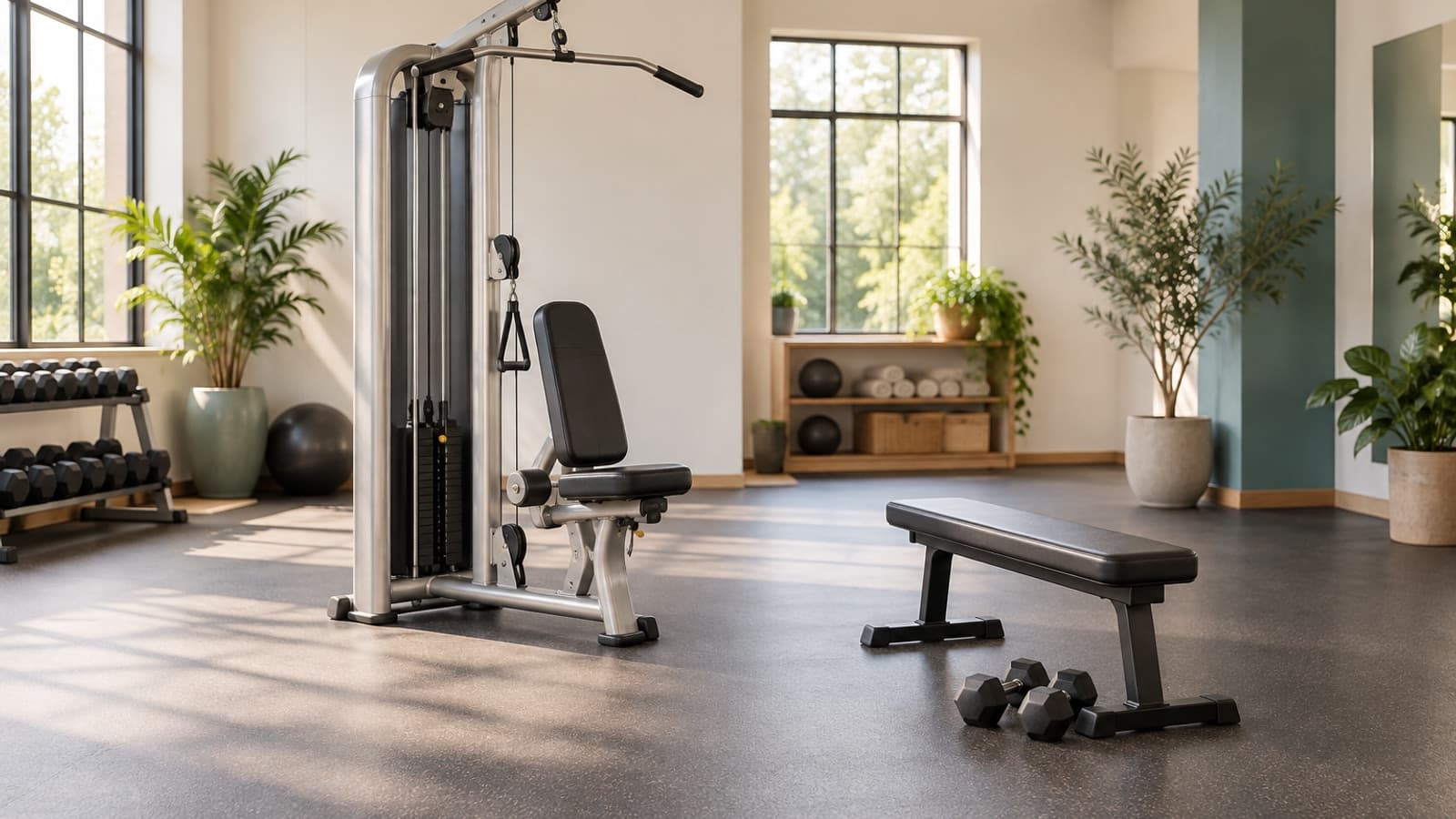
One side of the gym has machines with seats and handles. The other has racks of dumbbells. If you’re starting strength training, it’s easy to wonder which side you’re supposed to choose.
Both machines and free weights can be useful. The better first choice is often the one that fits your body, your available space and the kind of help you can get while learning.
What a machine offers
Many weight machines have a seat, adjustable resistance and a handle or pad that moves along a defined path. That can make it easier to focus on one setup at a time. Some people also appreciate having a place to sit while they learn an exercise.
The machine still has to fit you. A seat that is too high or low, a handle that is difficult to reach or a movement that irritates a joint may call for an adjustment or a different exercise. Ask a staff member to show you the settings, where to place your hands and feet, and how to stop. Write down the settings that feel right so you don’t have to solve the puzzle from scratch next time.
Not every machine works for every person. If the available range of motion doesn’t feel comfortable, don’t assume you must keep using it. Someone with relevant training can help you find an alternative.
What about dumbbells?
Dumbbells and other free weights give you more choices about how and where to move. A small pair can be used at home, and some exercises can be performed seated. They also require you to manage the weight through the movement and find a safe way to pick it up and put it down.
That flexibility can be appealing, but it may mean more decisions when you’re new. It’s worth getting a demonstration and beginning with a light, manageable load. You don’t need to purchase a full rack to find out whether you enjoy using them; a gym introduction or a borrowed pair may help you decide.
Free weights aren’t the only home option, either. Bodyweight movements and properly secured resistance bands may be useful choices depending on the exercise and your abilities.
Think about the practical details
Consider where you’re most likely to exercise. A gym may provide a variety of machines and staff support, but getting there and paying for a membership may be barriers. A home setup saves travel and may feel more private, although space, equipment cost and access to instruction matter.
Also consider your grip, balance and comfort getting on and off equipment. One machine might feel straightforward for a seated row while a light dumbbell works better for another movement. You can mix tools rather than making a permanent choice.
Some research finds that people get better at the particular movements they practice. That makes sense when your goal is specific: if you want to feel more comfortable with an everyday task, ask a professional how to include suitable practice for that task alongside your other strength work. No single machine or weight guarantees the same result for everyone.
Make the first session small
Pick one or two movements, learn the setup and use resistance you can control. Stop if something hurts or you feel unsteady. If you have a recent injury or another condition affecting exercise, ask your care team what modifications make sense for you.
If GLP-1 symptoms are interfering with food or fluids, address them with your care team rather than treating a workout as the priority. And if you’re visiting a gym for the first time, our first-visit guide can help you plan the practical details. You can change equipment later as you learn what works for you.