










It's 7 p.m. You've answered questions all day, the refrigerator is open, and somehow choosing dinner feels harder than the work you just finished.
On a night like that, the problem may not be a lack of recipes. It may be that every recipe asks you to make more decisions: what to cook, what to chop, which pan to use, and whether you have the energy to wash it afterward.
You can make dinner easier before that moment arrives. The idea is to give yourself a short, familiar route from “I need to eat” to food on a plate, with as few decisions in between as possible.
Pick a default before you need one
Think of a meal you already like that takes little attention. It could be a frozen meal you enjoy with a piece of fruit, a bowl of cereal and milk with a spoonful of nut butter, or toast with eggs and sliced tomatoes. There is no prize for making it from scratch.
Choose your own version while you have the headspace, then write it somewhere easy to see: on the fridge, in a note on your phone, or beside your grocery list. On an exhausting night, you can follow the note rather than starting a new debate with yourself.
Your default doesn't have to be your favorite dinner forever. It just needs to be acceptable, reasonably accessible, and easy enough that you're willing to make it when your attention is gone. Having two defaults gives you a backup when one ingredient runs out.
Make the decision smaller
If “What should I eat?” feels too broad, narrow it to one choice at a time:
- Hot or cold? A microwaveable bowl might sound good; on another night, yogurt and fruit might be easier.
- What's already ready? Look for washed produce, leftovers stored safely, a can of beans, or a food you can heat according to its package directions.
- What would make it feel like a meal? Add something familiar if you want it: crackers with soup, cheese with a baked potato, or fruit alongside a sandwich.
You don't need to build a perfect plate under pressure. If all you can manage right now is the first part, start there. You can decide whether you want more once you're sitting down.
Put convenience to work
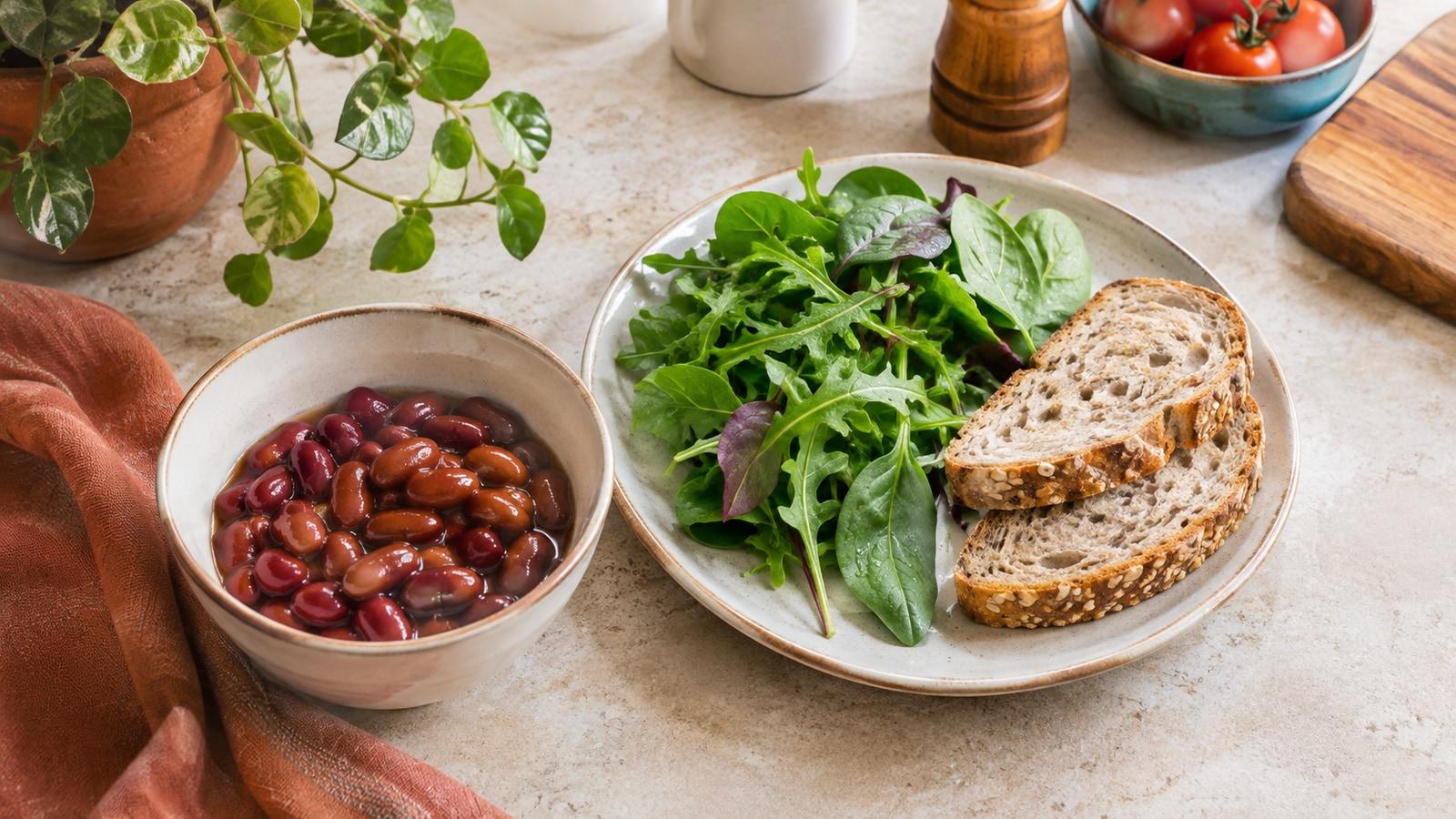
Convenience foods can be useful tools. Frozen vegetables, canned beans, bagged salad, microwaveable grains, and ready-to-eat protein options can cut out several steps. The best choices are the ones that fit your preferences, budget, storage space, and any food allergies or medical instructions you have.
Look for the steps you personally find hardest. If chopping is the obstacle, pre-cut ingredients may help. If washing a pan is what stops you, use a microwave-safe dish or assemble a cold meal. If a large package tends to spoil before you use it, a smaller or frozen option may be more practical.
Convenience can cost more, so it doesn't have to mean buying every item prepared. You might keep one ready-to-heat meal for a difficult evening and use less expensive staples on days when cooking feels manageable.
Give future you a hand
When you have a little more capacity, set up a small “tired night” area in the pantry or freezer. It might hold soup, crackers, a favorite shelf-stable protein, or a frozen dish. Keep the pieces together so you don't have to search the whole kitchen.
If someone else shops for the household, add the exact item and a workable substitute to the list. “The tomato soup in the blue can, or the lower-sodium version next to it” gives more useful direction than “something easy.” If you share a kitchen, tell others which foods are meant as your backup so the plan doesn't disappear unexpectedly.
You can also leave a reminder where the difficult decision happens: “Soup and toast are in the pantry.” A small prompt can be more helpful than a detailed weekly menu you don't have the energy to consult.
Keep leftovers simple and safe
Leftovers are useful only if you know what they are and when they were stored. Put a date on the container, refrigerate perishable food promptly, and check storage guidance for the food in question. Many cooked leftovers keep for three to four days in the refrigerator; when you're unsure whether something was stored safely, don't rely on a sniff test to decide.
Freezing a portion you won't eat soon can give you another low-effort option later. Label it with the name and date, and follow appropriate thawing and reheating directions when you're ready to use it.
When appetite is part of the problem
If you're taking a GLP-1 and dinner sounds unappealing, a familiar smaller meal may feel easier to start with. You can save more for later if it's stored safely. The goal is to find a routine you can follow, not to force a particular meal size.
If low appetite, nausea, or exhaustion keeps making it hard to eat or drink enough, bring it up with your care team. Tell them what you've been able to manage and what happens when you try. They can help you work through the cause and find a plan that fits.
For tonight, a simple meal counts. Tomorrow's decisions can wait until tomorrow.