










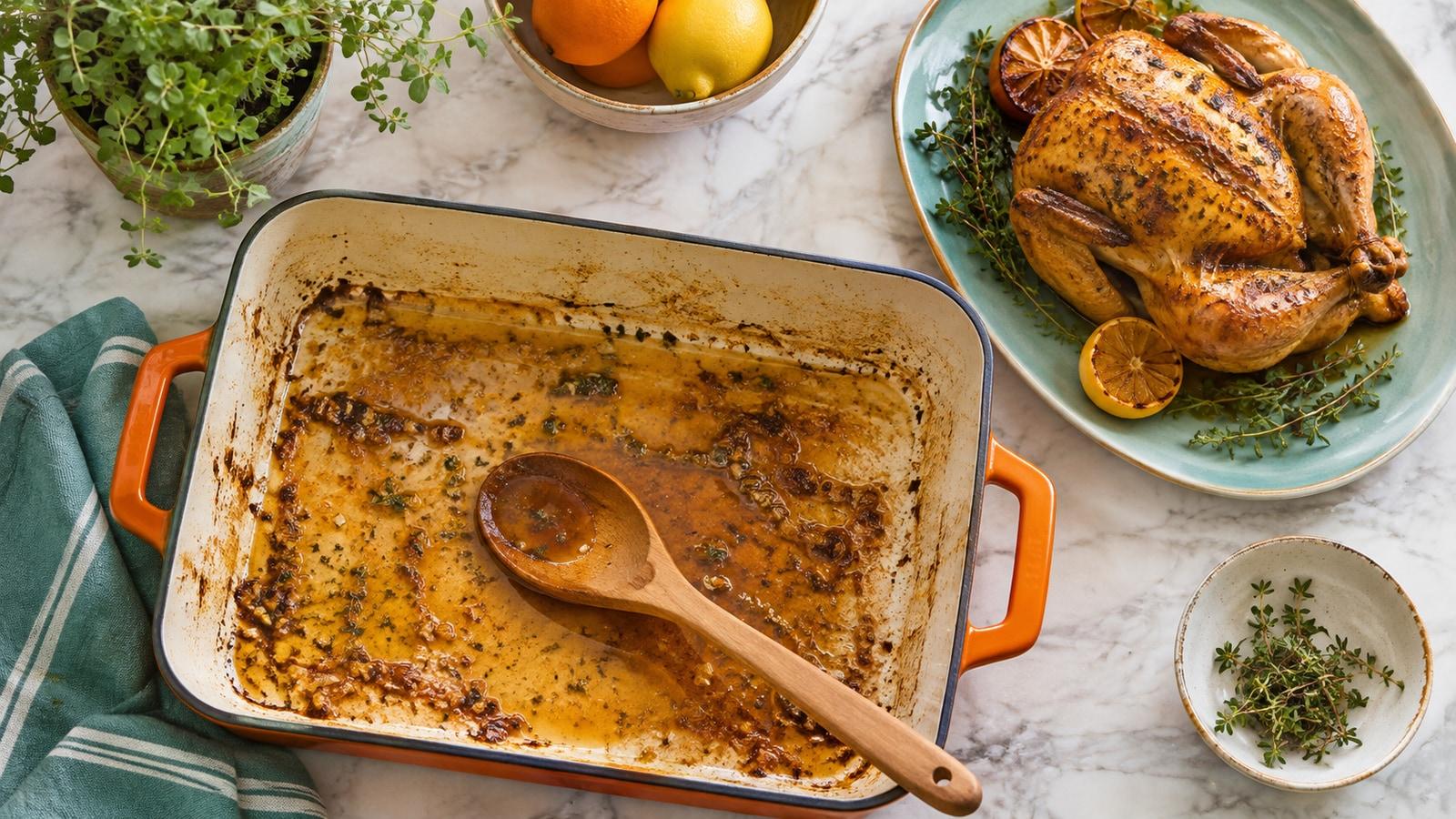
The roasting pan often has the beginnings of a sauce left in it: browned bits, juices and a little fat. With broth and herbs, those bits can become a simple spoonful to serve with the chicken or vegetables.
You don't need a bottled sauce or a long ingredient list. You do need a pan that can be used safely on the stovetop, fully cooked chicken and a little attention to handling the hot pan.
Start after the chicken is safely cooked
Roast the chicken using a reliable recipe and check it with a food thermometer. Poultry needs to reach 165°F in the appropriate thickest areas. Move the cooked chicken to a clean platter to rest, using clean utensils.
Look at the roasting pan. The browned bits are useful; blackened, bitter pieces are less appealing. If the drippings are burnt, start a small sauce in a clean skillet with broth and herbs instead of scraping burnt material into it.
Not every roasting dish belongs on a stovetop. Check the manufacturer's instructions. If it isn't stovetop-safe, carefully transfer the usable juices to a suitable saucepan once you can do so safely, and make the sauce there. Protect your hands and keep the hot pan stable.
Decide how much fat to keep
The pan juices may contain both liquid and fat. You can spoon off some fat if there is more than you want, leaving a little for flavor. A fat separator is optional; a spoon and a heat-safe container can do the job.
Don't pour hot fat down the drain. Let it cool safely and follow local disposal guidance. Keep the pan handle turned inward and remember that a handle that came from the oven stays hot even if it looks ordinary on the stovetop.
If the pan is very dry, a small amount of olive oil can help soften a little minced shallot or onion. That step is optional. A simple broth-and-herb sauce is perfectly useful on its own.
Add liquid and loosen the browned bits
Place the stovetop-safe pan over moderate heat and add a small splash of broth or water. The liquid will bubble as it meets the hot pan. Use a wooden spoon or another utensil suitable for the pan to gently loosen the browned bits from the bottom.
Add more liquid a little at a time until you have the amount of sauce you want. Let it simmer and reduce slightly, stirring. If it becomes too concentrated, add a splash of water. The amount of salt already in the broth and drippings varies, so taste the fully cooked sauce before adding more.
For a small starting batch, you might begin with about half a cup of broth and adjust from there. The final amount depends on the pan and how long it simmers. Keep the heat gentle enough that the liquid doesn't disappear before you've had a chance to taste it.
Finish with herbs or another flavor
Chopped parsley, thyme or a small squeeze of lemon can brighten the sauce. Add the herbs near the end and taste. If acidic foods are uncomfortable for you, skip the lemon; a little broth and herbs are enough.
For a richer finish, you might stir in a small amount of butter after reducing the liquid. For a lighter sauce, leave it out. The goal is a flavor and texture you like, not a particular amount of fat.
Spoon the hot sauce over the chicken or serve it in a small pitcher so each person can choose. It can also add flavor to roasted vegetables, potatoes or rice on the side.
Keep raw and cooked foods separate
Use a clean platter and utensils for the cooked chicken. Don't add uncooked marinade to a finished sauce unless it is handled and boiled according to a safe recipe; an easier choice is to reserve a separate portion before it touches raw poultry. Wash surfaces and hands after handling raw chicken.
If the chicken or sauce has been cooked and then chilled, reheat leftovers thoroughly. Bring leftover sauce or gravy to a rolling boil and heat leftover chicken to 165°F. Use a food thermometer for the chicken rather than judging by appearance.
Save the extra
Refrigerate the chicken and sauce promptly in shallow, covered containers, within two hours of cooking or one hour when the temperature is above 90°F. Keep the refrigerator at 40°F or colder. Use cooked leftovers within three to four days, or freeze suitable portions.
Storing the sauce separately makes it easier to reheat and lets you use it with a different side the next day. Label the container with the date and bring the sauce to a rolling boil when reheating.
Make it a repeatable habit
Once you know your pan is stovetop-safe, the method is simple: remove the cooked chicken, manage the fat, add liquid and loosen the browned bits. Change the herbs to suit the meal and stop reducing when the flavor tastes right.
A good pan sauce doesn't have to be elaborate. It's a small way to use what is already in the pan and make a familiar dinner feel a little more finished.